
|
21 September 2026 Design District Vienna 2026: Fashion, Interior and More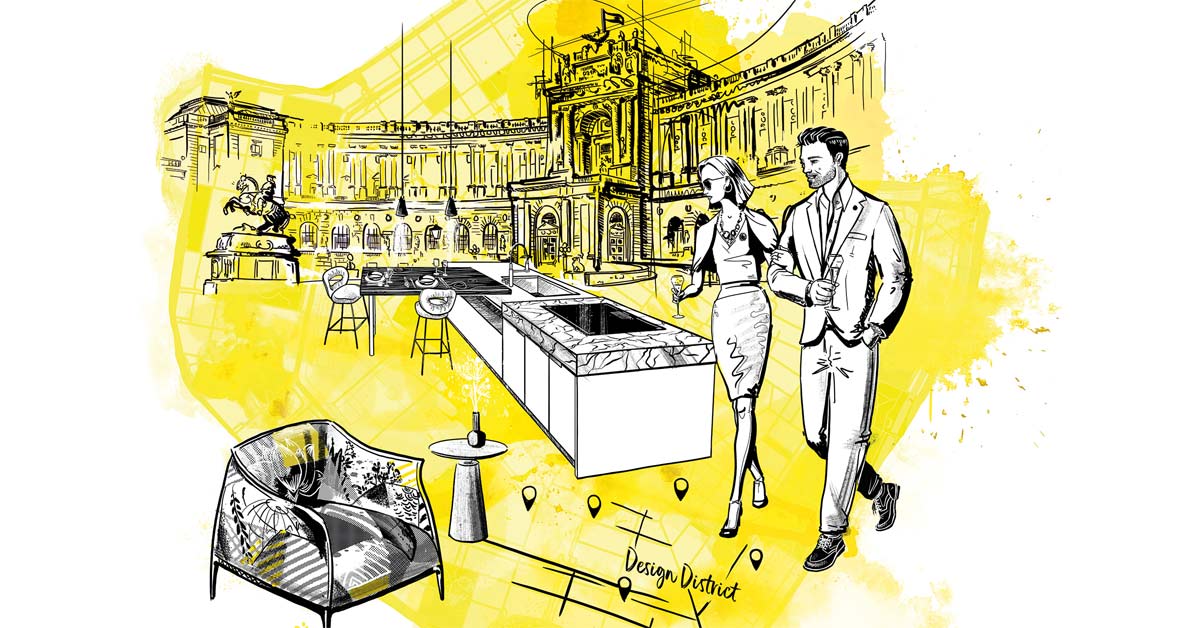
Quick Read
• Design District returns to Vienna's Hofburg from 9–11 October 2026. From an 80-brand debut to today's design directoryThe Design District began in 2017, when the first edition at the Hofburg brought around 80 national and international brands together across 5,000 m². Sabine Jäger and Peter Syrch have developed the format since then, with the Hofburg remaining its central venue. In 2026, the three-day event takes place from 9 to 11 October. The current exhibition area extends across more than 7,000 m², with the organizers expecting around 300 exhibitors.That scale makes the online Design District Directory more than just a list of names. Its categories provide a useful map of what is actually represented: Architecture & Building, Cheers & Chairs, Circular Design, Living & Housing, Fashion & Accessories, Garden, Interior & Lifestyle, Meisterstrasse, and Mobility. Cheers & Chairs: where wine meets seating designOne of the new elements for 2026 is Cheers & Chairs. The lounge concept is located in the antechamber of the Hofburg and combines selected champagnes, sparkling wines and rare wines with lounge furniture. In other words, chairs and drinks become part of the same design setting.The directory gives the idea a second dimension: Cheers & Chairs appears as its own category, bringing wine producers into a design-oriented context. Among them are wineries from established Austrian wine regions, including the areas around Göttweig and Fels am Wagram. It is a small but telling example of how the Design District stretches the term "design" beyond furniture and interiors into hospitality and the culture of enjoyment. Fashion, jewellery and textiles in the directoryThe Fashion & Accessories category provides another reason to browse beyond the classic interior brands. Wabisabi Vintage Kimono Fashion, for example, works with original Japanese silk and cotton kimonos and obi. Its special line transforms precious traditional wedding kimonos, known as uchikake, into cocktail and ball dresses, Dirndl and skirts – connecting Japanese textile heritage with European fashion.Jewellery is represented by Helga Beck, a mother-and-daughter goldsmith label creating handmade pieces in gold and silver in Vienna. Its designs combine raw, organic textures with a more refined jewellery aesthetic. The directory becomes particularly interesting where fashion, interior and craft overlap. Salzburger Handdrucke Jordis, established in 1947, works with historic hand-printing blocks and produces fabrics for curtains, furniture, table linen, traditional dress and fashion. Textilatelier Beate & Celina von Harten, meanwhile, has been creating textile one-offs in Vienna since 1984, ranging from artistic tapestries to customised textiles for interiors and architecture, alongside textile restoration and weaving courses. Meisterstrasse: Austrian craft alongside international designMany of these craft-based exhibitors also appear under Meisterstrasse, a long-established Austrian platform for workshops, manufacturers and specialist crafts. Its roots lie in the Salzkammergut, where the first nine craftsmen connected through the initiative came from Bad Goisern. Today, Meisterstrasse presents more than 6,000 businesses and positions itself as a network for regional craftsmanship, authenticity and locally rooted production.At Design District 2026, the Meisterstrasse selection includes Elisabeth Habig, whose Vienna-made jewellery combines unusual gemstones, raw minerals and sculptural surfaces. Rolf Brillen is listed as a specialist eyewear maker. Kohlmaier appears as a Raumausstatter, or interior outfitter, and Yogesh brings individually composed perfumes into the mix. The selection also includes metalworkers, traditional shaving culture and Japanese craft and cuisine. The result is less a single "style" than a cross-section of contemporary and traditional making. From bathroom fittings to design educationThe Interior & Lifestyle directory features a wide range of international brands. Dornbracht is represented with design fittings and accessories for bathrooms, spas and kitchens. Ligne Roset brings its French furniture tradition, dating back to 1860, including the internationally known Togo seating design. OMEGA X Swatch places watches within the same Interior & Lifestyle directory.At the other end of the spectrum are educational institutions. The New Design University and Fachhochschule Salzburg appear in the Circular Design category, alongside studios and companies working on new materials, interior solutions and resource-conscious approaches. Circular Design focuses on subjects such as responsible resource use, CO₂ reduction and upcycling. This is perhaps the most useful way to read the directory: not as a conventional exhibitor list, but as a snapshot of how broadly the organizers currently define design. Cars and bicycles meet watches and jewellery; fashion sits alongside textiles; kitchens, bathrooms and furniture share space with architecture, garden design, art, technology and educational projects. With around 300 exhibitors expected across the Hofburg, the Design District 2026 therefore offers a particularly wide field for browsing. The online directory is a good starting point before the fair itself opens. Image: Design District 2026 campaign illustration for the Vienna Hofburg fair, 9–11 October. © Design District |