
27 February 2026 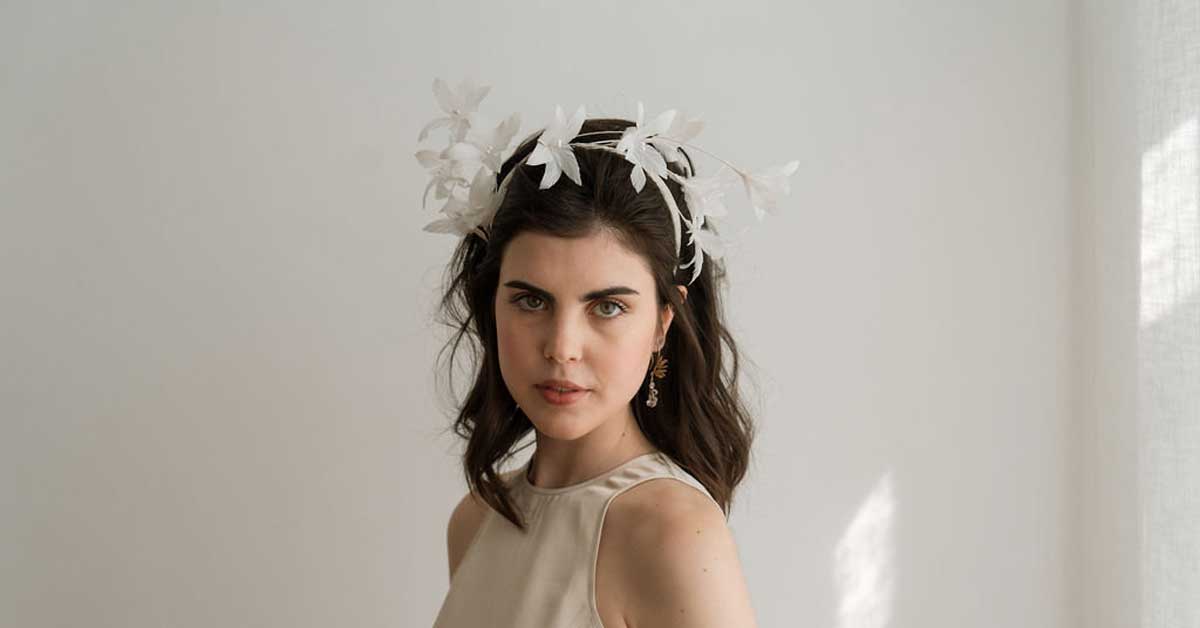 Austria's Wedding Season and Changing Bridal DetailsIn Austria, the wedding season traditionally spans May to October, with a clear concentration in May, June, and September. June remains a classic favourite due to its long days, mild temperatures, and fully bloomed landscapes. September has gained importance in recent years, appreciated for its stable weather and relaxed atmosphere after peak summer travel. May, often described as the country's traditional "month of love," attracts couples with spring blossoms and fresh greenery, although temperatures can be cooler in alpine regions.Alongside this seasonal shift, bridal styling habits are also changing. One visible development concerns headwear. The classic long veil, especially associated with church weddings, is increasingly replaced or complemented by fascinators, hairbands, and sculptural headpieces. These alternatives allow for individuality and adapt well to both civil and religious ceremonies. What Is Worn Where: Civil vs. Church WeddingsAt civil ceremonies (Standesamt), brides in Austria often opt for minimalist dresses and restrained accessories. Smaller fascinators or refined hairpieces fit well with this setting. In church weddings, where tradition still plays a role, longer veils remain present, but fascinators made from fine materials such as sinamay or feathers are now widely accepted, especially when combined with classic silhouettes.Guests also follow these distinctions. Headpieces are more common at church weddings and formal summer celebrations, while civil ceremonies tend toward subtler styling. Jewellery Logic Applied to HeadwearA key principle in contemporary bridal styling is coordination. Headwear should be considered together with earrings, necklaces, bracelets, and rings. Stylists and designers increasingly advise restraint: fewer elements, carefully chosen, create a stronger overall impression than many competing details.This approach is central to the work of Vienna-based designer Elisabeth Habig, who combines two crafts rarely practiced together today: goldsmithing and millinery. Elisabeth Habig: Two Crafts, One Design LanguageHabig trained as a modiste at the Modeschule Hetzendorf, one of Austria's best-known schools for fashion and design, and completed her education as a goldsmith at the Herbststraße, a leading institution for jewellery arts in Vienna. This dual background shapes her distinctive approach to headwear.Rather than treating fascinators as purely decorative fashion items, Habig designs them with a jeweller's mindset. Proportion, balance, surface texture, and material tension play the same role as they do in rings or necklaces. Feathers, sinamay, and textiles are handled with the same precision she applies to metal and stone. Her aesthetic aligns with a broader current in Viennese contemporary jewellery that values visible craftsmanship, material honesty, and individuality over perfect symmetry or digitally optimised forms. This attitude carries directly into her millinery work. Headpieces are not trend objects but personal accents that underline the wearer's character. Habig often draws inspiration from natural forms, everyday textures, and small structural details found in her surroundings. The result is headwear that feels sculptural yet wearable — light in appearance, but conceptually grounded. A Small Shop, A Concentrated Creative WorldHabig's studio and shop are located at Spiegelgasse 25 in Vienna's 1st District. From the street, the space appears modest. Inside, however, it opens into a concentrated creative environment where jewellery and headwear are developed side by side. The setting reflects the essence of her work: quiet, precise, and focused on craft rather than spectacle.In the context of Austria's wedding season, Habig's fascinators offer insight into how traditional rituals and contemporary design continue to influence each other — and how young jewellery and accessory design in Vienna is evolving today. Image: The bridal headpiece 'Flora', designed by Elisabeth Habig, is a handcrafted hairband with a movable floral element, made from sinamay and feathers. It can be worn on its own or combined with a veil. Photo: © Amon Barbara |