
|
24 August 2026 FESCH 2026: Green, Linen and the New Tracht Shape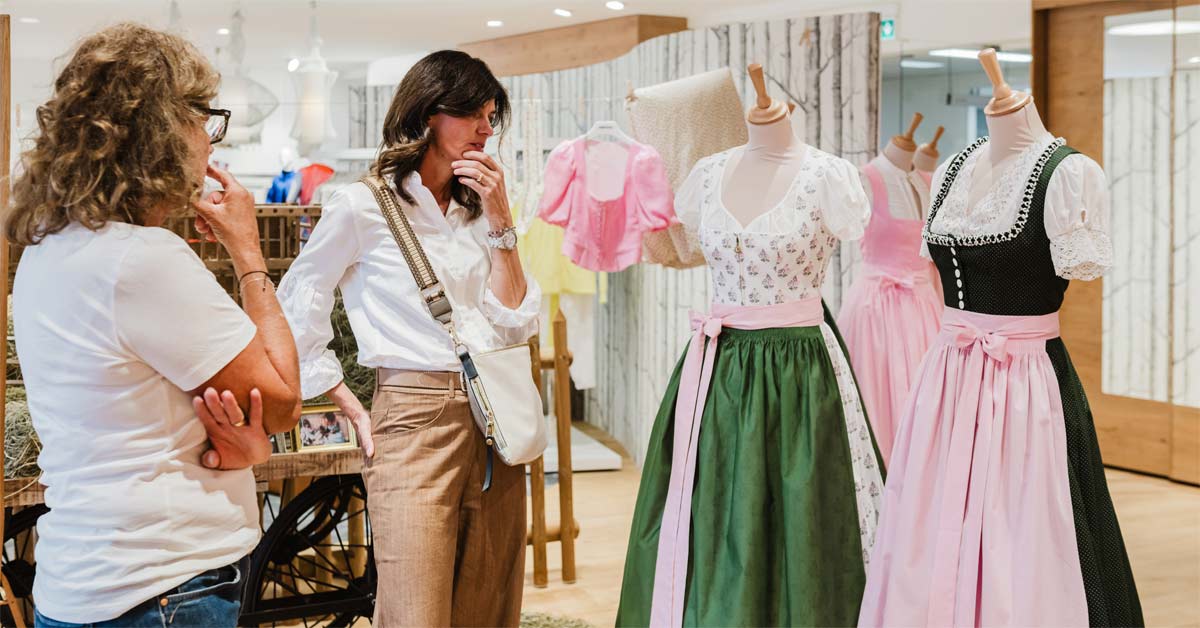
Quick Read
• Green is emerging as a key colour for summer 2027, particularly in Alpine-inspired looks. Green connects the Alpine lookThe FESCH trade fair at Brandboxx Salzburg, held from 21 to 23 August 2026, brought together the trade for traditional costume and Alpine fashion. The B2B event presents around 250 brands and takes place twice a year, giving retailers an early view of upcoming collections and trends.One day after the fair ended, the first trend summary for Spring/Summer 2027 points to a colour with a particularly strong regional association: green. Think summer in the Salzkammergut, around the Ausseerland or at an Alpine lake. Green dirndls connect naturally with this landscape, while contemporary cuts and lighter fabrics keep the look from becoming overly traditional. The colour also works across couples' outfits, appearing as a detail in men's waistcoats or embroidery on lederhosen. The bodice becomes a separate pieceThe bodice is perhaps the clearest sign that Tracht is becoming more modular. Instead of functioning only as part of a complete dirndl, the fitted bodice can be combined with a wide, tiered skirt – or with entirely non-traditional pieces such as jeans. The direction can go even further: remove the sleeves and the bodice becomes a corset-like top. Sportalm's current collaboration with Leni Klum provides a useful example of this development. The capsule includes silk-jacquard bodices, silk corsets with peplums and separate midi skirts, alongside complete dirndls. Sportalm says the collection was developed as a modern interpretation of Tracht. The important shift is not simply a shorter or more fashionable dirndl. It is the possibility of separating the traditional components and wearing them in combinations that work outside the Tracht setting.When summer gets really hotThe summer of 2026 has also sharpened a practical question: what happens to Tracht when temperatures move beyond 30°C? The trend answer is less weight and more breathability. Cotton and linen take centre stage, while airy lace and voile make dirndl blouses lighter. For men, the lederhosen gets a summer alternative in the form of short linen or cotton trousers, sometimes carrying traditional embroidery and sometimes deliberately leaving it out. Even the classic waistcoat is being opened up: versions with a wider neckline reduce layers around the upper body. And there is a notable relaxation of the rules for women, too. In the strongest summer interpretation, the dirndl can be worn without a blouse.Puff sleeves turn up the volumeThe final trend is harder to miss: sleeves are getting bigger. The familiar puff sleeve is no longer just a small romantic detail but a significant part of the silhouette. Volume is created not only through the cut itself. Structured fabrics, burnout effects and three-dimensional appliqués build additional height and texture. Bright colours such as yellow, terracotta and pink reinforce the fashion effect.The result is a version of Tracht that keeps recognizable elements – bodice, apron, waistcoat, embroidery and Alpine references – while borrowing increasingly freely from contemporary fashion. For Spring/Summer 2027, the direction is therefore less about replacing tradition than about recombining it. Image: Tracht styles presented at FESCH 2026 in Brandboxx Salzburg, including floral dirndls, green skirts and contrasting bodice looks. © herostudio / FESCH Brandboxx |