
14 February 2026 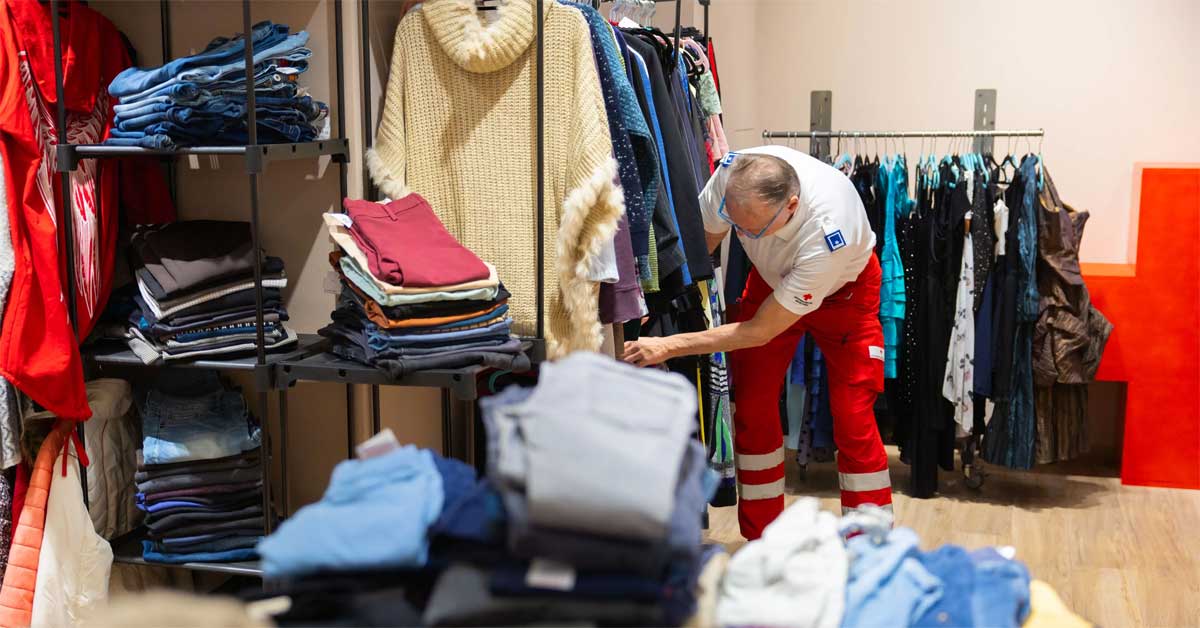 The newest Henry shop of the Wiener Rotes Kreuz (Vienna Red Cross) opened on 9 February 2026 as a temporary pop-up in Huma Eleven. Located in one of Vienna's busiest retail environments, the second-hand store brings a long-running social initiative into a contemporary setting of everyday consumption. Why the shop is called HenryThe name "Henry" refers to Henry Dunant, the founder of the Red Cross movement. The first Henry shop was launched in Austria in 2013, and since then the concept has expanded to several regions of the country. The idea is simple and transparent: donated, well-kept clothing is sold at affordable prices, and the revenue is used to finance social projects of the Red Cross.In Vienna, the Henry pop-up focuses on clothing for women, men and children. The goods come from private donors. Only clean and intact items are accepted—no damaged garments and no worn underwear. Shoes and home textiles are also excluded at this location. Donations are sorted and curated before reaching the sales floor, giving the shop a structured and accessible appearance rather than the feel of a classic charity warehouse. All proceeds remain within the organization. In Vienna, the income supports local Red Cross services such as emergency aid, social counselling and assistance for people in difficult life situations. The shop is open to everyone, without restrictions, and is staffed largely by volunteers. Creative funding beyond donationsThe Red Cross in Vienna finances its work through a mix of public funding, donations and independent initiatives. One of its culturally significant projects is the Art Collectors Club, which connects contemporary art with social engagement. Notable participating artists in recent years include Valie Export, Heimo Zobernig, and Franziska Maderthaner. Works are made available to supporters, and the proceeds help fund humanitarian activities. Together with projects like Henry, this shows a diversified and creative approach to financing social work.A pop-up inside a retail hubThe Henry shop will run until the end of April 2026. Its location inside Huma Eleven is deliberate. The shopping center, located in Vienna's Simmering district, is close to major traffic routes and the airport. It offers a wide range of stores, including fashion, beauty, shoes, eyewear, and interior design, as well as electronics, books, travel services, and food options ranging from cafés to a large, well-stocked supermarket. Beyond retail, the centre hosts community-oriented activities such as children's events and dance afternoons. The Red Cross is also present outside the shop context: on 27 February, a mobile blood donation bus will be stationed on site.Second-hand fashion and new EU rulesPlacing a second-hand shop in a "temple of consumption" also invites reflection. Clothing is a resource-intensive product, requiring raw materials, water, energy and labour. Disposal adds further pressure on ecosystems. Against this background, the European Union has adopted the new Ecodesign for Sustainable Products Regulation (ESPR). From 19 July 2026, large companies in the EU will no longer be allowed to destroy unsold clothing and shoes without justification. Medium-sized companies will follow around 2030. Firms must also disclose how many unsold goods they discard and why.The regulation primarily targets producers and retailers and does not directly regulate private consumer behaviour. Nevertheless, it marks a major shift for the fashion industry, as it promotes resale, reuse, repair and donation instead of the destruction of unsold goods. Initiatives like Henry show what this approach can look like in practice: garments remain in use, value is preserved, and the proceeds support social projects. If an item no longer fits, is no longer liked, or was bought in a moment of excess, there are systems ready to bring it back into circulation—benefiting both people and the environment. Image: A team member of the Vienna Red Cross arranges donated second-hand clothing in the Henry pop-up shop in the Huma Eleven shopping centre. Photo: © WRK/Holly Kellner |