
|
6 August 2026 From Skinny to Wide Leg: Why Fit Matters More Than Fashion Rules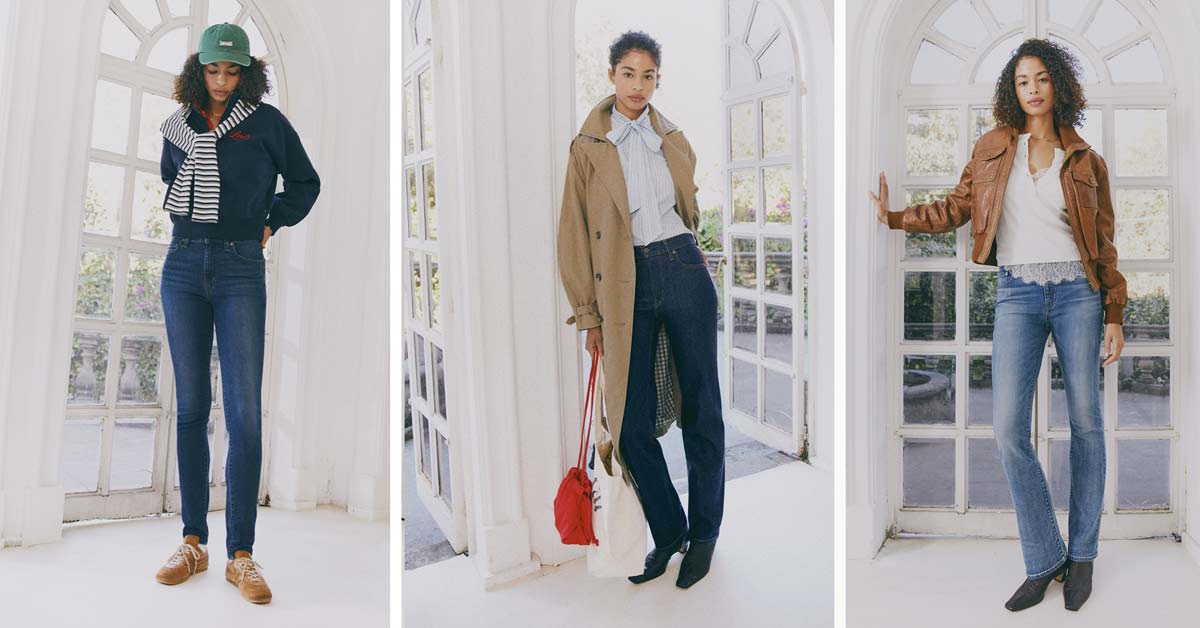
Quick Read
For years, fashion often appeared to dictate a single "correct" denim silhouette. One season it was skinny jeans, another oversized wide-leg styles, followed by relaxed straight cuts. Today, however, a walk through almost any major city tells a different story. Skinny jeans have not disappeared, nor have wide-leg or bootcut designs. Instead, different fits are worn side by side, reflecting individual taste rather than a dominant trend.
• Today's denim landscape is more diverse than it has been for years: skinny, straight, bootcut and wide-leg jeans coexist rather than compete. Rather than replacing one another, denim silhouettes increasingly function as alternatives within a personal wardrobe. One person may prefer a figure-hugging silhouette throughout the week, while another alternates between relaxed and slim styles depending on mood, occasion or comfort. In this environment, the quality of the fabric and the wearing experience have become as important as the cut itself. Comfort becomes part of the designLevi's® is placing this development at the centre of the relaunch of its women's 700 Series for Autumn/Winter 2026. Instead of focusing solely on new silhouettes, the company has redesigned the collection around a new stretch denim fabric that combines natural and technical fibres. The composition consists of 51% cotton, 37% TENCEL™ Lyocell from Austrian fibre producer Lenzing, 7% polyester, 3% elastomultiester (T400) and 2% elastane (LYCRA®).Each fibre fulfils a different role. Cotton provides the familiar denim structure, while TENCEL™ Lyocell contributes softness, efficient moisture absorption and a smoother hand feel. Polyester improves durability, elastomultiester helps the fabric recover its original shape after stretching, and elastane provides flexibility during movement. Together, the blend aims to maintain both comfort and shape throughout repeated wear. An Austrian fibre with a long denim historyThe inclusion of TENCEL™ Lyocell also highlights the long-standing relationship between Levi's® and Austrian fibre manufacturer Lenzing AG. Since TENCEL™ Lyocell entered the market in the early 1990s, the fibre has become one of the materials used by denim manufacturers seeking to combine the authentic appearance of cotton denim with greater softness and improved moisture management.The fibres themselves are not developed exclusively for Levi's®. Instead, Lenzing supplies fibre technologies that are adopted across the textile industry, while brands and denim mills create their own proprietary fabric constructions. Over the years, cooperation between fibre producers, spinning mills, weaving mills and apparel brands has contributed to increasingly sophisticated denim fabrics that combine natural fibres with technical performance. The latest 700 Series continues this approach by using fibre technology not as a visible fashion statement, but as an element designed to improve everyday wear. In today's denim market, innovation is becoming less about radically changing the look of jeans and more about improving how they feel and perform. From the 701 to today's 700 SeriesThe relaunch also revisits an important chapter in denim history. Levi's® describes the 700 Series as being inspired by the legendary Lot 700 lineage, which traces its roots to the Lot 701, introduced in 1934 as the company's first jeans designed specifically for women. That original garment marked a milestone by adapting workwear to the female body at a time when women largely wore men's jeans for ranch work and outdoor activities.Visually, however, the connection between the historic model and today's collection is more conceptual than literal. The original 701 featured rigid cotton denim, a straight workwear-inspired silhouette and practical construction details typical of the 1930s. By contrast, today's 700 Series consists of highly engineered stretch denim with modern high-rise silhouettes developed for contemporary everyday wear. What remains is the original design philosophy: creating jeans intended to complement the female silhouette rather than simply adapting men's patterns. Understanding the numbersFor many consumers, Levi's numbering system can appear mysterious. In fact, the numbers originated as internal Lot numbers, introduced to distinguish different products within the company's growing catalogue. The famous 501 became the best-known identifier, while later number ranges were assigned to additional fits and categories.Today, the 700 Series represents Levi's women's jeans, with each number indicating a particular silhouette rather than a quality level. The Autumn/Winter 2026 collection includes: • 721 High Rise Skinny – a close-fitting skinny jean that has received a subtle update with a slightly more open knee and leg opening while maintaining its signature silhouette. • 723 High Rise Straight – a new straight-leg style offering a cleaner, more relaxed line than the skinny fit. • 725 High Rise Bootcut – a slim fit through the thigh that widens gently below the knee to accommodate boots and create a balanced silhouette. Together with the 722 High Rise Slim, 726 High Rise Flare and 728 High Rise Wide Leg, the collection spans almost every major denim silhouette currently worn, from body-hugging to relaxed. Rather than promoting one fit as the next dominant trend, the relaunch reflects today's reality: consumers increasingly choose the cut that best matches their body shape, personal style and everyday needs. A broader shift in denim cultureThe renewed emphasis on fabric quality may also reflect a broader change in consumer attitudes. After years in which rapidly changing fashion trends encouraged frequent wardrobe turnover, many shoppers now appear to value garments that combine durability, versatility and long-term comfort.In that context, premium fibres, carefully engineered denim constructions and reliable fit become more than technical specifications. They influence how often a garment is worn and how long it remains part of a wardrobe. Whether someone prefers skinny, straight, bootcut or wide-leg jeans therefore becomes less a question of following fashion rules than of choosing what feels right personally. Images: Three models showcase the 721 High Rise Skinny, 723 High Rise Straight and 725 High Rise Bootcut from the relaunched Levi's® 700 Series, highlighting today's diverse approach to denim fits. © Levi's |