
|
20 November 2026 Flora, Fauna and Social Sustainability: NHM Bags Give Banners a Second Life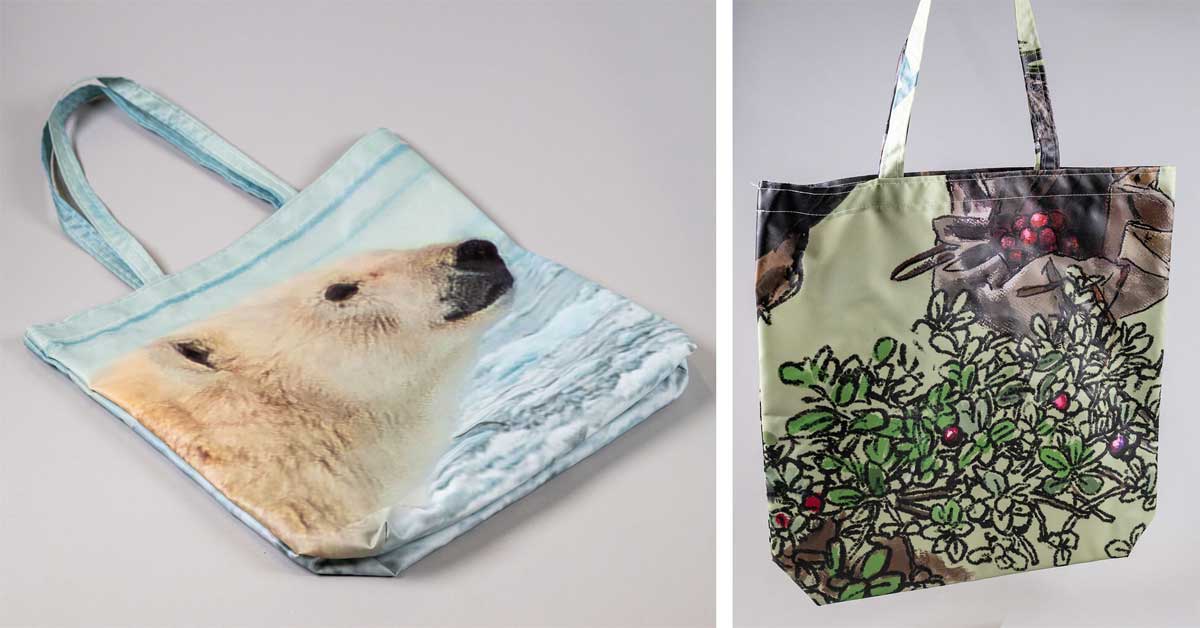
Quick Read
• Old exhibition banners from Vienna's Natural History Museum have been transformed into bags by young adults working at the Wörkerei.
From museum advertising to everyday accessoriesA polar bear, botanical illustrations or fragments of an exhibition campaign: the latest bags at the Natural History Museum Vienna (NHM) have a history that goes beyond their appearance. They were made from discarded advertising tarpaulins and exhibition banners that once promoted museum exhibitions. Instead of becoming waste after their original purpose had ended, the materials have been given a second life in the workshops of the Wörkerei. The collection offers four different formats: a shopper for €33, a belt bag for €39, a shoulder bag for €93 and a backpack for €136. The reused materials determine the colours, patterns and visual details of each piece. No two bags are identical. Their individual appearance is therefore not the result of a deliberately repeated print design, but of the material available for reuse.For anyone interested in flora, fauna, natural history or science, the bags could make an unusual Christmas present. They also offer something for people who have yet to develop an interest in these subjects. The practical drawback is that the NHM collection is currently available exclusively from the museum shop in Vienna, rather than through an online shop. What the name Wörkerei says about the projectThe name Wörkerei is an interesting combination of the English word work and the German idea of a Werkstatt or Werkerei: a place where things are made. It reflects the project's central idea of learning through practical work. Wörkerei is a joint employment initiative of Caritas Vienna and Volkshilfe Vienna. It focuses particularly on unemployed young adults aged 18 to 24 who are registered with AMS Vienna and meet the eligibility requirements for the programme.The project offers a gradual introduction to working life. Participants initially complete a preparation phase of up to eight weeks, working 16 hours per week while continuing to receive their relevant benefits from AMS and the City of Vienna. Depending on their suitability, they can subsequently receive a fixed-term employment contract lasting up to twelve months, with working hours that can gradually increase to 30 per week. Learning more than how to make a bagSewing, cutting and assembling recycled materials are only part of the experience. Participants also learn to organise their work, follow production processes, work with materials, meet deadlines and contribute to a shared project. The NHM collaboration adds another dimension: young people take part in transforming an existing resource into a new product. This involves practical decisions about material use, production and the value of things that might otherwise be discarded.Alongside workshop activities, Wörkerei provides professional guidance, coaching, social counselling, workshops and assistance with finding employment or further training. Other activities include transport, cleaning, repairs and placements with external businesses. Public support and income from salesThe Wörkerei is not financed solely through the sale of its products. It receives public support through AMS Vienna and the City of Vienna, while revenues generated through product sales and services also contribute to the project's economic basis. This combination is important. The programme is designed not simply to produce goods for sale, but to create opportunities for people who need support entering the labour market. At the same time, the products demonstrate how social employment initiatives can participate in economic activity. Caritas Vienna has long been active in labour-market support, offering programmes that combine employment, personal guidance and practical assistance. In the case of the Wörkerei, the production process itself becomes part of that support.The NHM bags illustrate how two different ideas of sustainability can meet: using materials for longer rather than discarding them, and investing in the skills and professional prospects of young people. Their value is therefore not only in what they carry, but also in the work and opportunities behind them. |