
|
1 August 2026 From Royal Parasols to UV Umbrellas: Why Portable Shade Is Making a Comeback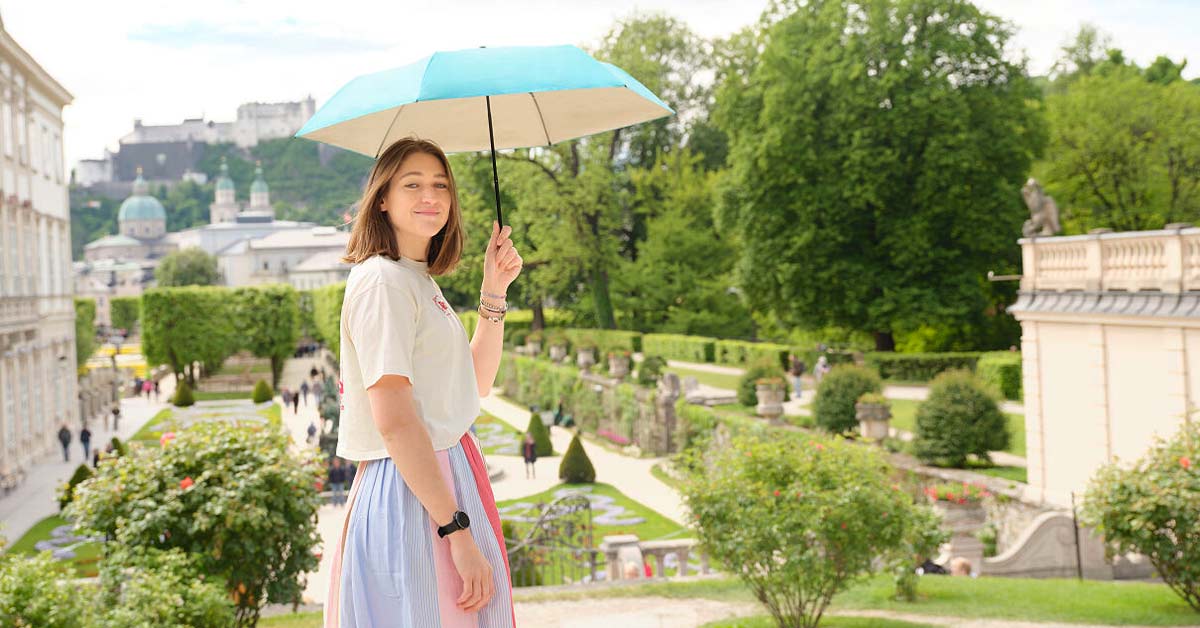
Quick Read
The image of a woman strolling through a baroque garden with a parasol may evoke paintings from the 18th century rather than contemporary city life. Yet portable sun umbrellas are quietly returning to European streets. This time, however, the motivation has changed fundamentally. Where aristocrats once carried parasols to preserve fashionable pale complexions, today's users are responding to rising temperatures, stronger UV exposure and growing awareness of skin cancer prevention.
• Portable sun umbrellas are returning to European streets, but for very different reasons than centuries ago. A centuries-old accessory with a new purposePortable parasols have a surprisingly long European history. They were already known in classical antiquity and later became an unmistakable accessory of European courts during the Baroque and Rococo periods. Figures such as Marie Antoinette popularised elaborately decorated parasols, not primarily as protection against ultraviolet radiation—which was then unknown—but as symbols of elegance and social status. Fair skin demonstrated that one did not work outdoors.The current revival has little to do with fashion ideals. Instead, it reflects practical concerns. Heatwaves have become more frequent across Europe, while public awareness of UV-related health risks has increased steadily. Since around 2022 and particularly during the exceptionally hot summers of recent years, portable sun umbrellas have become increasingly visible in European cities, following a practice that has long been common in countries such as Japan, South Korea and China. Heatwaves move umbrellas into the spotlightThe trend recently attracted international attention. In June, The Guardian described the "sunbrella" as one of this summer's defining accessories, noting that umbrellas designed for shade are becoming year-round essentials rather than rain-only items. The newspaper pointed to appearances during Paris and Milan Fashion Week and highlighted Formula One driver Lewis Hamilton carrying a red umbrella ahead of the Austrian Grand Prix as temperatures soared.Market analysts also expect continued growth in UV-protective umbrellas, reflecting broader consumer interest in products that combine weather protection with everyday health benefits. While ordinary umbrellas provide shade, models specifically designed with certified UV-protective coatings are intended to reduce the amount of harmful ultraviolet radiation reaching the user. From niche product to everyday companionThis development is reflected by Austrian umbrella manufacturer doppler, which recently reported growing demand for umbrellas offering certified UV protection. Managing Director Martin Würflingsdobler said the company has recorded annual sales doubling in this category and has expanded its UV product range in response to customer demand for practical umbrellas that combine rain and sun protection.The company's zeroSun collection illustrates how the category has evolved. The series includes the ultra-light zeroSun pocket umbrella weighing only 134 grams, the larger zeroSun magic automatic version at 184 grams, and the cane umbrella zeroSun XXL, designed to provide shade for two people. Available in several colours—including Aqua Blue Ivory, Ocean Blue, Orchid Lilac, Coral Pink and neutral shades—the umbrellas are tested by the Hohenstein Institute according to the Australian UV protection standard and are rated to block 99% of UV radiation (UPF 50+). Their compact dimensions allow them to fit easily into handbags or backpacks, making them suitable for daily commuting as well as travel. One element of a broader sun protection strategyHealth experts emphasise that umbrellas should complement, not replace, other protective measures. One reason is practical: sunscreen is frequently forgotten, applied too sparingly or not renewed often enough during the day. Physical shade therefore offers an additional layer of protection that does not depend on correct application.The German Dermatological Society (DDG) has incorporated UV umbrellas into its prevention advice for patients. Its guidance recommends lightweight, densely woven clothing, hats, sunglasses, avoiding intense midday sun and, where appropriate, umbrellas equipped with certified UV-protective coatings (UPF). Sunscreen remains an important measure for exposed skin, but dermatologists increasingly present mechanical shade as part of a comprehensive approach to reducing cumulative UV exposure. The renewed popularity of the parasol therefore says less about nostalgia than about adaptation. An accessory once associated with royal gardens and aristocratic etiquette is finding a new role in everyday life—responding not to changing fashion ideals, but to changing environmental conditions and a growing understanding of preventive health. Image: A woman stands with a light blue doppler zeroSun UV umbrella overlooking Salzburg's historic Baroque Mirabell Gardens, illustrating the renewed popularity of portable sun umbrellas for protection against heat and ultraviolet radiation in urban environments. © doppler |