
|
23 September 2026 SAGAN Vienna: From Wiener Geflecht to Reins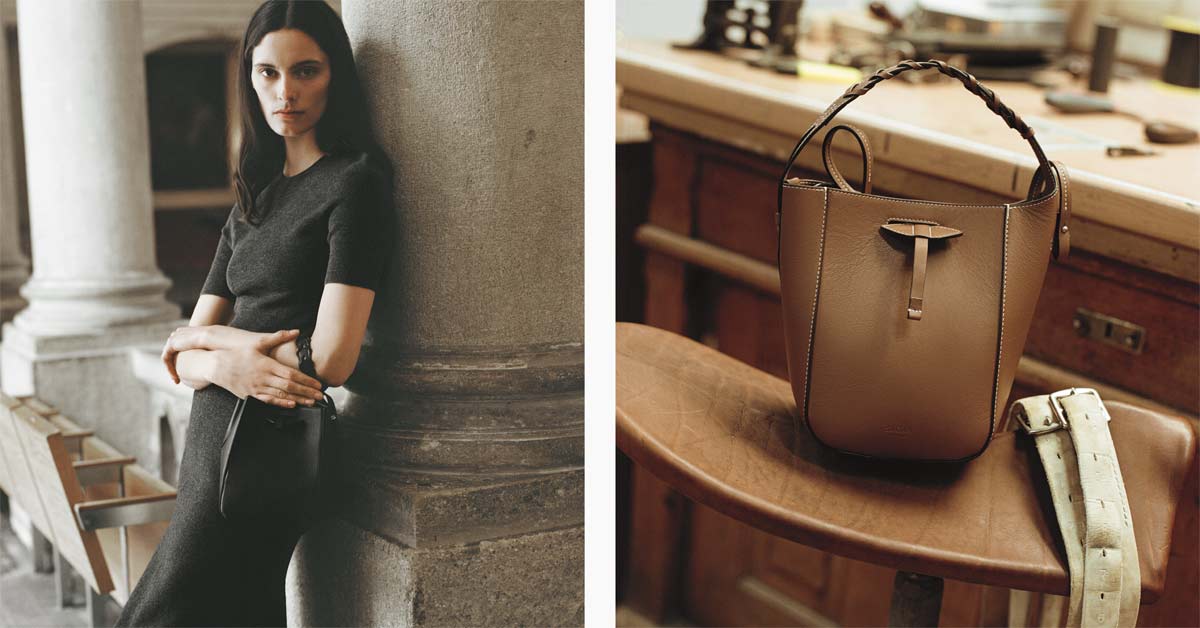
Quick Read
• SAGAN Vienna has been named a 2026 Outstanding Artist Award winner in the category of experimental fashion design. When Vienna becomes a design languageThere are certain images that immediately place a story in Vienna: the Lipizzaner horses of the Spanish Riding School, the curved wooden frames and woven seats of the traditional Viennese coffeehouse chair, the stone and stucco of the city's historic interiors. If one handbag label can be discussed in the same visual vocabulary, SAGAN Vienna is a plausible candidate — not because it reproduces Vienna literally, but because it repeatedly takes familiar elements of the city's material culture and changes their scale, function or context.Today, 23 September 2026, the Austrian Ministry for Housing, Arts, Culture, Media and Sport announced the recipients of this year's Outstanding Artist Awards. The awards recognise artists of younger and middle generations whose bodies of work have particular artistic significance beyond the regional level. Independent specialist juries select the recipients; the awards are currently endowed with €10,000 each. They cover a range of disciplines, from visual art, literature and music to film, photography, design, architecture, comics and experimental fashion. For 2026, SAGAN Vienna receives the award in experimental fashion design. SAGAN Vienna and the jury's reasoningFounded in Vienna in 2016 by designer Tanja Bradaric from Croatia and Taro Ohmae from Japan, SAGAN Vienna describes its practice around craftsmanship, quality materials and a dialogue between different cultural backgrounds. The founders were born and raised in Croatia and Japan respectively and studied design in Vienna.The ministry's jury statement is notably specific. It highlights the label's combination of local craftsmanship and an international perspective, its interest in regional materials and particular craft techniques, and its engagement with Austrian design and craft history. The jury also points to SAGAN Vienna's collaborations with traditional manufacturers and its international presence, including showrooms and retail partners in Paris, Tokyo and Shanghai. That description helps explain why the award is classified as experimental fashion design, although handbags are the most visible part of the label's output. The experimentation lies less in spectacular seasonal fashion than in the way historical references, materials, construction and function are continually recombined. From the coffeehouse chair to the handbagOne of the clearest examples is Wiener Geflecht — the characteristic cane weave familiar from classic Viennese café and Thonet furniture. SAGAN Vienna traces its Classic Collection to Marcel Breuer's S 32 chair, designed in 1929/30 at the Bauhaus and produced by Thonet. Its tubular-steel frame combined with the octagonal cane weave became an important reference for the bags. The idea has since been translated into leather. Current Pazar models reinterpret the Wiener Geflecht pattern as handwoven vegetable-tanned cow leather, turning a material and visual language associated with furniture into the surface of a contemporary bag.This is characteristic of SAGAN Vienna's approach: the reference remains recognisable, but its original function changes. A piece of Viennese furniture history becomes something carried through the city. Vienna as souvenir — and as collaborationThe connection becomes more explicit in the label's online "Souvenirs from Vienna" category. Among the objects are special-edition keychains created with Werkstätte Carl Auböck. The Vienna workshop dates back to a metalworking business founded by Karl Heinrich Auböck and has remained at Bernardgasse in Vienna's 7th district since 1912. The second-generation Carl Auböck brought Bauhaus influences into the family workshop, helping move its work from traditional Viennese bronzes towards modern design. Today the workshop is run by the fourth generation. The SAGAN collaboration adapts a classic Auböck keychain by combining brass with polished semi-precious stones. The current series includes pieces named Earth, Sedna, Mars, Saturn and Pink Planet; documented examples include sodalite and red jasper. The unfinished brass is intended to develop a patina through use, while the natural stones vary slightly in colour and pattern.The result is a small-scale version of the same idea found in the bags: Vienna's design history is not treated as a fixed museum object, but as material for another generation of everyday things. From Wiener Geflecht to the Spanish Riding SchoolThe newest chapter is the Reins Collection, developed in collaboration with Vienna's Spanish Riding School. Here the starting point is not furniture but equestrian craftsmanship: bridles, reins, leatherwork, grooming and the repeated gestures of preparation before a performance. The central design detail is a hand-braided leather handle, derived from the visual rhythm and tactile quality of traditional horse reins. On the Reins Tote the braid also functions as the fastening; on the smaller Reins Bucket Bag and Reins Bag S it becomes a handle or adjustable shoulder strap. The collection currently includes these smaller bags as well as tote versions in canvas and leather.The accompanying photographs by Jan Grombirik place the bags alongside bridles, metal fittings, braided horsehair and the architecture of the riding arena. There is also a distinctly contemporary ending to this Vienna story: SAGAN Vienna and the Spanish Riding School are currently inviting Instagram users to enter a giveaway for a white Reins Bucket Bag, photographed at the Spanish Riding School. The giveaway closes on 27 September 2026, with the winner selected at random. Images: SAGAN Vienna's Reins Bucket bag and model wearing the design, photographed in a historic Vienna interior. © Jan Grombirik / SAGAN Vienna |