
6 May 2026 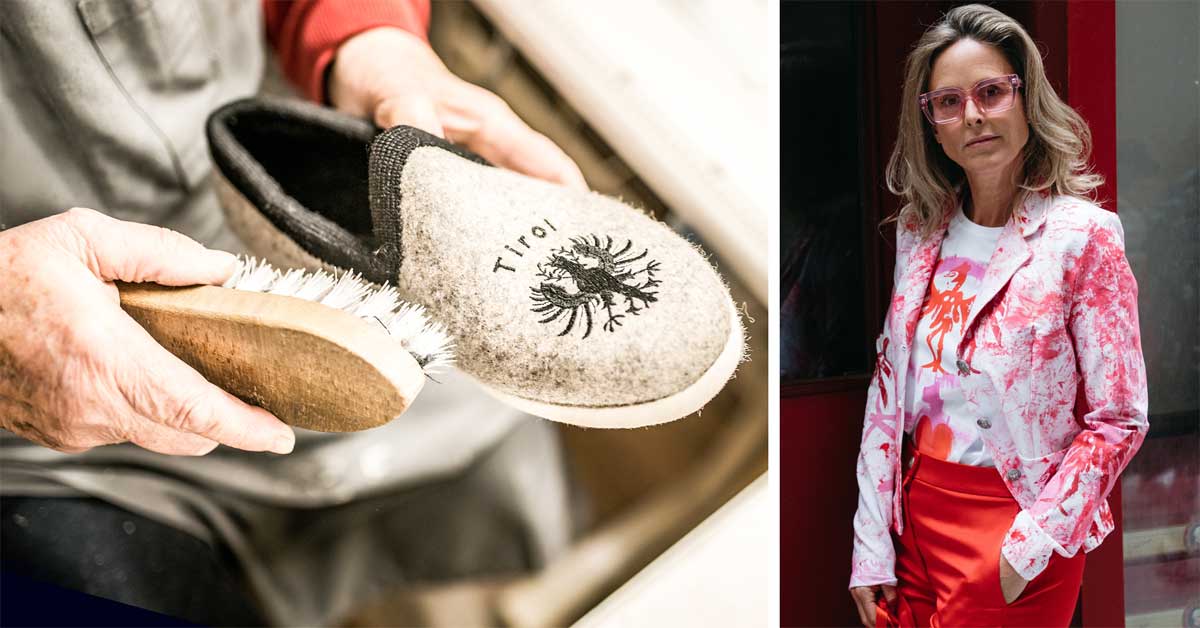 From Medieval Seal to Modern IdentityThe red eagle of Tyrol is one of the oldest and most recognizable regional symbols in Europe. It first appeared around the year 1205 on seals used by the Counts of Tyrol, a noble family documented since the 11th century. Under Count Albert IV, the eagle became a fixed element of the coat of arms, representing political authority and territorial identity.Over the centuries, the design evolved. A golden wing clasp was added in the 14th century, and in 1567 Archduke Ferdinand II introduced the green laurel wreath, honoring the loyalty and achievements of the Tyrolean people. While South Tyrol often uses a simplified version today, the Austrian state of Tyrol continues to display the eagle with its distinctive heraldic elements. The color red, historically associated with power and visibility, ensured recognition even on medieval battlefields. Today, the eagle remains highly visible—no longer in war, but in culture, tourism, and design. A Symbol of Region and Quality in Contemporary DesignIn the present day, the Tyrolean eagle functions as more than a historical emblem. It signals regional origin, craftsmanship, and quality. Especially in the Alpine lifestyle sector, the symbol is used to communicate authenticity—products shaped by local materials, skills, and traditions.The Zillertal, a valley in Tyrol, offers a clear example. The region has built a reputation not only as a tourist destination but also as a place where heritage and innovation interact. Local businesses often draw on cultural memory while responding to contemporary social and economic conditions. In this context, the eagle becomes a visual shorthand for continuity and trust. Reinterpreting the Eagle: The Tiroler AdlerinA striking reinterpretation of the symbol can be found in the fashion label "Tiroler Adlerin," founded in 2007 by designer Margret Schiestl in Ramsau in the Zillertal. The "Adlerin" (female eagle) began as a spontaneous sketch and quickly developed into a registered word and image mark.Unlike the official coat of arms, this figure is expressive and unconventional. With a sharp tongue, clenched fists, visible breasts, and high heels, the Adlerin represents a fusion of fashion, art, and social commentary. It challenges traditional imagery while remaining rooted in regional identity. The label operates from a local atelier and shop ("G'schäftl"), where Schiestl and her daughter Melanie create and sell handcrafted garments. Each piece is individually produced and often finished with hand screen printing. The approach reflects a slow fashion philosophy, emphasizing individuality and meaning over mass production. Tradition in Practice: The Zillertaler DogglnA more traditional use of the eagle appears in the products of the Schuhmanufaktur Hartl in Stumm in the Zillertal. The family-run business, active for decades, produces "Zillertaler Doggln," handcrafted felt slippers made from loden and pure wool.These slippers are part of everyday Alpine culture and are known for durability and comfort. Some models feature the original Tyrolean eagle, complete with laurel wreath and wing clasp. According to the company, this use has been officially approved, which is required when reproducing the exact heraldic design. By contrast, stylized or artistic interpretations—like the Tiroler Adlerin—can be created without such permission, provided they are clearly distinct. Hartl's Doggln gained international attention when custom-made versions appeared at the Paris Fashion Week in 2019, in a show by Andreas Kronthaler for Vivienne Westwood. The versions shown were specially produced, but the classic models with the embroidered eagle remain among the company's most popular items, both in-store and online. Between History and AttitudeThe Tyrolean eagle demonstrates how design elements can travel across centuries without losing relevance. It carries historical weight, but also communicates present-day values. In regions like Tyrol, it stands for craftsmanship, resilience, and a strong sense of identity.Whether used in its official form or reimagined in contemporary design, the red eagle continues to connect past and present. It is not only a reminder of history, but also a statement—one that suggests quality, origin, and a certain independence often associated with the region. Images, from left: Handcrafted Zillertal Doggln slippers by Hartl, made from wool, are brushed and finished by hand; some models feature the traditional Tyrolean eagle embroidery. © Lydia Sürth. Right: A woman stands in front of a red doorway, wearing a red and white outfit by the label Tiroler Adlerin that features a stylized eagle motif on her shirt. Her look combines tailored elements with expressive print design, reflecting a contemporary interpretation of traditional symbolism. She wears pink-tinted glasses and carries a red bag, reinforcing the strong color theme. © nicola ella photography |