
|
26 August 2026 Vienna Design Week 2026: Passionswege look back — and move forward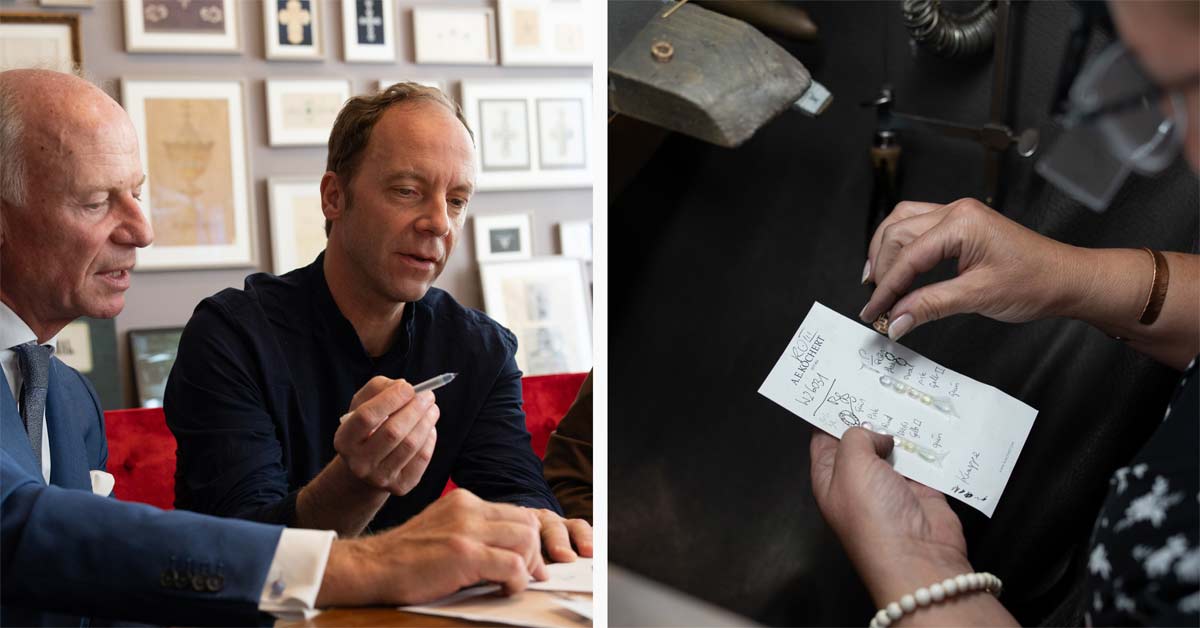
Quick Read
• 25 September–4 October 2026: the Passionswege return as the oldest format of Vienna Design Week, with three new collaborations and a 20-year retrospective. A format built around encountersPassionswege is less a conventional exhibition than a meeting between two kinds of expertise. Since the format began, Vienna Design Week has paired designers with Viennese craftspeople and manufacturers, giving them time and space to experiment outside the usual commercial client relationship. The resulting objects or installations are then presented where the work actually happened: in workshops, studios and traditional businesses. The format is the oldest of the festival and has become one of its internationally recognisable features.The 2026 edition takes place from 25 September to 4 October, marking the 20th festival edition of Vienna Design Week. The main headquarters are at Hietzinger Kai 101, in a high-rise building designed by Harry Glück, directly beside the Unter-St.-Veit underground station. Five long-term partners look backThe anniversary programme adds a retrospective dimension. Wiener Silber Manufactur, Rudolf Scheer & Söhne, Lobmeyr, Wäscheflott and the Mühlbauer Hutmanufaktur will open their archives and premises to revisit selected collaborations from two decades of Passionswege.Their histories also illustrate the range of craftsmanship involved. The Wiener Silber Manufactur traces its roots to 1882 and has worked with designers including Zaha Hadid, Erwin Wurm and Tomas Alonso; its Passionswege archive includes, for example, a 2015 project with French designer Alexandre Echasseriau. Rudolf Scheer & Söhne, the Viennese bespoke shoemaker established in 1816, appeared in the format as early as 2009 with designer Walter Thaler and again in 2014 with Studio deFORM. Lobmeyr, founded in Vienna in 1823 and now in its sixth generation, has been described by the festival as a partner from its very first days. Its Passionswege history includes collaborations with designers such as Martino Gamper, BCXSY and Ville Kokkonen. Wäscheflott, a Viennese made-to-measure shirt and linen manufacturer operating since 1948, joined the Passionswege at least as early as 2010, followed by another project with chmara.rosinke in 2013. Mühlbauer brings a particularly fashion-related perspective. Founded in 1903, the family business is today led by fourth-generation Klaus Mühlbauer, who reshaped the traditional hatmaker into an internationally active headwear label. The company has been part of Passionswege projects including Polka in 2007 and Tomáš Král in 2011. Mühlbauer also received Austria's prestigious Outstanding Artist Award for Experimental Fashion Design in 2022. For visitors interested in hats, caps and other headwear, Mühlbauer is therefore an especially fashion-focused stop — with many designs conceived beyond a strict men's/women's division. Jewellery without a gender rulebookOne of the new projects is »Uniform«, created by Luxembourgish industrial designer Christophe de la Fontaine together with the Viennese jeweller A.E.Köchert Juweliere. De la Fontaine is known for industrial and product design and has received awards including the Red Dot, Good Design and iF Gold awards; he has also been professor of industrial design in Stuttgart since 2018.Köchert has an even longer history: the business dates to 1814, when Emanuel Pioté established a goldsmith's workshop in Vienna. Five years later, Jakob Heinrich Köchert joined the business and laid the foundation for the jewellery dynasty. Today Wolfgang, Christoph and Florian Köchert continue the company. »Uniform« questions the traditional gender coding of jewellery. Rather than designing primarily for women and treating men's jewellery as a smaller category, the project looks for a form language that can be worn by women, men and people beyond conventional gender categories. Its visual references come not from historic jewellery motifs but from industrial mechanisms — gears, drive shafts, belts and other technical forms. The resulting work will be shown at A.E.Köchert Juweliere, Neuer Markt 15, 1010 Vienna. Flowers, ropes and the other new encountersAt Blumen Weisz, Maxingstraße 70 in Hietzing, Dutch-based Italian design studio Groovido — Gianmaria Della Ratta and Giorgio Gasco — works with the florist and cemetery gardening business on »Illusion of Forever«. The starting point is the traditional Viennese funeral wreath and, more specifically, the usually hidden reusable metal structure underneath the flowers. The project contrasts the temporary life of flowers with a construction designed to remain. Blumen Weisz is located directly opposite Hietzing Cemetery, making the setting part of the project's subject.At the festival headquarters, meanwhile, artist Anna Paul works with Floridsdorf-based rope-maker Haanl on »Seile«. Instead of using rope for tying, securing or lifting, the collaboration turns its structure, weight and tactile qualities into oversized sculptural objects. The short, large-scale rope forms are intended to interact with the human body — as objects for sitting, staying and playing in the lobby of Hietzinger Kai 101. Haanl has been making ropes since 1889 and has been based in Floridsdorf since 1912. The Passionswege therefore arrive at their 20th anniversary with a useful combination: a look back at relationships built over many years and three new experiments that deliberately avoid simply repeating what came before. The 25 September–4 October dates are worth putting in the calendar now — especially for anyone who wants to experience design not only as an object, but in the places and processes behind it. |