
25 March 2026 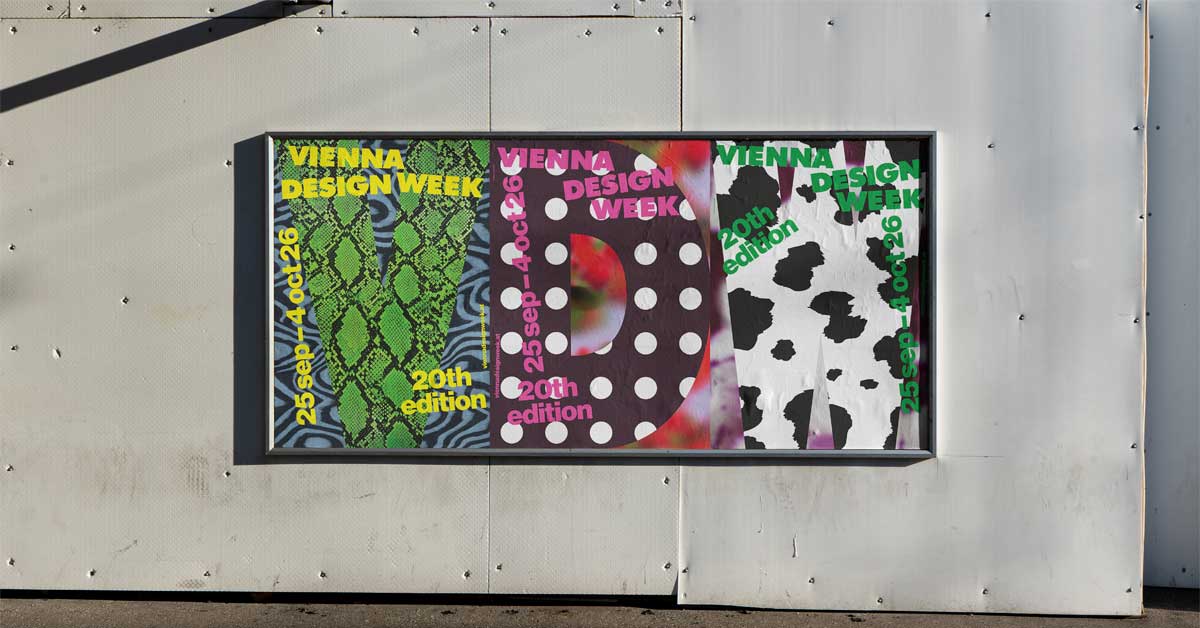 Overview of the 2026 ProgrammeAt a press conference held at the Designforum in the MuseumsQuartier Wien, attended by Fashion.at, Gabriel Roland, director of Vienna Design Week, presented the first overview of the 2026 edition. The festival will run from 25 September to 4 October 2026. While the exact number of locations across Vienna has not yet been confirmed, the programme is expected to unfold at multiple sites throughout the city, as in previous years.Roland outlined the established formats of the festival, including Passionswege, Stadtarbeit (Urban Work), Debut, Re:Form, Urban Food & Design, Talks, Tours and Workshops, and the format GAST. For 2026, Luxembourg is invited as the guest country. Its ambassador, Jean Graff, outlined the specific conditions of Luxembourg's design scene, where no dedicated university programme exists. Many designers therefore study abroad—including in Vienna—before returning and contributing to the local creative field. The GAST presentation will reflect this context by bringing together different approaches and perspectives, offering insight into the country's design culture while connecting it to international discourse and current questions in design. Several programme details remain undisclosed. The location of the festival headquarters and the thematic zones will be announced at a later stage. Biofabrique Vienna: Open Calls and Material InnovationA central focus of this year's presentation is the collaboration with Biofabrique Vienna, which enters its third year as a key partner of the festival. Biofabrique Vienna is an initiative by the Vienna Business Agency that develops new materials from regional resources and urban waste streams, promoting a bioregional and circular design approach.Biofabrique's two open calls were announced within the Urban Food & Design format. The first, titled "Colours at Work," invites designers to create and produce functional workwear for the festival teams. The garments must use natural dyes from the "Wiener Farben" project, developed from food waste and invasive plants. The designs are expected to reflect circular design principles and use natural fibres such as cotton. A minimum of 20 pieces must be produced, with a budget of up to €7,500. The workwear will serve as both a practical uniform and a visible test case for the dyes in everyday use. The dyeing process will again be carried out by Färberei Fritsch, which previously developed the Wiener Farben together with Biofabrique Vienna. The second open call, "Applied Colours," focuses on experimental applications of these dyes beyond textiles. Designers are invited to explore how the colours can be used on different materials, from surfaces to objects, culminating in an installation at the Biofabrique site. In conversation with Elisabeth Noever-Ginthör, Head of Creativity & Business at the Vienna Business Agency, Fashion.at learned that experiments are already underway, including the development of tiles using Wiener Farben. Biofabrique Vienna will reopen its site at the Nordwestbahnhof area already in April 2026, where visitors can explore a hybrid space combining laboratory, showroom, and exhibition. The site presents ongoing research into sustainable materials and invites public engagement with emerging design processes. Visual Identity: Patterns by Studio SireneAnother key element presented was the visual identity of the 2026 edition, developed by Studio Sirene. The collective—Clara Berlinski, Jana Frantal, and Maria Kanzler—works at the intersection of branding and strategy.Under the motto "Patterns," the visual concept reflects the 20th anniversary of the festival. A system of 20 patterns will gradually unfold over time, forming an evolving graphic language. The patterns draw on familiar visual references, such as the edelweiss motif from the former Austrian one-schilling coin, animal patterns like cow spots, and dot structures inspired by seating elements designed by Roland Rainer for the Wiener Stadthalle in the early 1950s. These patterns are developed as repeatable units, similar to textile designs, allowing them to expand across large surfaces in the urban space. First posters have already been presented. From an editorial perspective, they stand out for their clarity and visual impact and are likely to positively shape the cityscape in the months leading up to the festival. The colorful posters have a good chance of becoming collector's items. Even before its official opening, Vienna Design Week 2026 is already in motion. Through open calls, material experiments (Biofabrique opens its lab, showroom, exhibition space at the Nordwestbahnhof area on 9 April), and the gradual development of its visual identity, the festival offers early insight into its processes—highlighting not only final results, but also the making of design. Image: Poster campaign for Vienna Design Week 2026 featuring pattern-based visuals by Studio Sirene. Photo: © Studio Sirene / Vienna Design Week |