
10 June 2026 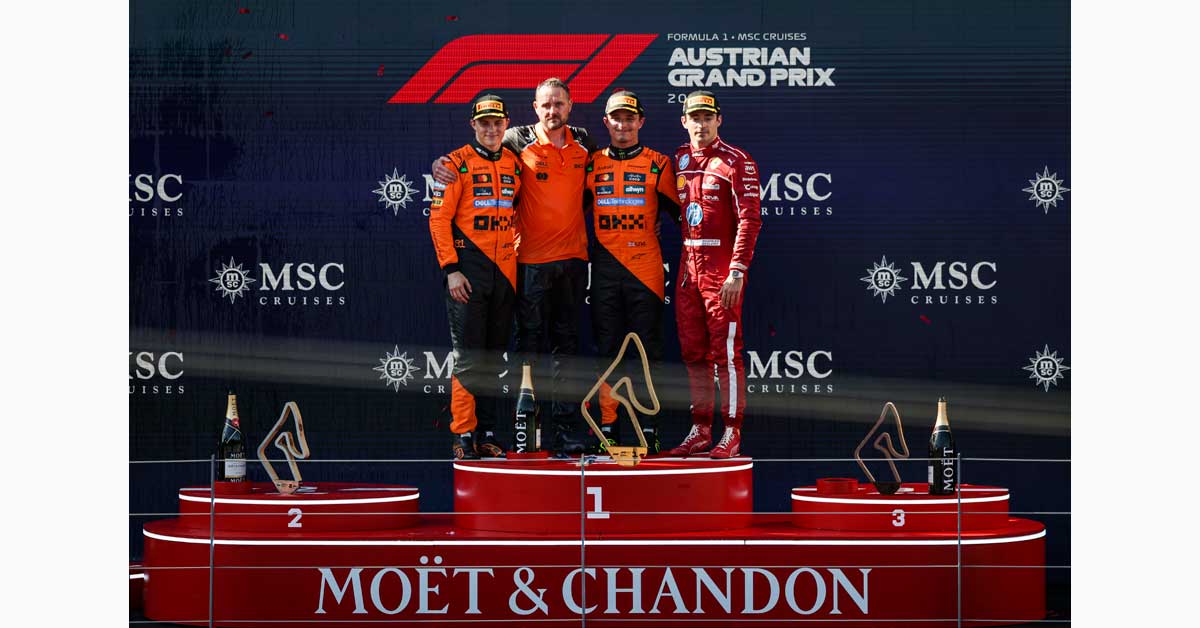
Quick Read
• The champagne-spraying ritual in Formula 1 did not begin in F1 itself but at the 1967 Le Mans race.
From a Cork Accident to a Global RitualWhen Formula 1 arrives at the Red Bull Ring in Spielberg later this month, fans will once again expect one moment as much as the race itself: the podium celebration. The Journey of a Three-Litre BottleThe bottles used on Formula 1 podiums are not standard retail formats. Winners traditionally celebrate with a Jeroboam containing three litres of champagne.The ritual follows a carefully structured sequence. After the chequered flag, the top drivers enter parc fermé, where the winning driver signs the ceremonial bottle. The drivers then move to the cooldown room before stepping onto the podium in front of thousands of spectators. Although the celebration appears spontaneous, it has become one of the sport's most choreographed moments. Television audiences around the world instantly recognise the spray of champagne as the visual confirmation that another Grand Prix has entered Formula 1 history. Austria has produced several memorable podium celebrations, from the victories of Austrian legend Niki Lauda in the 1970s to more recent celebrations by Max Verstappen at the Red Bull Ring. Austria Awaits the Next ChapterThe Formula 1 Lenovo Austrian Grand Prix takes place from 26 to 28 June at the Red Bull Ring. The event follows the Monaco Grand Prix, which this year carried the title sponsorship of Louis Vuitton.Formula 1 currently consists of 11 teams and 22 drivers. After six rounds, the championship is led by Kimi Antonelli of Mercedes with 156 points, ahead of Lewis Hamilton of Ferrari and Mercedes driver George Russell. The previous three Austrian Grands Prix in Spielberg were won by Verstappen (2023), Russell (2024) and Lando Norris (2025). The latter led a McLaren one-two finish ahead of Oscar Piastri. Why Fashion Houses Are Entering Formula 1The growing presence of luxury brands around Formula 1 reflects the sport's transformation into a global lifestyle platform.Through the LVMH partnership, brands including Louis Vuitton and Moët & Chandon have become visible across race weekends. Louis Vuitton creates custom trophy trunks for Grand Prix winners, while Moët & Chandon supplies the iconic podium bottles. Beyond LVMH, fashion labels have increasingly aligned themselves with teams and drivers. HUGO works with Visa Cash App RB, Castore supplies Oracle Red Bull Racing apparel, and Pepe Jeans has collaborated with Red Bull Racing on lifestyle collections. Meanwhile, Gucci has announced its entry into Formula 1 through a future partnership with Alpine. For fashion companies, Formula 1 offers something few cultural platforms can match: a global audience, highly recognisable personalities, and visual moments that travel instantly across television, social media and news coverage. The champagne spray on the podium remains one of those moments — a tradition that began with a single bottle and has become one of the sport's most enduring symbols. Image: Charles Leclerc of Scuderia Ferrari and McLaren drivers Oscar Piastri and Lando Norris stand on the podium after the Formula 1 MSC Cruises Austrian Grand Prix 2025 at the Red Bull Ring in Spielberg, Austria. Large-format Moët & Chandon bottles and the winners' trophies are displayed following the race. © Xavi Bonilla / DPPI (provided by Moët & Chandon) |