
3 January 2026 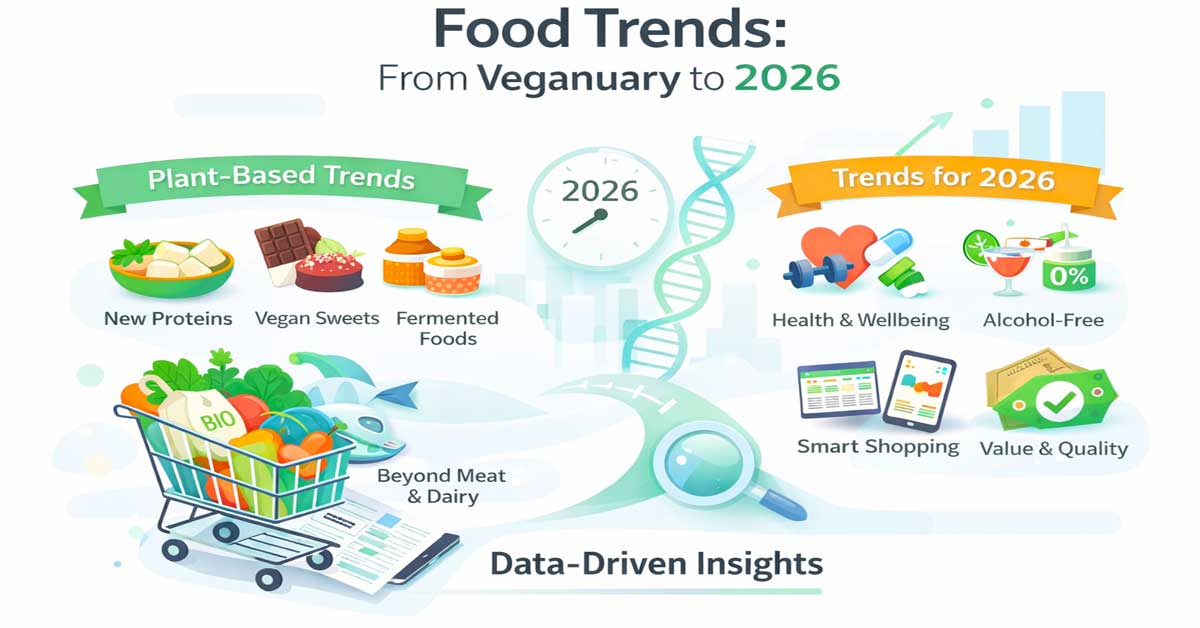 January as a mirror of changing food habitsThe beginning of the year has become a key moment for observing food trends. January is no longer just about resolutions, but about testing new habits, rethinking routines and making more conscious choices. Veganuary traditionally plays a visible role in this phase, yet it is increasingly embedded in broader, year-round developments.As Austria's fully online supermarket, Gurkerl has a unique view into these changes. Through a high level of automation in logistics and order processing, large volumes of anonymised order data can be analysed in real time. This makes it possible to identify not only short-term impulses such as Veganuary, but also longer-term trends that point towards 2026. Veganuary today: less challenge, more routineIn recent years, Veganuary has shifted from a one-off experiment to a fixed reference point in the food calendar. For many consumers, it is no longer about strict avoidance, but about reducing animal products, trying alternatives and gaining inspiration for everyday meals. In Austria, this development reflects a growing openness towards plant-based options across all age groups.Based on its latest order data, Gurkerl identified five key Veganuary-related trends that show how plant-based eating is becoming part of normal weekly shopping rather than a temporary exception: • New protein sources Plant-based proteins are becoming more diverse, with growing interest in fermentation-based and alternative protein solutions. • Short ingredient lists and transparency Consumers increasingly prefer products with simple, understandable ingredients and clear product information. • Plant-based sweets with a premium focus Vegan sweets are no longer seen as substitutes, but as indulgent products with higher quality expectations. • Fermentation and gut health Products linked to digestion and wellbeing, such as fermented foods, are becoming more mainstream. • Plant-based beyond classic substitutes Demand is expanding into new categories, including alternatives inspired by seafood, functional drinks and botanical flavours. Source: APA OTS Food trends shaping 2026Beyond Veganuary, Gurkerl's order data also highlights broader food and drink trends expected to shape consumer behaviour throughout 2026. These trends suggest that eating is increasingly linked to lifestyle, health awareness and informed decision-making.The main 2026 trends identified from order data include: • Health, longevity and wellbeing Food is increasingly seen as part of self-care, with rising demand for products linked to gut health, protein intake and functional benefits. • Alcohol-free as a conscious choice Alcohol-free drinks are gaining relevance as a lifestyle decision rather than a compromise, with growing interest across different age groups. • Technology supporting everyday food choices Digital tools and automated systems make shopping, planning and discovery easier, shaping how people interact with food. • Social inspiration with selective adoption While social media continues to influence curiosity, consumers appear more selective about which trends they adopt long-term. • Value awareness without quality loss Shoppers compare more carefully, looking for products that balance price, quality and health considerations. Source: APA OTS What the data reveals about today's consumerTaken together, these trends suggest a consumer who shops with intention. Gurkerl's data indicates that many customers read labels, compare products and make informed choices aligned with health, enjoyment and everyday practicality. Trends derived from order data do not just show what is popular; they also reflect a mindset.Rather than following food trends blindly, consumers appear to curate their baskets carefully, combining curiosity with knowledge. The growing importance of plant-based options, functional foods and alcohol-free drinks points to a more conscious and informed approach to eating. In this sense, data-driven insights offer not only a view on trends, but also a snapshot of a consumer who increasingly sees food as part of a balanced and thoughtful lifestyle. Image: A minimalist infographic in light, soft colours visualises current food trends at the start of the year. On the left, plant-based developments such as new protein sources, fermented foods and vegan sweets are shown with simple icons. On the right, broader trends for 2026 appear, including health and wellbeing, alcohol-free options, smart shopping and value-conscious choices. Abstract elements like charts and a timeline connect both sections, symbolising data-driven insights into changing consumer behaviour. Illustration: © Fashion.at / Generated with ChatGPT (OpenAI) |