
|
1 October 2026 Six Tables, Six Views of Viennese Dining Culture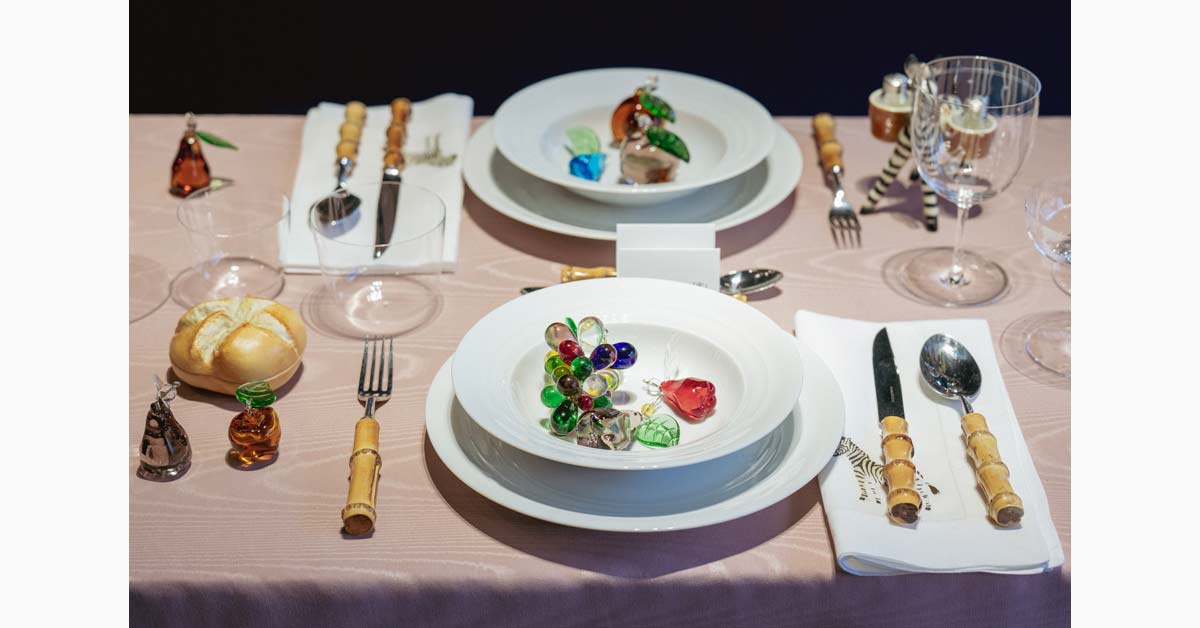
Quick Read
• Lobmeyr presents six different approaches to the Viennese dining table. Six professional views of one tableAs part of Vienna Design Week 2026, Lobmeyr has turned its historic flagship store on Kärntner Straße into a small study of contemporary table culture. From 25 September to 3 October, six installations look at the dining table from very different professional perspectives. The presentation is part of the festival's programme and the Vienna Tourist Board's "Vienna Bites" focus.The six participants are architect Hermann Czech, chef Lukas Mraz, designer Laura Karasinski, London-based event planner Angela Mugnai, curator Alice Stori Liechtenstein of Schloss Hollenegg for Design, and Alexandra Winkler, owner of Hotel Sacher. Their common starting point is the table as more than a piece of furniture. Lobmeyr frames it between eating as a necessity, dining as ritual and the table as a place for conversation and encounter. The resulting arrangements differ, however, in what they consider important: architecture and order, conviviality, historical references, informality, atmosphere or the performance of hospitality. From Viennese architecture to the informal tableHermann Czech approaches the subject from architecture. His long engagement with Viennese cafés, bars and restaurants includes the Kleine Café, Wunder-Bar and Salzamt, making the dining environment itself part of his architectural work. His position is less about a decorative table image than about the relationship between people and the spaces in which everyday social life takes place.Chef Lukas Mraz starts from another practical problem: the host is often the person least able to participate in the meal. His contribution therefore centres on the tabletop grill, which allows food preparation, eating and conversation to happen at the same table. The emphasis shifts from formal service towards shared activity. Mraz & Sohn is listed among Vienna's Michelin-starred restaurants in the 2026 Michelin Guide. Angela Mugnai's arrangement takes Vienna's design history as its point of departure. KPM Kurland porcelain, Josef Hoffmann's Wiener Werkstätte cutlery, Hoffmann-designed Lobmeyr glasses and Stefan Rath's Alpha glasses bring together different periods of Viennese design. A Jugendstil-inspired cake by Sophia Stolz extends the historical references into the food itself. Alice Stori Liechtenstein approaches the table through informality. Her installation uses straw, historically associated with protecting glass during transport, as a rough counterpoint to Lobmeyr's finely worked glass. Glasses are arranged without prescribing which one belongs to which drink. In this setting, table etiquette becomes secondary to choice, curiosity and the objects themselves. Liechtenstein is the curator and director of Schloss Hollenegg for Design, an Austrian platform for contemporary design that she founded in 2015. Laura Karasinski: a table between past and futureKarasinski's "Tutti Frutti" is perhaps the most visibly playful of the six approaches. She describes it as a table for two, combining pieces from her private collection with Lobmeyr objects and historical references. Vintage bamboo cutlery is placed alongside the Zebra cruet set, Rothschild glasses and ENA plates, while Josef Hoffmann's Mokka service introduces another layer of Viennese design history.The glass fruit scattered across the plates changes the character of the setting. Apples, pears and small pumpkins, together with coloured glass objects, turn the table into something closer to a still life than a conventional place setting. The arrangement does not attempt to reconstruct a historical Viennese table. Instead, it places objects from different periods next to one another and allows their contrasts to remain visible. That approach is consistent with Karasinski's broader design practice, which moves between interiors, branding and curated experiences. Her studio describes her work as combining history and identity with a sense of whimsy, while the Vienna Tourist Board has characterised her practice through its focus on spaces and the details within them. At Lobmeyr, this translates into a table where the historical object is not treated as untouchable heritage. The old and the new coexist with deliberately ordinary and playful elements. The effect is neither a strict historical reconstruction nor a purely contemporary design exercise. Instead, Karasinski uses the table as a small stage on which Viennese design history can be handled, mixed and enjoyed. Hospitality as a cultural practiceAlexandra Winkler takes yet another route, connecting the table to the identity of Hotel Sacher. Her arrangement combines Sacher elements with contemporary design: newly developed Sacher wine glasses made with Lobmeyr, a Viennese Baroque glass, Herend tableware, a historic fruit stand and BCXSY table lamps. Winkler is one of the owners of the Sacher group and managing director of its holding company.Seen together, the six arrangements show that "Viennese table culture" is not one fixed style. The table can be architectural background, cooking station, historical catalogue, informal landscape, playful composition or expression of hospitality. What connects the six positions is the idea that eating is also a social and cultural act. What distinguishes them is where each participant places the emphasis: space, participation, history, informality, play or hospitality. Rather than offering a single definition of Viennese dining culture, Lobmeyr's presentation brings together different perspectives on how the table creates a setting for people to meet, interact and exchange. |