
6 April 2026 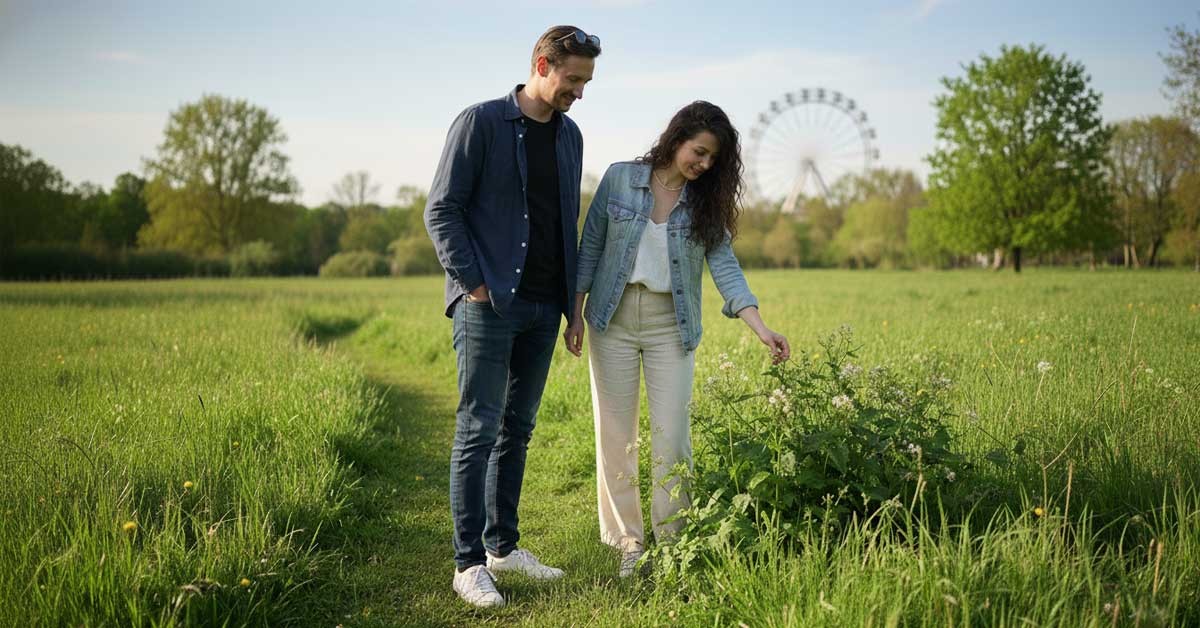 Urban Nature Under Pressure In Vienna, wild herbs are still part of the urban landscape, found in places like the Prater, the Danube Island, or smaller unmanaged green areas. Yet their presence is increasingly fragile. Construction projects, soil sealing, and rising temperatures reduce the spaces where these plants can grow naturally. At the same time, public awareness is changing. More people are paying attention to biodiversity, planting herbs and wildflowers on balconies, in courtyards, or community gardens—often with consideration for insects such as wild bees. Even if spontaneous wild growth declines in some areas, a more conscious cultivation of plants is emerging. A Digital Guide Arrives via SMSAgainst this backdrop, Greenpeace Austria recently introduced a digital herb guide, announced through its newsletter. The guide is delivered via SMS, a practical format designed for mobile use outdoors. However, it is currently available only to Austrian phone numbers, reflecting its strong focus on local flora.Fashion.at requested the guide via greenpeace.at and received it directly on a mobile device. The concept is simple: a compact, accessible companion for identifying and using wild herbs in everyday life. Like a Botanical Picture BookThe guide presents 15 common wild herbs found in Austria, including plants such as nettle, dandelion, yarrow, and elder. The design stands out: it resembles a modern botanical picture book, with detailed, naturalistic illustrations that make identification easier and visually engaging.Beyond identification, the guide offers practical knowledge. Each plant is accompanied by information on: • key characteristics and harvesting times • possible confusion with toxic species • culinary and cosmetic uses Examples include recipes for pesto, soups, herbal salt, and teas, as well as instructions for making hair rinses or body oils from plant extracts . The emphasis is on everyday usability rather than scientific depth, making the guide accessible for beginners. Knowledge and LimitsThe guide also stresses caution: only collect plants that can be clearly identified, avoid protected areas, and harvest responsibly. These principles reflect a broader ecological message—wild herbs are not just resources, but part of a fragile system that includes pollinators such as wild bees.While the SMS format ensures portability, it also limits access. Users without an Austrian phone number are currently excluded, which reduces the potential reach of an otherwise well-designed educational tool. From Guide to Personal ExplorationDespite this limitation, the idea behind the guide can be extended. With the help of AI tools, readers can create their own localized herb guides tailored to their environment.Suggested prompt for readers: "Create a detailed herb guide as a downloadable PDF for my location [insert city/country]. Include a maximum of 15–20 common wild herbs. For each plant, provide identification features, harvesting times, possible toxic lookalikes, and practical uses such as food recipes, teas, or natural cosmetics. Add tips for sustainable harvesting and benefits for local biodiversity. Use clear structure and simple language." Such tools can encourage people to observe their surroundings more carefully and to recognize the ecological and cultural value of the plants growing nearby. Image: A couple stands in a lush green field on a sunny day. The woman gestures towards a flowering bush. A Ferris wheel is visible in the background. Photo: © Fashion.at, generated with Google AI Studio. |