
|
1 September 2026 Vienna Coffee Festival 2026: Tradition Meets the New Coffee Culture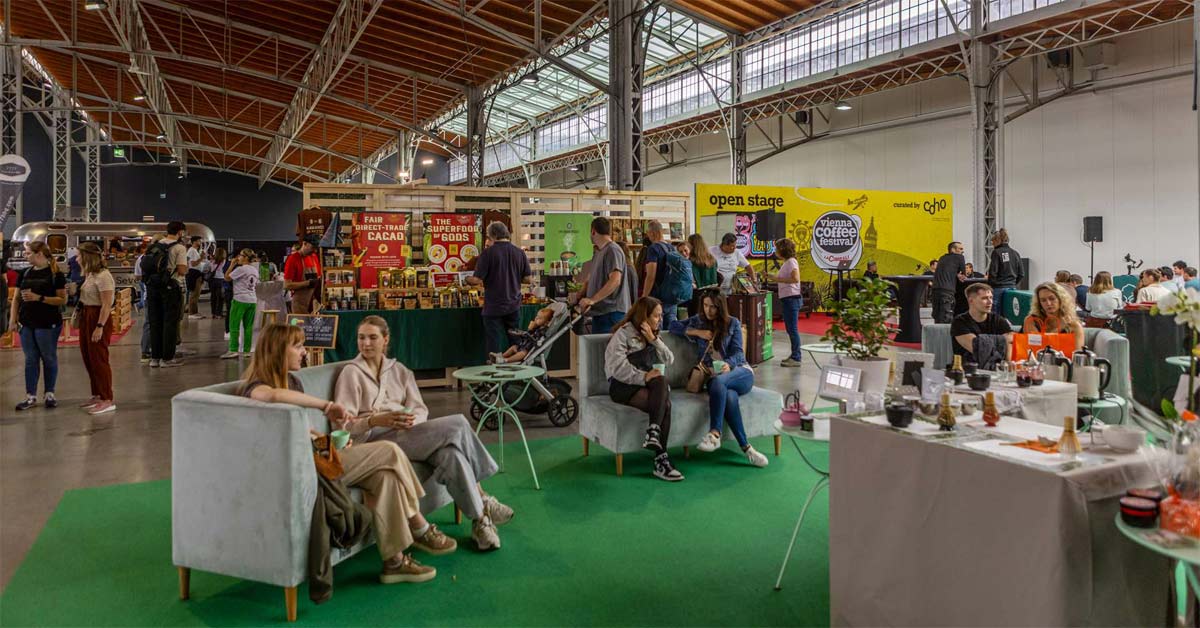
Quick Read
• 11–13 September 2026, Marx Halle Vienna A bigger festival for a country of coffee drinkersThe Vienna Coffee Festival returns to the Marx Halle from 11 to 13 September for its 12th edition. The event began in 2015 and has grown from a relatively small gathering into a major meeting point for Austria's coffee scene. In 2026, the organisers are introducing an expanded festival setup, including a larger Roasters' Village, a new Workshop Area and a broader programme. The change of organiser is also part of the story: Lefor Oberbauer is taking over the festival in 2026, continuing the work associated with founder Günther Gapp.How Much Coffee Does Austria Drink?Two recent surveys point in a similar direction, although they use different methods and focus on different aspects of coffee consumption. Tchibo's representative Kaffee-Fakten 2026 survey, conducted with NIQ/GfK, found that 70.7% of people in Austria drink coffee daily or several times a day. Average consumption is 2.6 cups per day, with Generation X drinking the most at 3.06 cups. Coffee is still primarily consumed at home: 86% say they drink it there, while the younger generation is much more mobile. Among Gen Z coffee drinkers, 94.2% buy coffee to go.The latest Marketagent/Kanzi Kaffee Kaffeereport 2026 arrives at a comparable picture: seven in ten Austrians drink coffee every day, 48% drink it several times a day, and 62% say enjoyment is their main reason for drinking it. The study also found that 47% would choose a bean-to-cup automatic coffee machine for home use. From UNESCO coffeehouses to specialty cafésVienna's coffee story, however, does not begin with the espresso machine. The festival blog, with the Vienna Chamber of Commerce as a partner, looks back at the history of the coffeehouse and its status as UNESCO Intangible Cultural Heritage since 2011. The interesting part is what comes next: heritage is presented not as something frozen in time, but as a tradition that continues to change. That change is visible in the festival's own exhibitor field. Alongside established companies and international coffee businesses, Vienna's newer specialty scene is represented by roasters that also operate cafés in the city. CoffeePirates has its roastery and café in Spitalgasse; GOTA Coffee Experts runs its specialty café on Mariahilfer Straße; and Jonas Reindl Coffee Roasters operates several cafés, including a café and roastery on Westbahnstraße. The festival therefore offers an interesting picture of Vienna's coffee culture: the traditional coffeehouse remains part of the city's identity, while specialty coffee introduces different roasting styles, origins and ideas about how coffee is served.Water, rankings and the taste of coffeeThe festival's online magazine and blog extend this discussion beyond the exhibition stands. One example is water: coffee consists of more than 98% water, and its mineral composition and pH influence extraction and therefore taste. BRITA Professional turns the subject into a practical workshop, with sessions on Saturday, 12 September at 15:00 and Sunday, 13 September at 11:30.Another new element is Best 100 Coffee Shops Austria, presented in the special edition of the magazine Signature. The international ranking evaluates coffee shops according to factors including coffee quality, barista expertise, atmosphere, service, innovation and sustainability. Coffeehouses, coffee shops, coffee bars and roasteries with a hospitality operation can participate, regardless of size. The ranking combines 70% expert jury assessment with 30% public voting; businesses can enter themselves or be nominated. The special Signature festival edition is available as a PDF, and the Best 100 feature is also published online by the magazine. The Austrian selection will be presented on the Open Stage on Saturday, 12 September at 14:30. Another festival feature is 'Cupping', which offers the most direct way of understanding coffee: tasting it. A cupping is a structured comparison of coffees from different origins, processing methods or roast profiles. At the 2026 festival, the programme ranges from Ugandan Excelsa and Ethiopian coffees to Panama, Colombia, Peru and Vietnam. Visitors smell, slurp and compare rather than simply choosing between "strong" and "mild". In that sense, the Vienna Coffee Festival's most revealing theme may be the meeting of old and new: the coffeehouse as living cultural heritage, and a young specialty scene constantly testing what the next cup might taste like. Image: Visitors meet, taste and talk among coffee stands at the Vienna Coffee Festival in Marx Halle. The 2025 scene reflects the event’s mix of specialty coffee, gastronomy and coffee culture. © VCF2025 / Christina Karagiannis |