
29 December 2025 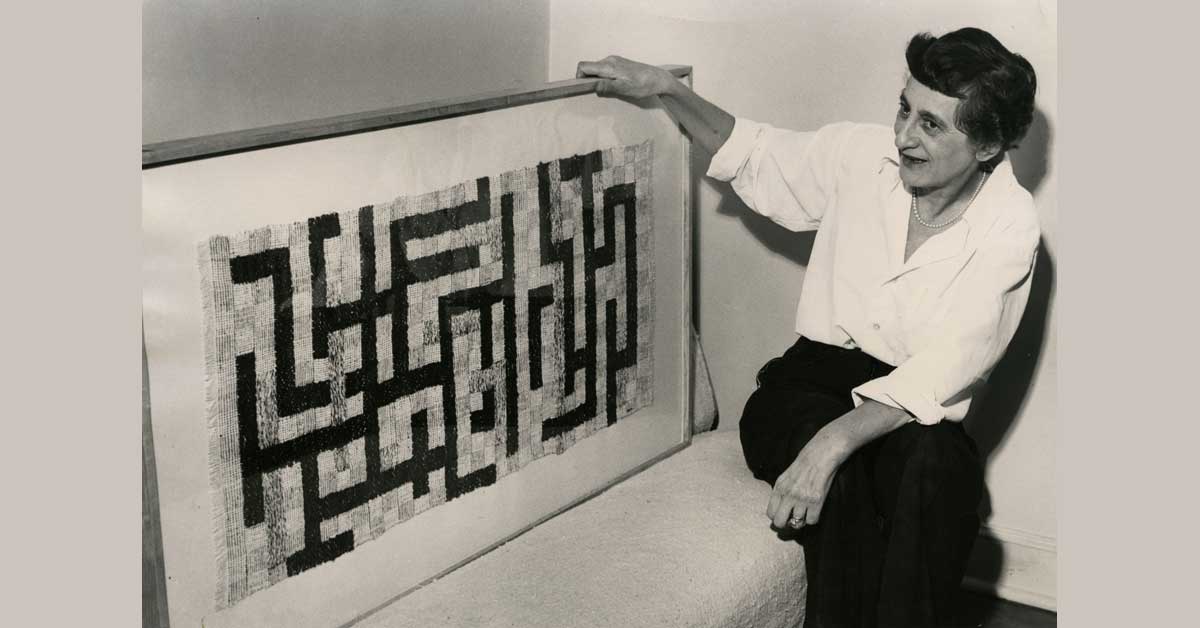 Textiles as a Living Museum LanguageTextiles and fashion have long been part of museum history, not as static objects but as a living cultural language. This was clearly demonstrated in 2025 by Jonathan Anderson with the Loewe x Albers Collection FW 2025. The collection was widely seen as one of the highlights of the fashion year and was developed as a conscious homage to craft. Anderson showed that textile traditions are not nostalgic references but active sources for contemporary design thinking. His work underlined an important point: the history of design and craftsmanship—especially textile craft—is not closed or finished. It continues to evolve.This idea forms a strong conceptual bridge to an exhibition that will open in Vienna next year and looks at textiles not as decoration, but as thinking in material form. Anni Albers in Vienna: Time, Place, ContextFrom 30 April to 16 August 2026, the Lower Belvedere in Vienna will present Anni Albers: Constructing Textiles. It will be the first major solo exhibition in Austria dedicated to the German-American artist and designer. The show offers a broad overview of Albers's work, from her early years at the Bauhaus to her later career in the United States.Rather than following a strict chronological path, the exhibition focuses on ideas: structure, material, function, and visual rhythm. Visitors will encounter wall hangings, material studies, architectural textiles, and written reflections that reveal how Albers understood weaving as a form of modern construction. Her work moves between art and design, handcraft and industry, theory and practice. Thinking Through MaterialAnni Albers saw weaving as more than a technique. For her, it was a way of thinking. She explored how threads behave, how surfaces react to light, and how textiles shape spaces. Many of her works balance clarity and complexity, using simple geometric forms to express deeper structural ideas.The exhibition also reflects her role as a teacher and thinker. Albers believed that understanding materials leads to responsible design. This approach feels especially relevant today, at a time when questions of resources, durability, and value are central to cultural debate. Beyond Fast Fashion: Why Quality LastsHigh-quality fashion and design stand in clear contrast to fast fashion, which is produced for quick consumption and disposal. Good design has no expiry date. It is made to last, to age, and sometimes to change its context—from everyday use to museum object.The story of Anni Albers reminds us that well-made textiles are not waste. They are carriers of knowledge, skill, and cultural memory. What is created with care may one day leave the wardrobe and enter the museum—not because it is old, but because it still matters. Image: Anni Albers with her weaving Two, New Haven, Connecticut,1952 Photograph by the New Haven Evening Register. Image courtesy of the Josef and Anni Albers Foundation. |