
|
29 October 2026 Her Story: What 250 Years of Collecting Reveal About Women in Art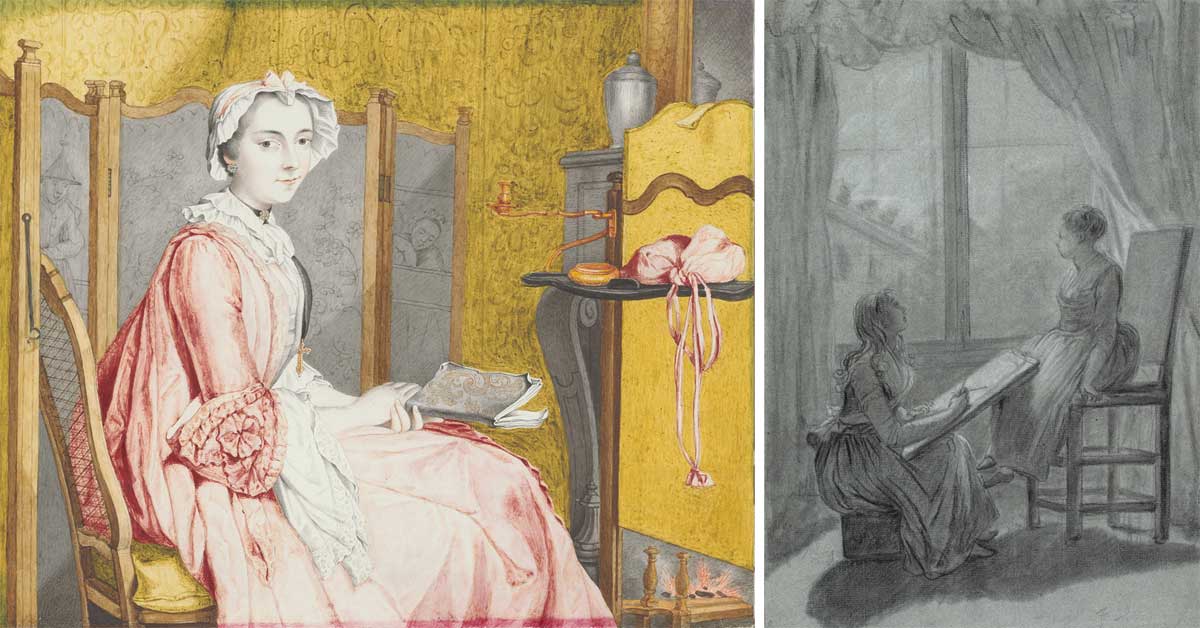
Quick Read
The ALBERTINA's new exhibition Her Story opens on 30 October 2026, examining a question that reaches far beyond the museum's walls: why are women artists still so poorly represented in many historical collections? Research has so far identified around 41,000 works by women among the museum's more than 1.2 million objects. The exhibition presents 250 works by women artists across five centuries, making both their achievements and the gaps in the historical record visible.
• Her Story. Women Artists of the ALBERTINA presents 250 works by women artists across five centuries. A collection built around drawings and printsFounded in 1776 by Duke Albert of Saxe-Teschen and Archduchess Marie Christine of Habsburg-Lorraine, the ALBERTINA began as a collection of graphic art. Its foundations were laid by prints and drawings, assembled to provide a broad overview of European art. The collection later grew to include photography, architecture, painting, sculpture and contemporary art. Its historic strength remains drawing and printmaking, a focus that also shapes Her Story. The museum's collection history traces this development from its aristocratic origins to its present international scope.The exhibition's earliest documented women artists were born in the 16th century. Nine are represented in the research findings: three engravers, two etchers, two publishers and two painters whose works served as models for prints. Among the artists whose compositions circulated in this way was Sofonisba Anguissola, one of the best-known painters of the Renaissance. The story continues through artists working in different media and circumstances: from the naturalist Maria Sibylla Merian and portraitists Rosalba Carriera, Élisabeth Vigée Le Brun and Angelika Kauffmann to Impressionists Berthe Morisot and Mary Cassatt, modernists Käthe Kollwitz and Sonia Delaunay, and contemporary figures including Maria Lassnig and VALIE EXPORT. Élisabeth Vigée Le Brun: fame and a life in ViennaOne revealing example is Élisabeth Vigée Le Brun (1755–1842), whose detailed portraits of European aristocrats remain important to fashion and costume history. Her portrait of Marie Antoinette, painted in 1778 for the queen's mother, Maria Theresa, is held by Vienna's Kunsthistorisches Museum. The KHM's collection record documents the painting's original purpose and its journey to Vienna.At the ALBERTINA, Her Story presents three works by Vigée Le Brun: the drawing A Young Woman Drawing the Portrait of a Girl, made around 1790–1795 in black and white chalk on blue paper, and two pastels. The artist lived in Vienna from 1792 to 1795 after fleeing the French Revolution, working for members of the aristocracy. The drawing probably depicts her daughter, Julie, sitting while her mother draws her portrait. The contrast is telling. An artist celebrated across Europe is represented here by works on paper, and not her famous paintings on canvas. This is not evidence that she lacked artistic standing. Rather, it reflects the different collecting histories of institutions and the particular emphasis the ALBERTINA placed on works on paper. It also illustrates how a museum's holdings can shape the version of an artist's career that later generations encounter. From private pastime to professional careerInstead of following a strictly chronological route, the exhibition's ten chapters explore the social conditions that shaped women's artistic work. Their titles include Visible, Dilettantish?!, Enterprising, Academic, Committed, Scientific, Self-Directed, Displaced, Recognised? and Feminist. Together, they ask who received training, who could earn a living from art, whose work was exhibited and whose achievements survived in public memory.The chapter Dilettantish?! examines a distinction that was once central to women's artistic lives. The word dilettante derives from the Italian dilettare, meaning to delight or take pleasure in something. It originally described someone who practised an art for enjoyment rather than as a profession; its later, dismissive meaning suggested a lack of expertise. For aristocratic women such as Marie Christine, drawing and painting could form part of their education without the expectation of earning an income. She received private instruction and developed her own artistic skills. After marrying Albert, she helped establish the collection in 1776, whose prints also provided models for her work. Women who worked privately and did not sell their art often remained largely outside the written history of professional artists. For women seeking careers, the obstacles were different. Access to academies, life drawing and professional guilds was restricted for centuries. Some artists worked in family workshops; others built businesses, signed prints, ran publishing houses or developed international networks. Later chapters address scientific illustration, the emergence of professional opportunities in the 19th century, persecution and exile under National Socialism, and feminist challenges to the art establishment from the 1960s onwards. What the numbers reveal — and what remains unknownThe current research identifies around 41,000 works by women, less than 3.5 per cent of the ALBERTINA's total holdings. More than 1,400 women artists have so far been identified by name. These figures are provisional: many historical prints have not yet been fully digitised and catalogued, while incomplete documentation and uncertain attributions complicate the work.The distribution by birth century offers another perspective. Around 60 per cent of the identified women artists were born in the 20th century, nearly 25 per cent in the 19th century and around 15 per cent between the 16th and 18th centuries. The figures point to a growing presence of women in the more recent part of the collection, although they do not establish the proportion of works by women in each period. The museum has made a more deliberate effort in recent decades to acquire works by women, particularly in contemporary art. New acquisitions from 2025 and 2026 include works by Jenny Saville, Conny Maier, Angela Glajcar, Eva Beresin, Isabella Ducrot, Ewa Juszkiewicz, Leiko Ikemura and Rosa Barba. Yet the research also exposes the limits of what can currently be known. As the exhibition catalogue (available in separate German or English editions) notes, many women artists from earlier periods remain poorly documented; for some, even basic life dates are unknown. Fashion.at had the opportunity to consult the richly illustrated catalogue, which brings together artists' biographies and collection research across five centuries. It is a useful resource for tracing careers that have received uneven attention. Her Story therefore offers more than a correction to a list of celebrated names. It shows how access to training, professional networks, markets, museums and historical documentation influenced which women could become recognised artists — and which remained invisible. The collection is not a complete record of artistic achievement, but a record of what successive generations chose and were able to preserve. The ongoing research may change that picture further. |