
15 May 2026 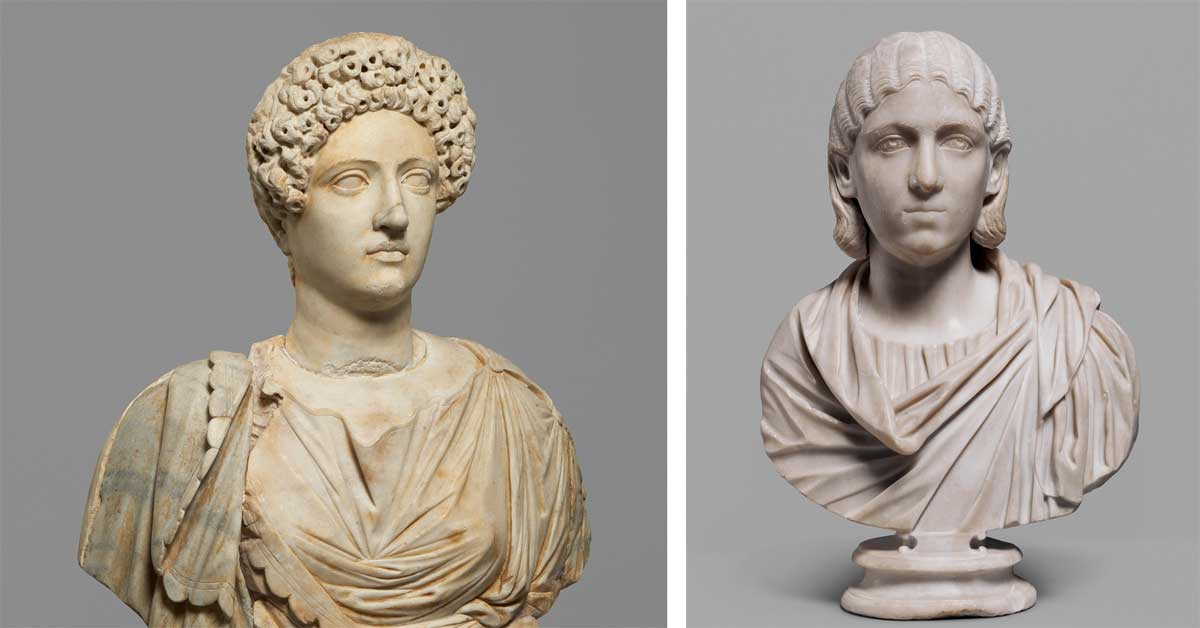
Quick Read
Ancient marble portraits are usually imagined as fixed objects from the distant past: permanent faces carved into stone. But current research presented in Vienna suggests something more dynamic. In many cases, Roman female portrait busts were repeatedly updated, repaired or even politically adapted — also through changes to hairstyles. What appears today as solid and timeless marble was once surprisingly flexible.
The special exhibition "My Story – Ancient Female Portraits and Their Afterlife" at the Collection of Greek and Roman Antiquities of the Kunsthistorisches Museum Vienna examines how female portrait sculptures changed across centuries, from antiquity to the Renaissance and beyond. The presentation is part of the museum's "Vitrine EXTRA" series and remains on view until 20 September 2026.
• A current exhibition at the Kunsthistorisches Museum Vienna shows how ancient Roman female portrait sculptures were repeatedly altered over centuries. Hair as Identity and StatusRoman hairstyles were not simply decorative details. In imperial portrait culture, hair functioned almost like a political language. Specific curls, braids or hairlines could identify a dynasty, social status or historical period. Researchers now argue that these hairstyles also became practical tools for transforming older sculptures into "new" portraits.One example in the exhibition is connected to Julia Titi, daughter of Emperor Titus and niece of Domitian. Her portrait shows the elaborate Flavian hairstyle associated with elite Roman women of the late first century CE. At first glance, the marble bust appears coherent and complete. Closer scientific examination, however, revealed later additions and interventions, including reconstructed elements and reworked sections added centuries after the sculpture's original creation. The exhibition presents these interventions almost like forensic evidence. Restoration studies and material analyses allow specialists to distinguish ancient surfaces from later additions. What earlier generations considered invisible repairs now becomes part of the object's biography. Another key object focuses on Julia Mamaea, the politically influential mother of Emperor Alexander Severus. Born into the Severan dynasty, she acted as one of her son's closest advisers before both were killed by rebel soldiers in 235 CE. The exhibition includes a portrait that was originally created during the Hadrianic period but later transformed into an image of Julia Mamaea during the Severan era. Researchers identified added marble sections at the back of the head that effectively reshaped the hairstyle — almost like ancient "hair extensions" carved into stone. The adaptation allowed an older sculpture to match newer imperial fashion and political imagery. The result demonstrates how portraits could be recycled, updated and ideologically repositioned instead of newly produced from scratch. Research Beyond the Museum ShowcaseThe Vienna project is part of the international initiative "ANTIQVAE FEMINAE", which studies female sculptural portraits from antiquity and their later reinterpretations. The project also addresses a long-standing imbalance in classical research, where male portraits traditionally received far more scholarly attention. According to the project description, the initiative combines archaeology, art history, conservation science and digital methods to investigate symbolism, production techniques, social roles and the later reception of female portraits. Researchers are also examining how these works were modified across time and what these alterations reveal about changing cultural values.Politics, Beauty and Digital ReconstructionThese themes continue in the upcoming international symposium "ANTIQVAE FEMINAE: Ancient Female Sculptural Portraits and their Afterlife – Studies, Analyses and Digital Reconstructions", taking place from 19 to 22 May 2026 at the Forum of the Weltmuseum Wien.The programme extends beyond traditional art historical analysis. Section B, titled "Iconography, Properties, Messages", examines aesthetics and political meaning in female portraiture: how visual appearance communicated power, virtue, dynasty or social expectations in the Roman world. Another notable area is Section D on Digital Humanities. Here, specialists discuss technologies such as 3D reconstruction, scanning and printing. These methods are increasingly important for identifying later interventions, reconstructing missing elements and visualising earlier versions of sculptures without physically altering the originals. The symposium may therefore attract not only archaeologists and art historians, but also audiences interested in conservation, technology, material science and digital heritage research. Registration is available through the symposium website. What emerges from both the exhibition and symposium is a different understanding of ancient sculpture. Rather than frozen remnants of the past, these portraits appear as evolving objects — repeatedly reshaped by politics, fashion, restoration and changing cultural expectations. Even marble, it turns out, could follow trends. Images: Roman female marble portraits shown in the Vienna exhibition 'My Story – Ancient Female Portraits and Their Afterlife', including Julia Titi and a reworked portrait associated with Julia Mamaea. © KHM-Museumsverband |