
|
20 June 2026 Art Without a Price Tag? Vienna Revives the Swap Experiment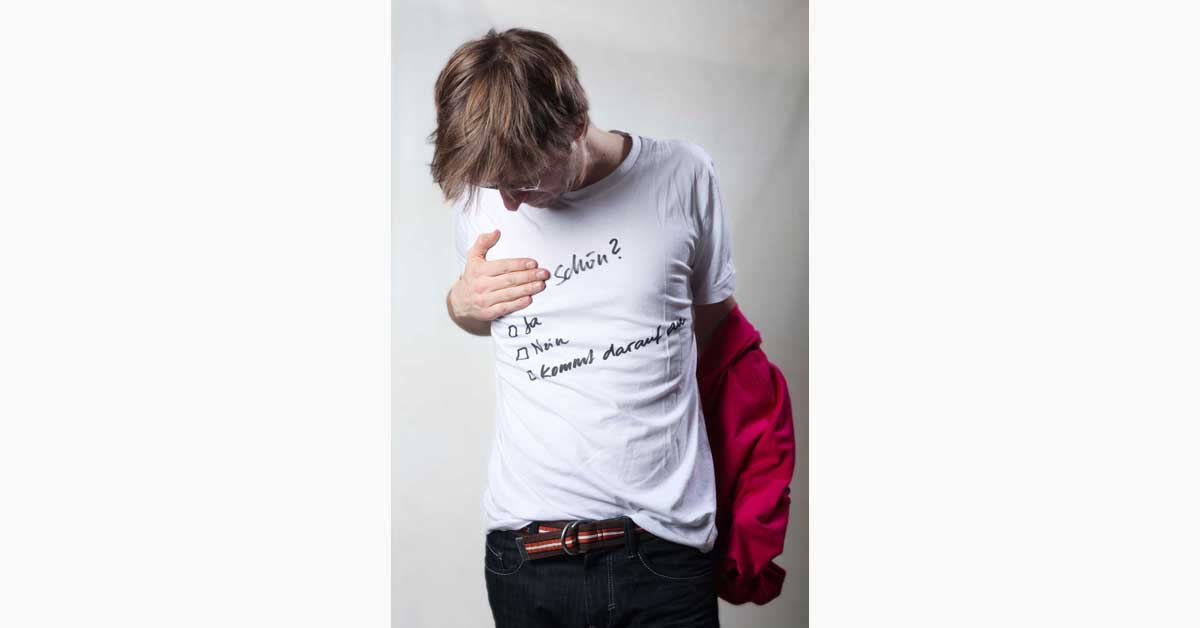
Quick Read
• A one-day art exchange returns to Vienna on 28 June 2026 at the mumok Café in the MuseumsQuartier.
When art changes hands without moneyAt first glance, the idea sounds almost playful: bring an artwork you no longer appreciate and exchange it for one that someone else has decided to part with. Yet the eSeL Kunst Tausch Börse, taking place on 28 June 2026 in the mumok Café, touches on larger debates about how art is valued and why people collect it.The event comes only days after the reopening programme at mumok – Museum moderner Kunst Stiftung Ludwig Wien, linking the exchange to a period of renewed public attention for contemporary art in Vienna. Fashion.at has already reported on the museum's current opening activities. Unlike an auction or gallery sale, no monetary assessment is required. Participants simply bring at least one work and may immediately select another on a first-come, first-served basis. A revival of an earlier experimentThe exchange is presented as the return of a format first initiated by eSeL nearly a decade ago. In 2017, the "Entsetzliche Kunst"-Tauschbörse was organised in connection with the exhibition Skandal Normal?! at the O.K. in Linz and later at the MASC Foundation in Vienna (video insights on Facebook). According to the organisers, the new edition revisits the same central questions while moving into the setting of the mumok Café.The revival also reflects eSeL's longstanding role in Vienna's cultural landscape. Founded by Lorenz Seidler, eSeL has documented exhibitions, artists and cultural events since 1998 through photography, reporting and one of Austria's earliest online platforms dedicated to contemporary art. Seidler's photographic work is also widely used by museums and cultural institutions for documentation and media communication, while since 2011 eSeL has operated the eSeL Rezeption in the MuseumsQuartier. Can taste define artistic value?Within creative communities, exchanging work is nothing unusual. Students from different disciplines have long traded projects among themselves: a fashion design garment for an illustration, a chair by an industrial design student for a painting by a fine arts colleague. In such situations, perceived effort and material costs often provide a rough basis for comparison.The eSeL exchange deliberately removes much of that certainty. There appears to be no formal jury deciding what qualifies as an artwork or assigning financial values. As a result, participants themselves negotiate significance through their willingness—or unwillingness—to exchange. This echoes broader discussions in contemporary art. Unlike design objects, whose success is often linked to function and consumer preference, artworks frequently resist objective measurement. Personal taste may influence individual choices, but it does not necessarily determine artistic importance or historical relevance. More conversation than competitionThe organisers describe the event as a humorous way of addressing questions of quality, value, sustainability and public expectations of art. Equally important is its social dimension: by bringing together people with different backgrounds and collecting habits, the exchange creates opportunities for conversation rather than commercial transactions.In practice, the true "currency" of the event may therefore be interaction itself. Whether participants arrive with a carefully crafted sculpture, an overlooked painting or a minimalist conceptual work, the success of the exchange ultimately depends less on expert appraisal than on another visitor deciding that the object deserves a second life. Image: Archive photograph of Lorenz Seidler wearing a white T-shirt with handwritten text, provided by eSeL for the promotion of the 2026 Kunst Tausch Börse. © eSeL.at, 2009 |