
10 January 2026 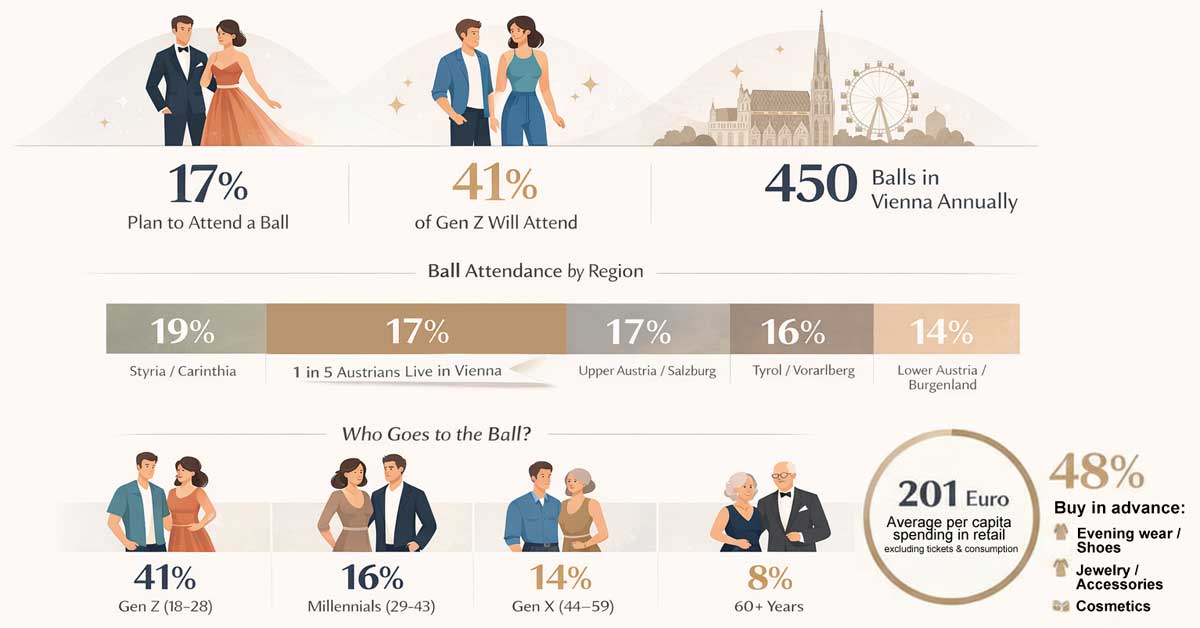 Ball Season in Full SwingWith ball season currently in full swing, Vienna once again turns into a stage for one of its most distinctive cultural traditions. A curated overview of the season is provided by the Viennese ball calendar on ganz-wien.at, which brings together the best-known events and offers an accessible guide through the dense schedule of evenings devoted to dance and ritual. Alongside internationally renowned highlights such as the Philharmonic Ball on January 22 and the Vienna Opera Ball on February 12, the calendar also features much-loved fixtures like the Zuckerbäckerball (January 15), the Jägerball (January 26) or the Vienna Ball of Sciences on Saturday, January 24. Each of these events follows its own codes and audiences, and together they reflect the many facets of Viennese ball culture – from glamour and tradition to academic and regional identities.For dedicated ballgoers, however, attending just one evening is often not enough. This enthusiasm is mirrored in a recent survey by the Austrian Retail Association (Handelsverband), which underlines how deeply the season resonates with audiences across generations. The Consumer Check: Who Goes to the Ball – and WhyThe Handelsverband is a voluntary, non-partisan and independent interest group representing the Austrian retail sector. Its latest "Consumer Check" was conducted as a representative nationwide online survey (CAWI) by Reppublika Research & Analytics, with 1,014 respondents questioned in late November and early December. The results were analysed by generational cohorts — including Generation Z, Millennials, Generation X and older groups — and by region, revealing clear differences in consumption patterns. Notably, 41 percent of Generation Z plan to attend at least one ball, compared with significantly lower participation rates among older age groups, indicating that the tradition remains particularly appealing to younger audiences.According to the survey, 17 percent of Austrians plan to attend at least one ball during the current season. Regional participation varies: the highest share of planned ball attendance is found in Styria and Carinthia (19 percent each). In Vienna — home to around one fifth of Austria's population and hosting some 450 balls each year, where the tradition is celebrated in its most glamorous form — 17 percent intend to visit at least one ball, matching figures in Upper Austria and Salzburg. Tyrol and Vorarlberg follow with 16 percent, while Lower Austria and Burgenland fall below the national average at 14 percent. Preferences also differ by type of event: masked and carnival balls rank first, followed by school and university balls, then farmers' balls and events organised by regional institutions or emergency services. Together, these results underline that ball culture is not limited to elite occasions but remains firmly embedded in social life across Austria. Fashion at the Heart of Ball SpendingThe strongest economic impact of the season is felt in the fashion-related trades. Almost every second ball guest plans targeted purchases in advance, with average spending of around 200 euros per person in retail – excluding tickets, travel or on-site consumption. Demand focuses on evening wear, traditional costume, shoes, jewellery and accessories, complemented by cosmetics and styling products.While the median expenditure is lower, the wide range of spending reflects different approaches to the season, from modest updates to significant investments in elaborate gowns or tailored suits. For bricks-and-mortar retailers in particular, personal advice, quality and short-term availability remain key advantages during this period. A Living Tradition with Global RecognitionViennese ball culture was recognised as UNESCO Intangible Cultural Heritage in 2010 for its role as a social practice combining music, dance, etiquette and communal participation; although later removed from the national list for political reasons, this has not diminished its cultural significance or contemporary relevance. The current data from the Handelsverband shows that this heritage is far from static. Instead, it remains a living tradition that continues to fascinate broad sections of society – especially younger generations, with Generation Z showing the highest participation rates.Seen through the lens of consumption and cultural practice alike, the ball season illustrates how tradition, social life and economic activity intersect, keeping one of Austria's most iconic customs vibrant and relevant today. Image: The infographic titled 'Austria’s Ball Season in Numbers' showing key statistics on ball attendance in Austria. Highlights include 17% of Austrians planning to attend a ball, 41% of Generation Z participation, and 450 annual balls in Vienna. A horizontal bar chart shows attendance by region, while a row of illustrated couples represents participation across different age groups. Illustration: © Fashion.at |