
|
7 July 2026 Belvedere opens Gustav Klimt research to the public with landmark digital catalogue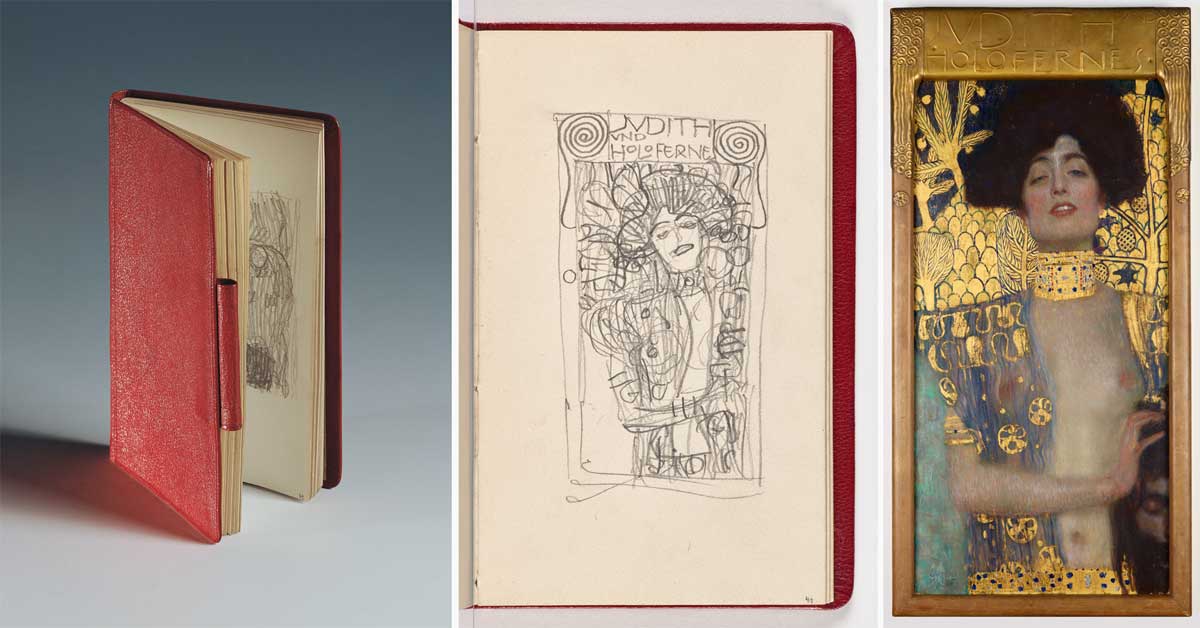
Quick Read
For many years, museum collections online often consisted of little more than an image, a title, a date and basic object information. The Belvedere's newly published digital catalogue of its Gustav Klimt collection marks a significant step beyond that model. Instead of presenting artworks simply as digital reproductions, the museum has created a research platform that combines art history, conservation, archival material and provenance research, making years of scholarly work publicly accessible.
• Austria's most important Gustav Klimt collection is now accompanied by an extensive digital research platform. Since 2022, an interdisciplinary team has examined the museum's 24 Klimt works in detail. The resulting online catalogue includes comprehensive essays, conservation documentation, exhibition histories, literature references and links to digital sources. Because it has been designed as a living database, new discoveries can be added continuously rather than waiting for a future printed catalogue. For Austria's museum landscape, where many online collections still provide only basic documentation, this represents a notable development in digital accessibility. Austria's most important Klimt collection becomes a research platformThe Belvedere is home to the world's largest collection of Gustav Klimt paintings, including iconic works such as The Kiss and Judith. The new catalogue reflects the museum's role as one of the leading international centres for Klimt research.Among the newly presented findings are the identification of Lady at the Fireplace with the long-lost painting Dusk, new archival discoveries relating to the actor Josef Lewinsky, revised datings of several works and a new interpretation of Judith, which is discussed for the first time within a theatre-iconographic context. The essays also place Klimt's portraits of Johanna Staude and Fritza Riedler into updated biographical contexts, illustrating how research continues to reshape the understanding of familiar masterpieces. Beyond painting: Klimt's influence on design and fashionKlimt's importance extends well beyond painting. As a co-founder of the Vienna Secession, he became one of the leading figures of Viennese Modernism, influencing architecture, graphic design, fashion and the applied arts. Although he was never a member of the Wiener Werkstätte, he maintained close friendships with its founders, Josef Hoffmann and Koloman Moser, and collaborated with them on projects including the Stoclet Palace in Brussels.His creative partnership with fashion designer Emilie Flöge further blurred the boundaries between fine art and design. Flöge, whose celebrated portrait is now part of the Wien Museum collection, pioneered the flowing Reform dress that challenged the restrictive corseted silhouette of the time. Klimt designed textile patterns for her salon, while her progressive fashion informed the visual language of his paintings. The dialogue between decorative art, textiles and jewellery that was practised in those days is still evident today. For example, the MAK exhibition 'GLANZSTÜCKE' presents historic textile designs by the Wiener Werkstätte alongside high jewellery by Van Cleef & Arpels, highlighting the shared fascination with ornament, geometry and precious materials such as silver and gold. New perspectives on familiar masterpiecesThe digital essays also demonstrate how art history continues to evolve. The long-debated identity of the couple in The Kiss remains intentionally open. While some scholars have suggested that Gustav Klimt and Emilie Flöge may have inspired the embracing figures, the Belvedere emphasises that no definitive evidence exists and that the symbolic nature of the composition argues against identifying them as portraits of specific individuals. At the same time, archival objects such as a painted brooch dedicated to Emilie Flöge provide intriguing clues about the personal significance of the motif.The essay on Judith similarly revisits earlier assumptions. Rather than confirming longstanding speculation that Adele Bloch-Bauer served as the model, the research presents a more nuanced picture and instead introduces a new theatre-iconographic reading. It also discusses how Judith's fashionable hairstyle would have immediately identified her to contemporary audiences as a modern Viennese woman, demonstrating how Klimt translated biblical subjects into the visual culture of fin-de-siècle Vienna. Klimt's portraits continue to shape popular culture well beyond the museum. Portrait of Adele Bloch-Bauer I—widely known as the "Woman in Gold" after the restitution story and subsequent film—is now housed at the Neue Galerie New York and is expected to come under the umbrella of the Metropolitan Museum of Art from 2028 following the institutions' planned integration. The painting has also inspired contemporary design, including Kilian Paris' fragrance Woman in Gold, illustrating how Klimt's imagery continues to resonate across creative industries. Digital access cannot replace the originalThe catalogue offers unprecedented opportunities to examine Klimt's technique, artistic development and historical context from anywhere in the world. Yet the digital experience ultimately complements rather than replaces a museum visit.This is especially true for Klimt's paintings, whose surfaces incorporate genuine gold leaf, silver and richly textured paint layers that constantly change with the surrounding light. On a screen these qualities become documentation; in front of the original they become physical experience. The famous concept of an artwork's "aura" remains particularly relevant for Klimt: digital technologies reveal details invisible to the naked eye, while the encounter with the original preserves the unique presence that no reproduction can fully capture. With its new digital catalogue, the Belvedere demonstrates that digital innovation does not diminish the importance of museums. Instead, it expands access to knowledge while encouraging audiences to discover why Austria's most celebrated paintings continue to reward close viewing in person. Image: From sketchbook to finished masterpiece: Gustav Klimt's 'Judith' is among the works documented in the Belvedere's new digital collection catalogue, which combines art-historical essays, conservation research and archival discoveries. Photos: © Belvedere, Vienna / middle & right: Johannes Stoll |