
24 February 2026 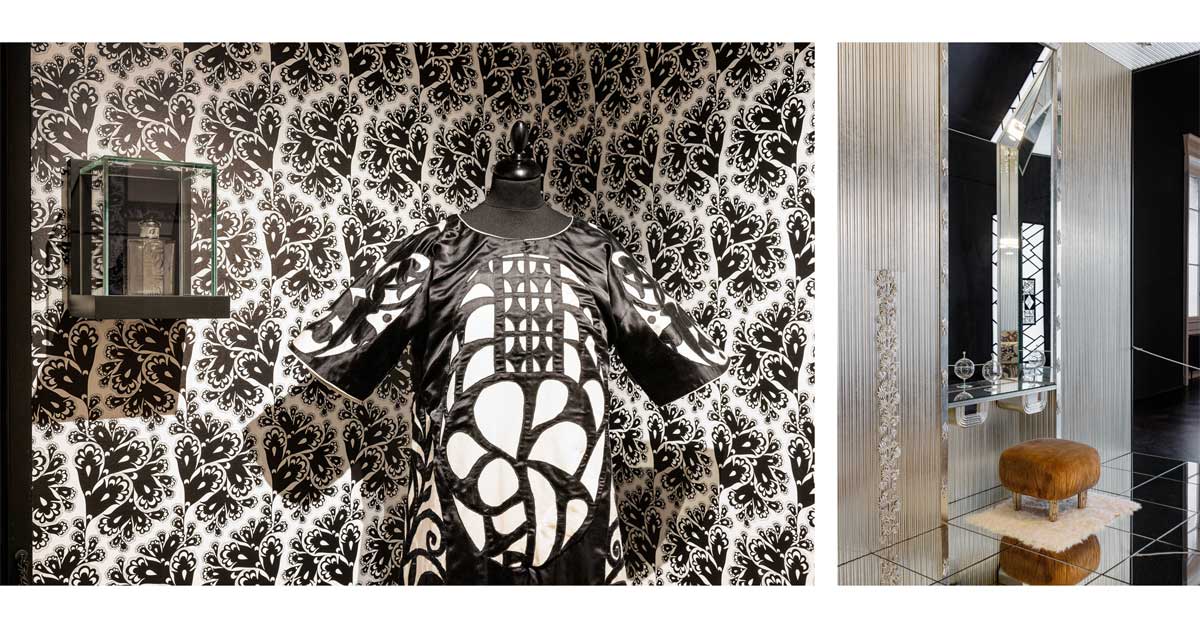 Yesterday, the theme and dress code of this year's Met Gala—taking place on 4 May—was officially announced with further details. As always, the gala coincides with the opening of the spring exhibition at the Costume Institute of the Metropolitan Museum of Art. The event is, first and foremost, a fundraiser for the Costume Institute itself. The exhibition 'Costume Art' will be on view from May through 10 January 2027 and is presented in the new Condé M. Nast Galleries, a 12,000-square-foot space adjacent to the museum's Great Hall, expanding how fashion can be displayed within a museum context (source). The announced dress code 'Fashion is Art' briefly hints at the exhibition's core question: how close fashion can come to art, and where the two still differ. While the Met Gala turns this debate into a global media spectacle, similar discussions have long been part of Austria's cultural landscape. Fashion and Art: Definitions in an Austrian ContextIn Austria, fashion is traditionally discussed in relation to applied arts. Unlike fine art, which is created primarily for contemplation, fashion is functional by nature: it is made to be worn. This functional aspect has legal consequences. Under Austrian copyright law, garments are protected as applied art only if they reach a certain level of originality beyond pure utility.This distinction also shapes education. At the University of Applied Arts Vienna, fashion is taught as an interdisciplinary practice that connects material, body, and concept. Here, clothing is not treated solely as a market product but as a cultural medium—one that can move between everyday use and museum display. Once a garment enters a collection, its function shifts: it is no longer worn, but observed. Fashion on Display: Museums in AustriaOver the past years, Austrian museums have increasingly presented fashion within artistic and historical narratives. Current and recent examples include Kopf & Kragen at the Kunsthistorisches Museum (article), which examines how clothing signals power and status, and the ongoing Helmut Lang presentation at the MAK – Museum of Applied Arts (article), where garments are shown as part of a broader cultural archive. These exhibitions underline a broader trend: fashion is no longer seen only as a fleeting expression of the zeitgeist. Greater attention is paid to material quality, design, and craftsmanship—values that allow clothing to be discussed alongside art and design objects.Vienna 1900 at the MAK: Fashion as Part of a Total Work of ArtThe most comprehensive current example is Vienna 1900—Everyday. A Total Work of Art, which opens today at the MAK and is open to visitors from tomorrow, running from 25 February 2026 onward. The exhibition presents over 700 objects from the period of Viennese Modernism, including furniture, textiles, graphic design—and fashion.Garments and costume designs from the Wiener Werkstätte are shown not as isolated highlights, but as elements within a broader aesthetic system. Dresses, fabrics, and accessories correspond with interiors and everyday objects, reflecting the idea of the Gesamtkunstwerk, where all aspects of life are designed as a unified whole. The new presentation, developed with artist Markus Schinwald, uses cinematic methods: shifting perspectives, close-ups, and wide spatial views create a narrative rather than a linear chronology. Fashion appears as part of a lived environment, embedded in social rituals, work culture, and ideals of beauty. The visitor moves through these spaces like through a film—observing, comparing, and discovering connections. As the exhibition text notes, this constant immersion and the changing relationship between object and viewer can only emerge in a dialogue between past and present. The Role of the ViewerWhether in a museum gallery in Vienna or on the red carpet in New York, fashion unfolds fully only through those who engage with it. A successful exhibition depends on visitors willing to look closely and follow a story. The same is true for the Met Gala, where guests—and the designers and stylists behind them—will soon be discussed and judged by audiences worldwide. In both cases, it is the observer's curiosity and imagination that turn fashion into a shared cultural experience.Images: Exhibition views from 'WIEN 1900 – Alltag. Gesamtkunstwerk' at the MAK Schausammlung, 2026. Left: Copy after Josef Hoffmann’s evening gown for a Redoute (1908), produced in 2018 and shown within the Vienna 1900 display. Right: Detail view of Josef Hoffmann’s 'Room Interior for a Great Star', originally presented at the Paris World’s Fair in 1937, integrated into the current exhibition architecture. Photos: © kunst-dokumentation.com/MAK |