
3 March 2026 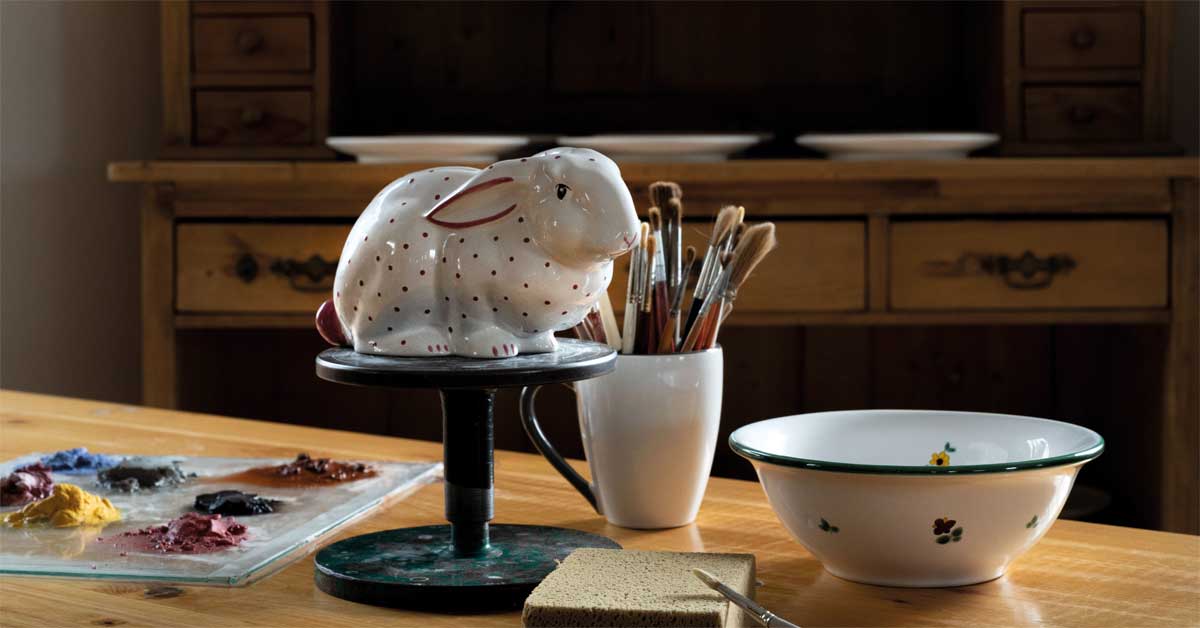 For many people in Austria, Easter is closely linked to the image of the Easter Bunny. The tradition goes back to the late 17th century, when written sources in the German-speaking world first described a hare that brings and hides eggs. During the 19th century, the Easter Bunny became firmly established in Austria as a children's gift-bringer and a symbol of spring, renewal, and fertility. At the same time, the practice of colouring and decorating Easter eggs developed into a widespread custom. Painted eggs were already known in Central Europe in the 15th century and were closely connected to the end of Lent and the celebration of new life. Today, these traditions continue in many forms. One of them invites people not only to receive Easter symbols, but to actively shape them. From Easter Symbols to Artistic TraditionsThe town of Gmunden in Upper Austria is known far beyond the Easter season for its strong connection to arts and crafts. Ceramics have been produced in the region for centuries, and creative work has long been part of everyday life there. In the 20th century, this artistic orientation was further strengthened by designers and artists who worked with Gmundner Keramik.An important figure in this context was the Austrian ceramic artist Gudrun Baudisch-Wittke. In 1968, she founded and led the design studio Gruppe H, which played a key role in shaping the modern design language of the manufactory. This period established Gmunden not only as a production site, but also as a place of artistic experimentation and contemporary design thinking. Living Craft: Education and Exhibitions TodayThis tradition of creative production is still actively cultivated. In recent years, Gmunden has positioned itself as a centre for ceramic education and exhibition, linking historical craftsmanship with contemporary art and design. Current exhibitions (article) and academy programmes show how ceramics continue to evolve as an artistic medium. Professional artists, designers, and students work side by side, keeping the dialogue between tradition and innovation alive.When Consumers Become CreatorsAlongside its collaboration with professional designers and artists, Gmundner Keramik also creates space for non-professionals. In stores with painting studios in Gmunden, Anif, and Vienna, visitors are invited to paint ceramic pieces themselves (details). According to information shared with Fashion.at in a recent phone call, the sessions are used in many different ways: by groups of friends gathering before a wedding, by families designing a shared gift for a grandmother's birthday, by company groups on excursions—particularly in Gmunden—or by tourists looking for a personal souvenir to take home.Participants choose a raw ceramic form and decorate it freely. Afterwards, the piece must be fired in the kiln, which means it cannot be taken home immediately. This step underlines that even a playful activity follows the same basic rules as professional ceramic production. The Sparhase: A Bunny with HistoryA special highlight during Easter time is the so-called "Sparhase", a ceramic money box shaped like a rabbit. The object was originally created in the 1970s as a collaboration between Gmundner Keramik and the international jewellery company Tiffany & Co.. The design was developed by the manufactory's team and appeared in dotted pink and blue versions.After several decades, the Sparhase was reintroduced into the collection a few years ago, again in pink and blue dot patterns. Its return reflects the continued interest in historical designs and their reinterpretation. While professional designers once defined its form, today the idea behind the painting studios goes a step further: it allows anyone to engage creatively with ceramic traditions. In this sense, Gmundner Keramik offers a small but telling example of how artistic expression can be shared. Whether created by trained artists, designers, or hobby painters, ceramics here remain a living craft. And who knows – perhaps the next Picasso of ceramics will be discovered not in an academy, but at a painting table in a local store. This openness reflects a broader, democratic approach to artistic expression within contemporary ceramic practice. Image: Ceramic Sparhase money box in the painting studio of Gmundner Keramik. Photo: © Gmundner Keramik |