
22 January 2026 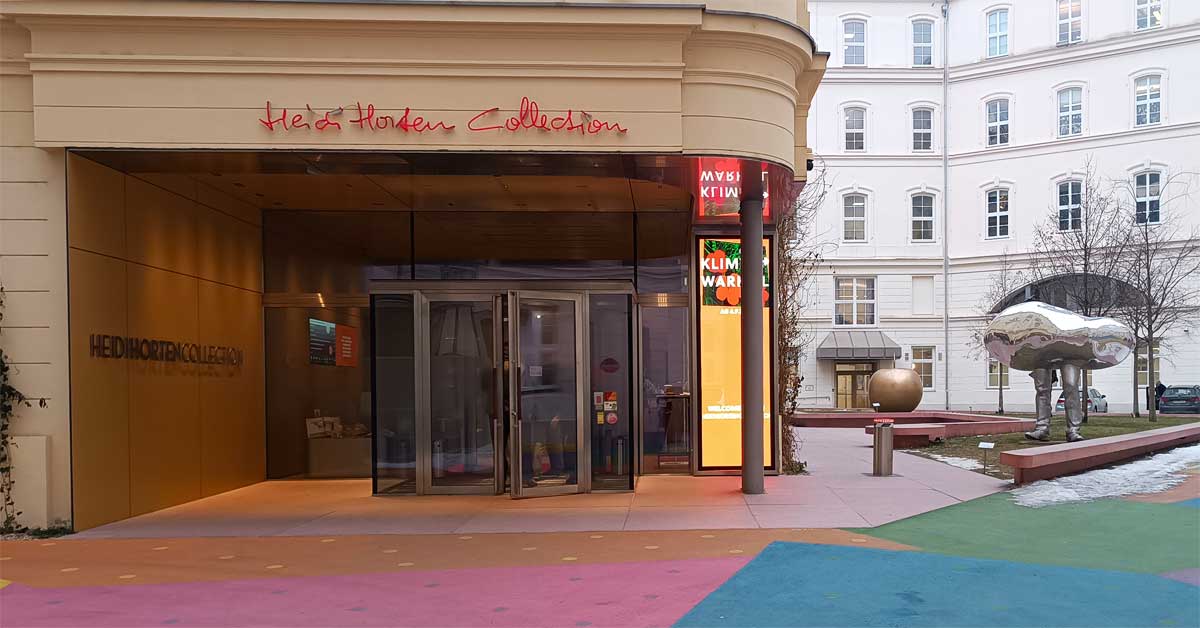 A Frosty Morning and a Colorful WelcomeFashion.at was invited to today's press conference at the Heidi Horten Collection in Vienna. The morning was cold, at around minus 7 degrees Celsius, but the atmosphere changed quickly when entering the museum area. Walking through the passage into the Hanuschhof and its sculpture garden, the heart lifts almost instantly. Brightly colored areas cover the ground and create a playful first impression.These colorful surfaces are not decoration only. They are part of CO₂ntext, an artistic and scientific climate project in the Hanuschhof. The painted areas reflect sunlight, reduce heat in summer, and visualize global CO₂ emissions through color and data. Art, science, and climate awareness come together in a simple but effective way. Inside the museum, the mood is warm, friendly, and colorful. Groups of children were present: primary school classes and kindergarten groups with their supervisors. They sat comfortably on the floor with colored pencils and craft materials, calmly drawing and working, surrounded by high-quality artworks. The museum felt lively and open, not formal or distant. Since its opening in June 2022, more than 330,000 visitors have come to the Heidi Horten Collection. Around 115,000 people visited in 2025 alone. The audience includes many adults, but also a significant number of school classes and young visitors. The Tea Room as a Meeting PlaceThe press conference took place on the first floor, in the Tea Room. The space is designed as a modern interpretation of a classical salon. Artist Markus Schinwald created the artistic intervention in the room, while sculptor Hans Kupelwieser designed the striking red ceiling relief. Together, they give the Tea Room a special atmosphere between intimacy and representation.Journalists were welcomed with warm drinks and cake at a buffet. Within a short time, all the seats in the main room were taken, and the adjoining space was also packed with media representatives. The setting encouraged conversation and close attention. A New Director and Key Exhibitions for 2026Before the press conference officially began, the new director, Verena Kaspar-Eisert, moved through the room and personally greeted almost every guest with a handshake and a few words. When the conference officially began, she stood between a sculpture by Elisabeth von Samsonow - the artist's work will be presented from mid-September - and Andy Warhol's work Á La Recherche du Shoe Perdu (ca. 1955), showing a shoe and linking art, design, and everyday objects. In front of her stood a miniature sculpture by Gottfried Bechtold: Elf Elf (Miniatur) (2008), a Porsche 911 cast in concrete. This work plays an important role in the museum's program for 2026.The first new exhibition this year is "Animalia. Of Animals and Humans" (27 March–30 August 2026). It explores the relationship between humans and animals through more than 100 works from the 20th and 21st centuries. The first major project initiated by Kaspar-Eisert in her role as director is "Gottfried Bechtold. Betonporsche" (29 April–11 October 2026). A full-scale concrete Porsche 911 will be placed in the Hanuschhof, on the so-called "Director's Parking Space." The sculpture turns a symbol of speed and freedom into something heavy and immobile. It questions ideas of mobility, status, and power. After the exhibition ends, the concrete Porsche will remain permanently in the courtyard. Mobility is also addressed in a different way in "To Shoe or Not to Shoe. Warhol and Others" (20 October 2026–18 April 2027). Andy Warhol's early shoe drawings, originally created for newspaper advertisements, are shown alongside works by other artists. The exhibition examines shoes through a feminist lens, interpreting them as symbols of femininity, gender roles, and, by extension, an aspect of social mobility. Art as a Playground for Serious ThemesThe Heidi Horten Collection uses art, lifestyle objects, and fashion-related imagery to communicate social issues, power structures, and questions of different types of mobility. The first impression remains strong: the museum feels like a playground that makes serious topics visible and understandable.This approach is also clear in the workshop YOUareART – Unfiltered Beauty, which deals with social media, self-image, and mental health among young people. In addition, the museum offers extensive free art education programs for kindergartens and schools. These programs are widely used by classes from socio-economically disadvantaged districts, as well as integration and inclusion classes. From today's visit, Fashion.at gained the impression that, under the new direction, the Heidi Horten Collection will continue to position itself as a place where visitors of all ages can engage with art in an open and structured setting. The mediation programs appear to facilitate reflective engagement with artistic and social issues across different generations. Image: The entrance to the Heidi Horten Collection in the Hanuschhof building in Vienna's first district features colorful grounds and sculptures in the outdoor garden. Photo: © Fashion.at |