
|
13 October 2026 Kids in Fashion: From Imagination to the Runway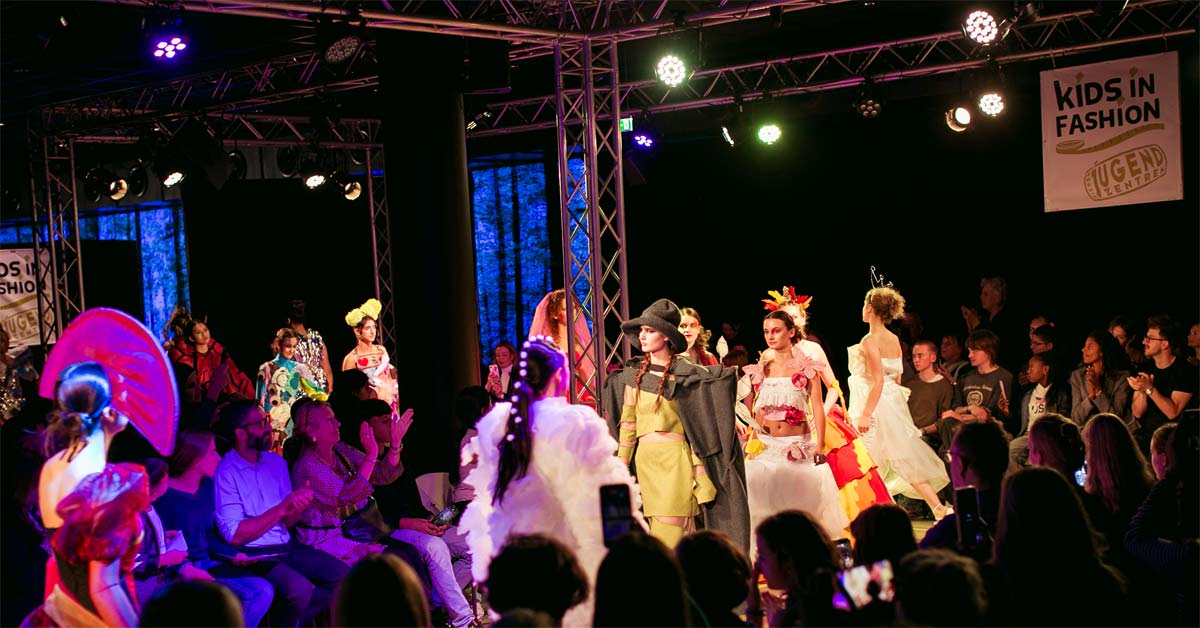
Quick Read
• Since 1994, Vienna's Kids in Fashion has given children and young people a platform for their own fashion ideas. Fashion as a creative processWhat happens when children are allowed to design clothes without having to follow a trend, a commercial brief or an adult's idea of what fashion should look like? Vienna's Kids in Fashion offers an answer. The long-running youth project of the Verein Wiener Jugendzentren gives children and young people aged 4 to 21 the opportunity to develop their own fashion ideas and see selected designs turned into real garments.The aim goes beyond producing an unusual outfit for a fashion show. Participants can experiment with shapes, colours, materials and imaginative combinations. They learn that an idea can be developed, communicated through a drawing and eventually translated into something tangible. The project does not require exceptional drawing skills: the central question is what the young designers want to express. This process can support creative confidence and a sense of personal achievement. Seeing a professional garment made from one's own design also provides a concrete experience of how an initial idea can become reality. It gives young participants a different perspective on clothing, too. A finished garment represents much more than the material visible on the runway: it embodies a design decision, technical planning, skilled work and time. Creative freedom meets professional presentationThe media coverage of Kids in Fashion over the years has repeatedly highlighted the originality of the young participants' ideas and the quality of their presentation. The 2026 edition provides a recent example: 63 selected designs were presented at the WU Mensa in Vienna on 10 October, following a selection from approximately 2,500 submissions. The outfits ranged from colourful everyday-inspired creations to more extravagant designs incorporating decorative and craft materials.The contrast between the freedom of the original drawings and the discipline required to produce a finished garment is central to the project. The final show brings together design, garment construction, model casting, styling and stage presentation. Its professional setting gives the young participants an opportunity to present their ideas to an audience rather than leaving them on paper. For children who see their own creations on the runway, this can be a particularly powerful experience. The recognition does not depend only on winning a prize: it comes from seeing an individual idea taken seriously and realised with care. Collaboration with a fashion schoolFashion designer Leo Oswald initiated Kids in Fashion in 1994. Organised by the Verein Wiener Jugendzentren, the project has developed into an established Austrian fashion-design competition for young people. Its model connects an open call for designs with a professional production process and a public presentation. A key partner in the realisation of the designs is KunstModeDesign Herbststrasse, a vocational school in Vienna's 16th district offering education in fashion, art and design. Its programmes combine creative development with practical and technical training. The school's specialist training includes garment construction and demanding techniques for haute couture and stage costumes.For Kids in Fashion, the challenge is to translate a child's drawing into a wearable garment without losing the character of the original idea. This can require considerable technical judgement: proportions, materials, construction and decorative details must work together, even when a design departs from conventional ideas of clothing. The results are striking because the two sides of the process remain distinct. The children supply the imagination; the fashion students contribute the skills needed to turn that imagination into a finished piece. The 2026 runway show offered a vivid demonstration of what this collaboration can achieve. Already thinking about the 2027 show?The finished garments and their original drawings can be viewed on the official Kids in Fashion website, which also provides the entry materials for the next edition. The comparison between sketch and finished piece makes the technical achievement particularly clear: imaginative concepts have to be interpreted, planned and constructed before they can be worn on a runway.Children and young people aged 4 to 21 from across Austria can submit designs for Kids in Fashion 2027. The entry sheets are available free of charge, including templates for those who prefer to draw their ideas on a prepared figure. The deadline is in May 2027; the exact date should be checked on the official website before submitting an entry. |