
|
13 November 2026 Klimt Meets Viennese Design at the Theatermuseum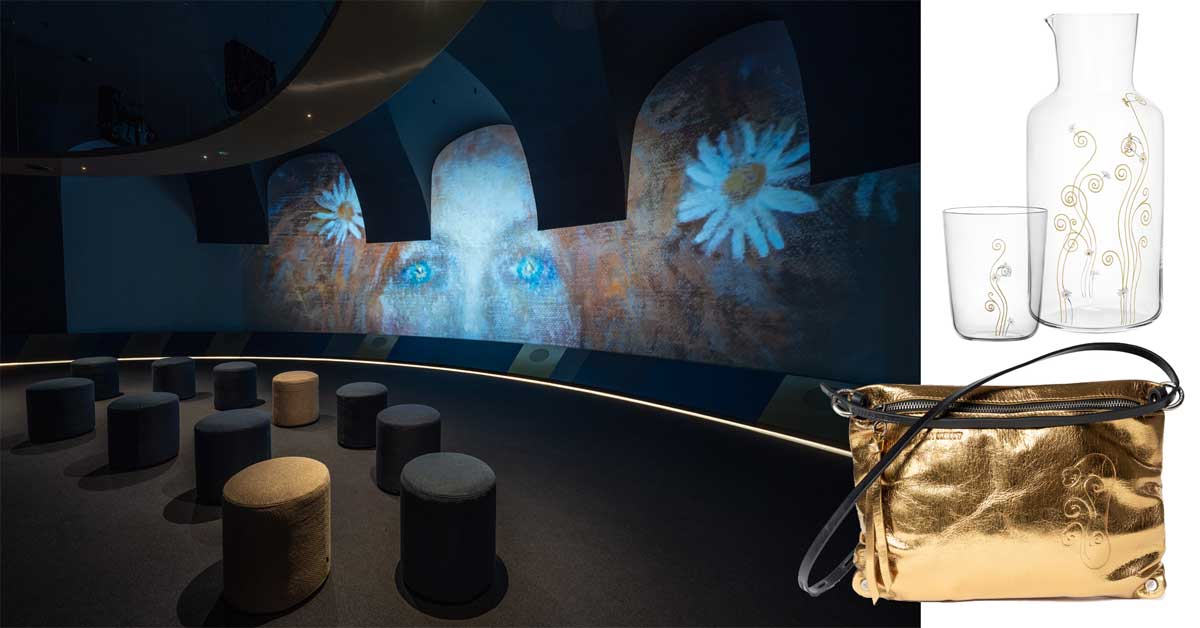
Quick Read
• The Theatermuseum in Vienna reopens on 2 December 2026 after an eleven-month renovation, introducing a new entrance, redesigned foyer and museum shop.
A new stage for Klimt's Nuda VeritasThe Theatermuseum at Palais Lobkowitz is preparing for a new chapter. Following eleven months of renovation, it will reopen on 2 December 2026 with modernised visitor facilities and a new approach to presenting one of its most important artworks: Gustav Klimt's Nuda Veritas (1899).Presented to the press on 13 November, KLIMT. THE NAKED TRUTH is an approximately 20-minute audiovisual experience. Rather than simply displaying the painting, the production builds a historical narrative around it. Images, historical newspaper headlines, bilingual texts and a specially composed soundscape bring Vienna around 1900 into the exhibition space. Short passages attributed to Klimt and other figures of the Viennese Secession, including his critics, offer contrasting perspectives on the period. The first room introduces Klimt's Lady with a Lilac Scarf (c. 1895), on loan from the Kunsthistorisches Museum, alongside four screen installations and a timeline connecting developments in art and architecture with events in world history. The cinematic presentation reaches its climax in the palace's historic semicircular hall. Here, paintings and other works from the period, including the famous spandrel paintings from the Kunsthistorisches Museum, are animated and projected on a large scale. The sequence eventually gives way to an encounter with the original Nuda Veritas. The spatial concept was developed by C4 Berlin and Knauer Architekten, while the film was produced by Tarkemoto. The message behind the naked truthPainted in 1899, Nuda Veritas emerged from Klimt's confrontation with public criticism of his work, particularly the controversy surrounding his Faculty Paintings. The life-size female nude holds a mirror towards the viewer, appearing to demand self-knowledge. Above her figure, Klimt included a quotation attributed to Friedrich Schiller: "If you cannot please everyone through your deeds and your work of art, then please a few. Pleasing many is bad."The painting became an emblem of artistic independence and the Secession's rejection of established expectations. Writer and Klimt supporter Hermann Bahr acquired the work around 1900. Following his death, it eventually entered the Theatermuseum's collection in the 1950s. From museum shop to Viennese design showcaseThe renovation extends beyond the exhibition itself. The public areas on the ground floor have been redesigned, accessibility improved and the building's infrastructure modernised. A newly created entrance on Augustinerstraße leads into the redesigned foyer, which will also serve as a central ticket office for all institutions of the KHM-Museumsverband. The museum shop has found a new home in the former premises of Galerie Wolfrum. Its role goes beyond selling exhibition souvenirs. For KLIMT. THE NAKED TRUTH, the museum has invited two Viennese businesses to translate details and ideas from the painting into objects.J. & L. Lobmeyr, the glass manufacturer founded in Vienna in 1823, has created a carafe and drinking glasses inspired by details of Klimt's painting. The collaboration connects an artwork from Viennese Modernism with a craft tradition that has long been associated with the city's cultural identity. Lobmeyr's international reputation rests on its handmade glassware and lighting designs, developed across generations and appreciated by collectors and design institutions worldwide. The second collaboration is with Ina Kent, the independent Viennese handbag label founded by designer Ina Kent in 2007. Its contribution is a limited edition of the MOONLIT ed.1 model. For the project, a specially developed motif inspired by Nuda Veritas has been embossed onto gold-coloured leather. A matching charm completes the edition. The design draws on a characteristic feature of Kent's work: combining understated aesthetics with adaptable functionality. Her bags are designed for different carrying options and everyday use, rather than as accessories tied to a particular season. The label has since developed an international distribution network reaching more than 50 countries. Taking a piece of the experience homeThere is an interesting idea behind this combination of art presentation and product design. Museums increasingly consider how visitors can connect with an exhibition beyond the time spent in front of an original work. A drinking glass or a handbag cannot replace the experience of seeing Klimt's painting, but it can become a tangible reminder of it. In this case, the museum shop creates a dialogue between artistic heritage, traditional Viennese craftsmanship and contemporary independent design. It also offers another way of understanding how an artwork can continue to influence visual culture long after its creation. |