
|
27 October 2026 Bisovsky’s Disney+ Costumes at Schloss Halbturn Preview Vienna Game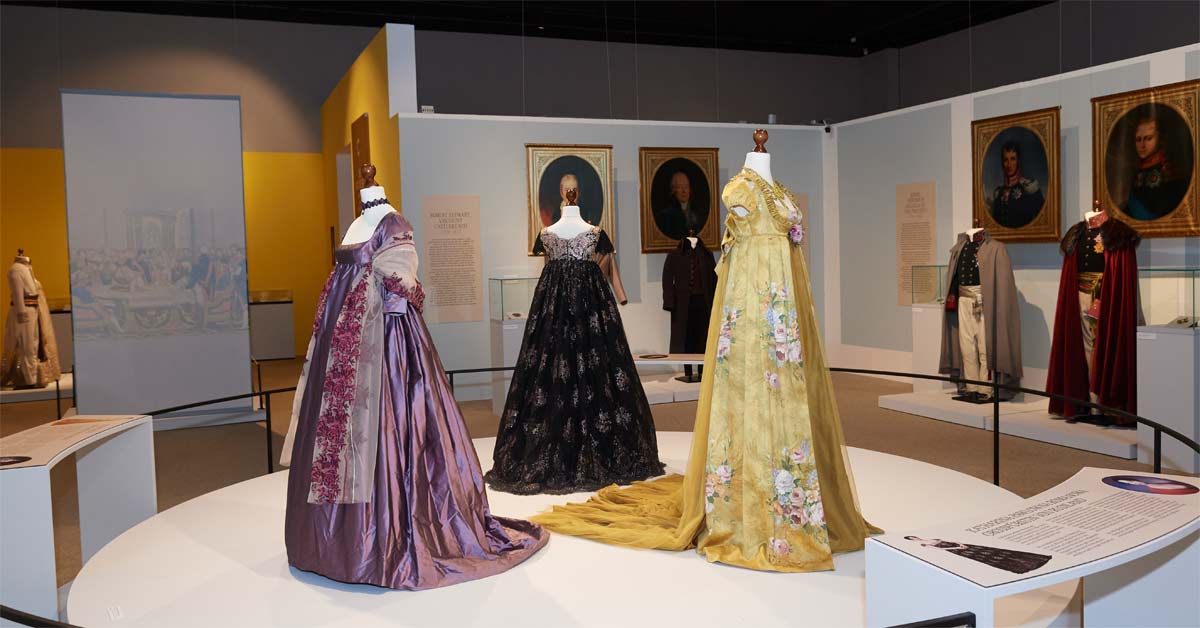
Quick Read
• Love & Power – Behind the Scenes of the Congress of Vienna, 1814/15 looks beyond diplomacy to the social networks that helped shape European politics.
A European turning point beyond the negotiating tableA visit to Schloss Halbturn reveals an exhibition that connects political history, women's history and costume design. Love & Power – Behind the Scenes of the Congress of Vienna, 1814/15 begins with a defining moment in European history, then looks at the relationships, social gatherings and personal ambitions that shaped political negotiations. Its costumes provide a further layer: a preview of how a forthcoming television series will interpret this period for a contemporary audience.The Congress of Vienna took place between September 1814 and June 1815, following Napoleon Bonaparte's defeat. Representatives of Austria, Russia, Prussia, Britain and France negotiated a new European order, redrawing borders and seeking a balance of power intended to prevent another period of French domination. Austrian statesman Clemens von Metternich played a central role in the negotiations. The settlement shaped European politics for decades, although it did not prevent later wars or revolutionary movements. At Halbturn, however, diplomacy is only the starting point. The exhibition explores how political influence also operated through private relationships, salons, social events and the exchange of information. Women such as Wilhelmine von Sagan and Fanny von Arnstein could bring influential people together, circulate information and influence discussions outside formal negotiations. Marie Louise, Napoleon's wife and daughter of Emperor Francis I of Austria, also occupied a complicated position between dynastic expectations and personal independence. The exhibition asks visitors to consider who exercised power when official accounts focused primarily on male statesmen. From historical evidence to television dramaThe exhibition's second interpretative layer is the six-part series Vienna Game, produced by Vienna-based Satel Film. Created and written by Stefan Brunner and directed by Hannu Salonen, the historical satire is scheduled to premiere on Disney+ on 18 November 2026. In the United States, the series is listed for release on Hulu on the same date.The series places Wilhelmine von Sagan at the centre of a story involving diplomacy, espionage, romantic relationships and political rivalry. A forged letter sets off a chain of consequences, while the competing interests of Europe's leading powers determine the stakes. The narrative draws on the historical setting but uses the freedom of drama to shape characters and events for the screen. This distinction matters when looking at the costumes at Halbturn. Some objects and garments refer directly to the historical period; most of the costumes on display were made for the series. They should therefore be understood as interpretations rather than treated as a collection of original clothing from 1814–15. Their value lies in showing how costume design translates historical research into a visual language that supports characterisation, atmosphere and storytelling. Costumes between period silhouettes and Viennese coutureThe garments are central to the exhibition's visual dramaturgy. Displayed alongside portraits, historical furniture and interior elements, they give form to differences in status, personality and social role. The dresses also allow visitors to compare the visual conventions of the period with contemporary interpretations of historical fashion.Viennese designer Susanne Bisovsky is responsible for the series' couture design. Her work is known for combining references to traditional dress, historical textiles and elaborate craftsmanship with an individual interpretation of Viennese style. Her experience extends beyond fashion collections to stage productions, including work for the Salzburg Festival, Teatro alla Scala and the Vienna State Opera. She also designed costumes for the ballet interludes of the Vienna Philharmonic's 2024 New Year's Concert. In some of the dresses at Halbturn, the characteristic Wiener Chic associated with Bisovsky becomes a contemporary reading of Empire silhouettes. Rather than simply reproducing period shapes, the designs use historical lines as a point of departure for new proportions, surface treatments and combinations of materials. The result sits between historical reference and theatrical invention. Costume designer Elisabeth Binder-Neururer contributes the broader costume work for the series. Her career spans theatre, opera and film, with experience in historical costume and reconstruction. Together, the two designers create a visual world in which clothing does more than establish a date: it distinguishes the political and social positions of the characters while helping the production move between historical plausibility and historical satire comedy. The display also includes costumes associated with male protagonists such as Metternich. Seeing these garments before the series launches offers an opportunity to examine the production's visual choices independently of the finished screen narrative. A book for the history behind the costumesFor visitors who want to go further than the exhibition, historian Katrin Unterreiner's book Liebe & Macht: Hinter den Kulissen des Wiener Kongresses provides a more detailed account of the political relationships and women's influence behind the event. Unterreiner also worked as a historical adviser to the Disney+ production, connecting the exhibition, the book and the series through a shared interest in the period.The exhibition at Schloss Halbturn runs until 1 November 2026. The next exhibition announced for Schloss Halbturn will shift the focus from the Congress of Vienna to the journeys of Empress Elisabeth. Under the title Sisi's Reisen. Nimm mich mit ins ferne Land (Sisi's Travels: Take Me to a Distant Land), the planned 2027 exhibition will explore the empress's travels through objects and accessories from museum collections and private holdings. It will examine her journeys to countries such as Greece and Italy and the different forms of transport she used, including her own train and ship. Katrin Unterreiner is also expected to curate this exhibition, continuing the castle's exploration of history through material culture and personal stories. |