
|
8 November 2026 The Palais des Beaux Arts: Vienna's lost fashion and media empire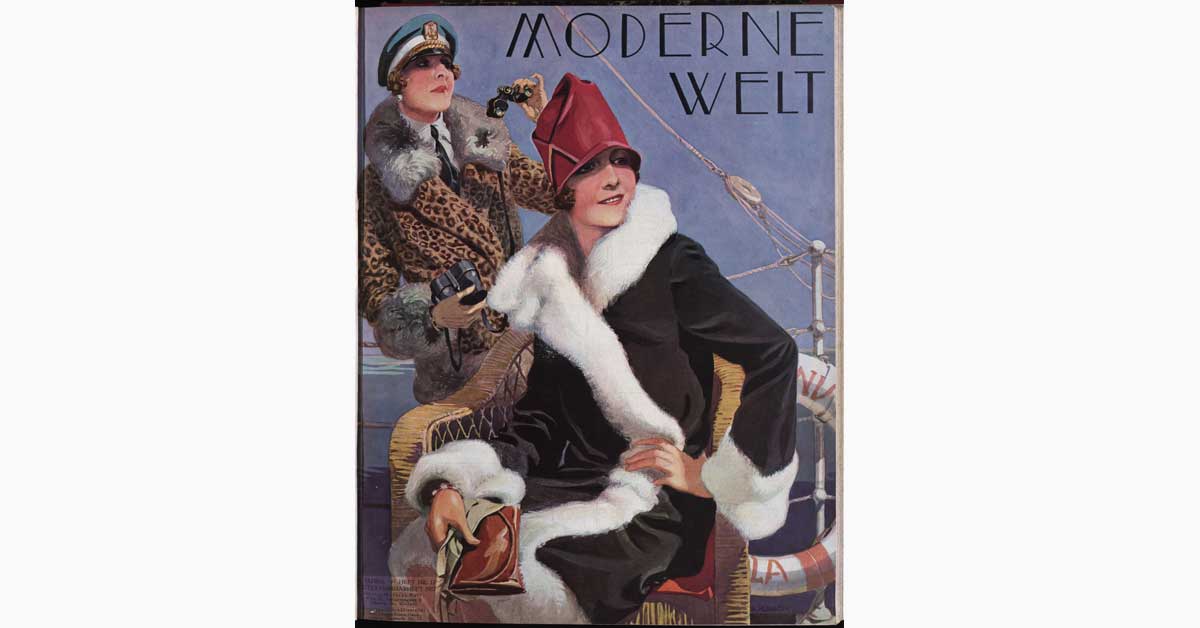
Quick Read
• Vienna's Palais des Beaux Arts, at Löwengasse 47, was once the headquarters of an internationally active fashion publishing business founded by Arnold Bachwitz. A radio programme opens a door to Vienna's historyVienna has many stories hidden in plain sight. People pass impressive buildings every day without knowing who once lived or worked there, what happened behind their façades or why their history matters. A contribution on the public radio station Ö1 on Sunday, 8 November, at 7:05 am, provided a reminder of this overlooked urban history. The programme Orte der Erinnerung und Geschichten der Weisheit included a report on historian and author Gabriele Anderl and her new book, Jüdisches Leben in Wien-Landstraße, published by Mandelbaum Verlag in May 2026. With 586 pages, the book examines Jewish life in Vienna's third district before, during and after the Nazi period. It also draws attention to places, families and businesses that shaped the district but have largely disappeared from public memory.The subject offers a starting point for looking more closely at one particular address: the Palais des Beaux Arts in Löwengasse 47. Its history connects fashion, publishing, photography, craftsmanship, international trade and the destruction of Jewish economic and cultural life under National Socialism. A publishing house where fashion was made visibleThe Palais has already attracted considerable historical attention. Two particularly useful accounts are Olga Kronsteiner's detailed article in Der Standard and Peter Payer's research for the Wien Museum.The building was commissioned by Arnold Bachwitz, a businessman who had come to Vienna from Prussia. He initially worked in the fashion trade. In 1883, he established a business specialising in women's coats with a partner, before opening a fashion atelier at Hoher Markt. Regular visits to Paris gave him access to new trends, which he brought to Vienna through his growing fashion business. In the 1890ies, Bachwitz began building his publishing operation, initially alongside his other commercial activities. The first publication, Der Modezeichner, appeared in 1898, followed by Chic Parisien. The business expanded rapidly and required a dedicated headquarters. Designed by architects Anton and Josef Drexler, the Palais des Beaux Arts was built in 1908/09. It was much more than an editorial office. The complex combined fashion design, sewing and tailoring workshops, pattern-making, hand-colouring, photography, printing, administration and international distribution. More than 300 people worked there at its height. Garments were made in the workshops, while fashion drawings and patterns translated the designs into material that readers and professional dressmakers could use. The magazines were not simply reporting on fashion: they were part of the process through which new styles were presented, reproduced and distributed. Bachwitz also used the building for art exhibitions. Several rooms were reserved for paintings, with as many as 2,000 works available for visitors to view and purchase. The Palais therefore combined a commercial publishing enterprise with an art business. Moderne Welt: an international outlook from ViennaOne of the most interesting publications associated with the house was Moderne Welt, founded in October 1918. Its first editor-in-chief was Ludwig Hirschfeld (1882–1942), a journalist and writer who had worked for the Neue Freie Presse. He was not a fashion designer or producer. His role was editorial: he shaped the magazine's cultural profile, selected contributors and brought together writers, artists, photographers and journalists. Under Hirschfeld, Moderne Welt was an unusually broad illustrated magazine. It covered literature, visual art, theatre, fashion, music, architecture, technology, scientific achievements, travel and social life. Its ambition was to present contemporary culture as an interconnected and international subject rather than confining itself to one specialist field.The magazine appeared monthly at first, became a fortnightly publication in 1923 and later returned to a monthly schedule. Its large format and extensive illustrations distinguished it from smaller magazines. Photographs from leading Viennese studios were an important part of its visual language. Madame d'Ora, Trude Fleischmann, Kitty Hoffmann, Edith Glogau and Edith Barakovich were among the photographers whose work appeared in its pages. The fashion section was substantial. Journalist and fashion writer Ea von Allesch was responsible for a supplement of around twenty pages during her time at the magazine. She treated fashion not merely as a matter of clothes but also in relation to changing social roles, economics and culture. Hirschfeld's editorial network included writers such as Arthur Schnitzler, Stefan Zweig, Hugo von Hofmannsthal, Hermann Bahr, Thomas Mann and Egon Friedell. Even Sigmund Freud contributed. The result was a publication that reflected the energy and confidence of the years following the First World War. The magazine's history also demonstrates how quickly a successful publication can change. Hirschfeld left in 1926. Bachwitz sold Moderne Welt around 1927–28 to the Viennese publisher Adolf Luser. The editorial direction subsequently became more conservative. The magazine continued under different owners, but ceased publication at the end of 1939. Nazi persecution and the destruction of the Bachwitz businessArnold Bachwitz died in Vienna in November 1930. His family continued to hold important positions and shares in the business. His widow Rosine and daughters Alice Strel and Grete Lebach were among those involved in its ownership and management. After the Anschluss in March 1938, the Jewish family lost control of the company. The business and building were subjected to Nazi Aryanisation. The family members were removed from the company's board in May 1938, and the company's shares subsequently passed to the publishing house of the German Labour Front in 1940. The persecution destroyed more than a commercial enterprise. Rosine Bachwitz was deported to Theresienstadt in 1942, where she was murdered. Her daughter Alice was deported from Prague in the same year and did not survive. Grete Lebach died of cancer in Vienna in August 1938.Ludwig Hirschfeld also tried to escape Nazi persecution. He fled Vienna with his family in 1938, initially reaching France. After periods of internment and changing places of residence, he and members of his family were deported from Drancy to Auschwitz on 6 November 1942. He was murdered there. The publishing company remained in existence under different ownership until its formal dissolution in 1958. Some fashion journals continued to appear under the new regime, in some cases until 1943. Moderne Welt, however, had already ended in 1939. A historical archive becomes contemporary artThe history of the Palais is not preserved only in books and historical research. Since 2014, Palais des Beaux Arts Wien has developed a digital art and memory project around the building. Initiated by media artist Bernhard Garnicnig, with Seth Weiner as artistic director, it treats the address as a place where historical memory and contemporary artistic practice can meet. One distinctive feature is its local WLAN network, which connects the physical location with digital content. The project also maintains an online collection, meaning that visitors do not have to stand in front of the building to access its works. Its website documents projects, historical material and artistic responses to the archive. An interesting example is Wet Baggage (2025) by Studio Hassan, presented in the Palais des Beaux Arts collection. The project revisits historical issues of Chic Parisien, the international fashion journal published by Atelier Bachwitz. Chic Parisien appeared in several languages, including French, German and English, and circulated hand-coloured fashion illustrations internationally. Studio Hassan takes these historical images out of their original printed context. The artist reworks details from the illustrations into digital collages printed on silk, cotton and Tencel. The result is a fabric publication, accompanied by a specially made bag and an interactive website. The old fashion images become material for a new discussion about clothing, identity, gender and the ways images shape our understanding of the past.The collection also links to the digitalised issues of Moderne Welt held by the Austrian National Library. These can be viewed through its ANNO historical newspaper and magazine archive. Why looking at familiar streets differently mattersThe history of the Palais des Beaux Arts is a reminder of how quickly a city's life can change. The building once represented an outward-looking Vienna, confident in its ability to connect local craftsmanship and creativity with international markets. Hundreds of people worked there. Fashion images travelled across continents, and a magazine brought literature, art, photography, technology and new lifestyles into readers' homes. Within a short period, this world was dismantled. A family lost its business and property, people were driven into exile or murdered, and a cultural network was broken apart. The building remained, but much of the story behind it disappeared from everyday view.The Ö1 contribution about Gabriele Anderl's book is valuable precisely because it encourages listeners to look again at places they might otherwise overlook. Historical knowledge does not change the past, but it changes how we see the present. A familiar street becomes a landscape of individual lives, ambitions, achievements and losses. It is impossible to know which of today's seemingly ordinary places will become tomorrow's historical landmarks. That uncertainty is reason enough to pay closer attention to the city around us. Sometimes, a single radio programme, a book or an old magazine cover is all it takes to begin seeing Vienna differently. |