
|
11 August 2026 The Polo Shirt Question: What the Vienna Fashion Study Actually Examines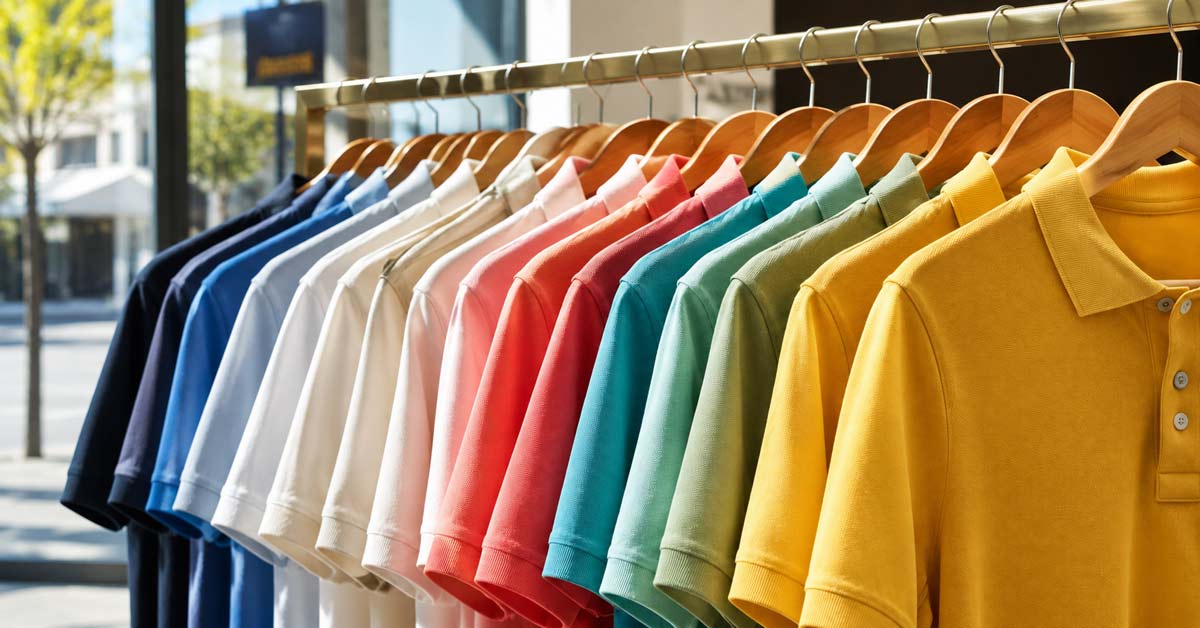 Image: A boutique rack displays polo shirts in a range of colors, from navy and white to pink, green and yellow. © Fashion.at | AI-generated with ChatGPT
Quick Read
• The polo shirt quickly became the headline detail in media coverage of a much broader research project. From a polo shirt to a much larger research questionThe polo shirt quickly became the unlikely star of the media coverage surrounding a major research project on fashion and the far right. That shorthand, however, risks obscuring what the researchers are actually studying. The FWF-funded project "Fashion and the Far Right: The New Complexity in Style", also known as "NeoFashFarRight", is led by empirical cultural scholar and fashion professor Elke Gaugele, with Sarah Held as deputy project leader, at the Academy of Fine Arts Vienna. The FWF has approved €393,972 for the project. It began in October 2023 and is scheduled to run until 30 September 2026.The project is not a study of polo shirts. Its central question is considerably broader: how has the far right appropriated fashion, style and visual culture to build and expand national, transnational and transatlantic networks? That distinction matters. A polo shirt is an ordinary item of clothing. It does not carry a political ideology simply because somebody wearing it may have a particular political view. The researchers are examining situations in which clothing becomes part of a wider system of communication – alongside symbols, images, slogans, brands, bodies, online communication and political networks. The FWF itself described the research in August with the headline "Once on the far right, now a hipster" and highlighted the shift from the highly recognisable bomber-jacket and boots image of the 1990s towards less conspicuous styles, including polo shirts. A research design that goes well beyond individual clothesThe scale of the research is easier to understand when looking at its methods. According to the official project description, the researchers collect material through local and online fieldwork and archival research in Germany, the United States and across Europe. The project uses the feminist materialist method of situational analysis, while combining fashion studies with research into far-right politics and visual culture.The research material is correspondingly diverse: • visits to relevant shops and interviews with employees; • online and digital fieldwork; • analysis of images, fashion objects, signs and symbols; • archival research; • network analysis and situational analysis; • examination of political and economic relationships between actors and brands. The FWF's project description explicitly asks which political and economic networks can be identified through far-right fashion and which signs and symbols can be found. It also examines the roles of gender, sex, race, body, ability and class. This makes the study less about identifying individual people by their clothes and more about reconstructing a system of communication. The geographical framework is similarly broader than Austria. The official description defines the research field as Europe and the US, while the case studies begin with German and Austrian far-right fashion brands and US labels. The researchers describe the contemporary far right as an international network whose fashion strategies operate across national borders. That is also why Germany, Austria and the US appear repeatedly in the material. But it would be misleading to turn this into a formal three-country ranking: the published project description does not define these three countries as the exclusive or only centres of the network. Why clothing can become a political signThe interesting part of the research lies precisely in the fact that visual signs are not necessarily obvious. The project describes a "new complexity in style": contemporary far-right fashion can be deliberately ambiguous and opaque. The researchers point to the development of dedicated labels as well as the appropriation of mainstream styles and commercial aesthetics. Their published work discusses the movement from more recognisable subcultural styles towards hipster, normcore and other apparently ordinary forms of dress.The example of a polo shirt therefore has to be read as part of a sentence, not as a dictionary definition. A plain polo shirt says very little about its wearer. A particular brand, slogan, patch, combination of garments, image, online profile or event can provide additional information. In that setting, the researchers are interested in how clothing participates in a larger visual language. This is also why the project studies networks rather than merely wardrobes. A clothing item can function as merchandise, a marker of group identity, a vehicle for a slogan, a reference to another political community or a component in an online communication strategy. The project's own website describes this as fashion being used to form and expand national, transnational and transatlantic far-right networks. The distinction is crucial: researching the political use of a garment is not the same as declaring the garment political. The 2025 call shows how broad the subject already wasThe breadth of the research becomes particularly clear when looking back at a 2025 call for contributions connected with the project. The Academy of Fine Arts Vienna invited international researchers to contribute to a special issue of Fashion Theory titled "Fashion – The Far-Right's Weaponization of Style". The call explicitly opened the subject to all research methods and disciplines. The proposed subjects included far-right fashion and gender appearances, clothing, merchandise, hairstyles, accessories, badges and patches, jewellery and body modification; far-right and neo-Nazi fashion brands, influencers and social media; the cultural hijacking of mainstream brands and logos; militaristic clothing; Aloha shirts; Nordic runes; patriotic dress and historical Americana; weapon and gun-culture symbols; Tradwife aesthetics; semiological and visual analysis of symbols, typography and codes; subcultural styles; the influence of far-right politics on fashion media and fashion shows; and the normalisation of far-right aesthetics through everything from mainstream fashion to luxury and avant-garde design. Counter-strategies by designers, activists, brands and consumers were also explicitly included. In other words, the polo shirt was never the intellectual boundary of the subject. It was one accessible example of a much larger research field.Why the study became a media story about one shirtThe research was not suddenly published out of nowhere. The Academy had already documented national and international reporting on the project, including coverage by Die Presse, Der Standard, Frankfurter Allgemeine Zeitung, Süddeutsche Zeitung and Deutschlandfunk Kultur. The August 2026 FWF press information then provided a fresh, highly accessible entry point: the transformation from bomber jackets and boots to more mainstream-looking fashion, with the polo shirt used as one example. Austrian media subsequently picked up the story, and the polo shirt became a particularly easy headline for a much more complicated research question. That compression is understandable in journalism: a familiar object makes an abstract research project immediately tangible. But it can also create a misleading impression if the example replaces the subject. The actual research asks how visual culture works inside far-right networks – how clothing, symbols, brands, images, digital communication and economic structures interact and cross borders. It is therefore closer to mapping a communication system than to producing a list of politically suspicious clothes.The project has already produced peer-reviewed publications, including Gaugele's 2025 article "From Rebel, to Hipster and Normcore. On Mainstreaming and the Far-Right Politics of Fashion and Styles". The final phase is now approaching. The FWF lists the project as ending on 30 September 2026. And there is an important final point to keep in mind when looking at the headlines: nobody needs to be afraid of wearing a polo shirt. The value of this research, if its findings are communicated with the same contextual care with which they are investigated, lies elsewhere. It attempts to make visible how political networks use fashion, images and aesthetics to communicate, identify themselves, reach new audiences and cross borders. That is a considerably more complicated – and more interesting – proposition than declaring individual garments politically guilty. A democratic society should not become a place where people hesitate before putting on an ordinary shirt because they fear being mistaken for somebody else. The purpose of mapping extremist visual culture should be the opposite: to understand the networks behind the signs, rather than turning everyday life into a catalogue of suspicious clothes. Context remains the essential part of the story. |