
|
4 October 2026 Sisi on Screen: From Romy Schneider to Netflix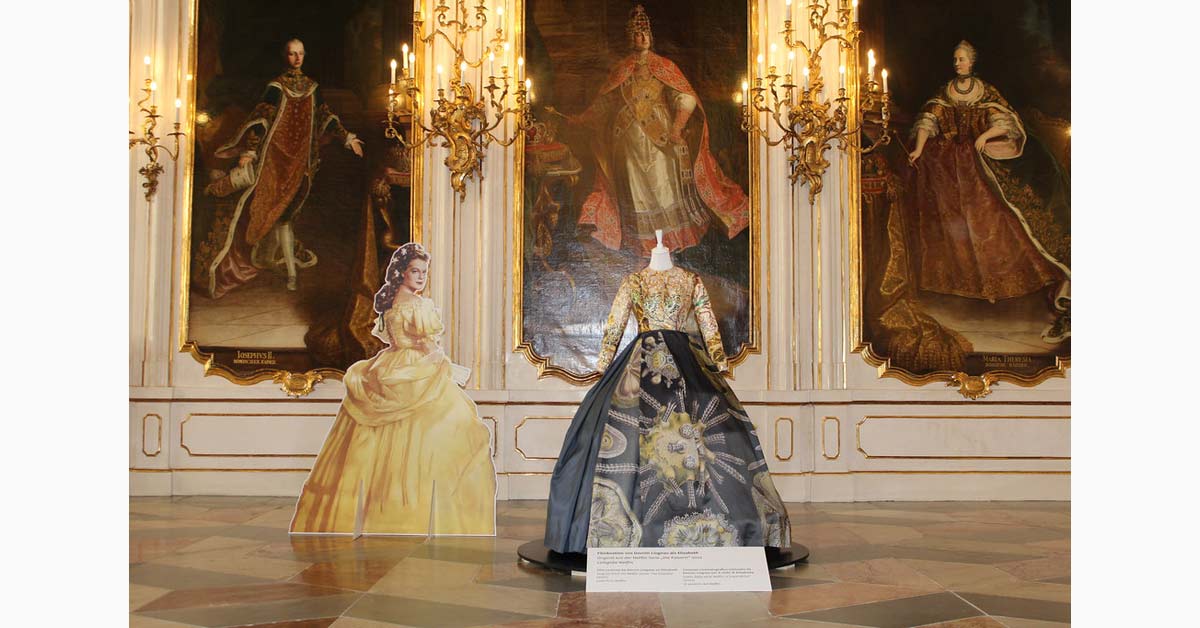
Quick Read
• "Sisi as a Media Star" at Hofburg Innsbruck follows more than 100 years of Elisabeth on film and stage. More than a century of Sisi on stage and screenThe special exhibition "Sisi as a Media Star – Empress Elisabeth in Film and on Stage" at the Hofburg Innsbruck examines how Elisabeth has been transformed from a historical person into a recurring figure of popular culture. It spans more than 100 years, from silent films of the 1920s through Ernst Marischka's famous 1950s trilogy with Romy Schneider to modern films, television series, musicals and theatre productions. The Hofburg Innsbruck provides a historically significant setting: the imperial residence was repeatedly used by members of the Habsburg family, and Elisabeth herself stayed there on several occasions.The exhibition is open from 24 September 2026 to 10 January 2027. According to the Burghauptmannschaft, it contains 12 dresses and one dressing gown, including five original costumes from the 1955–1957 Sissi trilogy that were worn by Romy Schneider. For anyone interested in costume design, this makes the exhibition particularly revealing: the clothes show how the visual language of historical film has changed from an emphasis on faithful period appearance towards interpretation, mood and contemporary design. From historical costume to contemporary interpretationThe contrast is especially clear in Netflix's The Empress. The series premiered in September 2022, with its second season following in November 2024. A third and final season is scheduled for 12 November 2026. Gabriela Reumer is the principal costume designer. Reumer deliberately rejected a strictly historical approach. In an interview with Vogue Germany, she described her aim as approaching the costumes differently from the "classically historical" model. She researched 19th-century clothing and visited historic locations in Vienna, but also looked to contemporary haute couture, including designers such as Dior and Alexander McQueen.This approach also shaped the work carried out in Vienna. Michaela Mayer-Lee, known professionally as Michel Mayer, trained at HBLA Herbststraße and has worked in Vienna couture since the 1990s. Her label became particularly associated with elegant couture and the Viennese ballroom scene, including gowns for the Vienna Opera Ball. Together with the pattern specialist and costume designer Monica Ferrari-Krieger, she founded Costumes Couture in 2021 for film and costume work. Their contribution to The Empress was substantial, but it is important to distinguish roles: Gabriela Reumer was the series' costume designer, while Mayer-Lee and Ferrari-Krieger's Vienna atelier manufactured many of the principal costumes. Reumer told Vogue that Costumes Couture made almost all of Elisabeth's and Sophie's dresses, including the wedding dress. She particularly valued Mayer-Lee's way of handling large volumes and fabric. The resulting costumes attracted considerable media attention. Reports highlighted the combination of historical research with modern cuts, elaborate handwork and unusual materials. The wedding dress became a particularly striking example: around 50 metres of material were used, including specially produced lace from Vorarlberg, with embroidery, sequins and beads worked by hand. Its production took at least two months. The point is not simply that the costumes look "historical". Their construction deliberately plays with that expectation. Modern cuts can sit inside historical silhouettes, while textile surfaces and contemporary design choices change how the period is perceived. In this sense, the costumes interpret history rather than merely reproduce it. Gerdago: the 1950s Sissi imageA very different approach can be seen in the costumes for Marischka's Sissi trilogy. Gerdago, the professional name of Viennese artist Gerda Gottstein, created the costumes for all three films. Her training was artistic rather than based on a conventional tailoring apprenticeship. She attended the Vienna Art School, worked as a textile painter at the Vienna State Opera under Alfred Roller, continued her artistic education in Berlin and Paris, and later worked with architect Oskar Strnad. Her career moved between stage, film and applied art. She became a costume designer for theatre and film in the 1930s and later worked extensively for Austrian and German productions.Compared with the Netflix series, the visual language of the Sissi films is much closer to the established image of the historical costume drama: elaborate silhouettes, decoration and an idealised imperial appearance. That difference is one of the exhibition's most interesting threads. The clothes do not simply tell us what Sisi wore; they show what different periods wanted Sisi to look like. Real garments, reconstructions and film costumesThe exhibition also makes it possible to distinguish between different kinds of "historical" clothing. Five costumes from the 1950s trilogy are original film costumes worn by Romy Schneider. There is also a costume from the 2021 theatre production Sisi at the Royal Palace of Gödöllő in Hungary, worn by actress Gabriella Gubás as Elisabeth. Another exhibit, the so-called Madeira dress, is a 2023 reconstruction made for the Theatermuseum exhibition Die Marischkas and loaned by the Kunsthistorisches Museum.This distinction matters: the Gödöllő costume is a stage costume, while the KHM piece is a reconstruction of a film costume. They are representations of Elisabeth rather than garments documented here as having been worn by the historical empress herself. Monika Buttinger: costume as part of the characterThe exhibition's most recent costume language can be extended to Monika Buttinger's work for Marie Kreutzer's Corsage (2022). Rather than copying the 19th-century wardrobe, Buttinger researched the period in order to move away from it and interpret Elisabeth through the film's contemporary perspective. As she explained to Austrian Films, the historical knowledge was the basis from which she could take artistic freedom.The corset became central to this method. Buttinger and her team worked with different corsets for riding, fencing and gymnastics, adapting the construction to what the actress actually had to do on screen. Vicky Krieps's waist was laced smaller by up to eight centimetres. The film's costumes themselves were deliberately reduced: rather than reproducing the elaborate decoration associated with Elisabeth, Buttinger used clear shapes and distinctive textile surfaces. The approach also brought contemporary Austrian design into the production. Buttinger worked with Mühlbauer on a small collection of hats and with Sagan on the bags; she also used linen from Leitner Leinen and knitwear developed by Rudolf. She explained that one dress required around 120 working hours and that approximately 45 outfits were created through a system of interchangeable elements. What Sisi reveals about costume designSeen together, the costumes in Innsbruck form something like a visual history of historical interpretation. Gerdago's Sissi helped establish a romantic imperial image; Reumer and the Vienna-based Costumes Couture team use historical references as material for a more contemporary visual language; Buttinger uses research to create something deliberately less museum-like and more closely tied to the psychology of the character.It is also a reminder that international film and television productions can contain more Austrian creative work than is immediately visible. The connection is not limited to the historical figure of Elisabeth herself. Viennese ateliers, Austrian textile expertise, designers, pattern specialists and craft traditions can become part of an international production without necessarily being visible to its global audience. That makes "Sisi as a Media Star" interesting beyond Sisi. The exhibition shows how a historical personality is repeatedly redesigned for new audiences — and how costume, from faithful reconstruction to deliberate reinterpretation, plays a central role in that process. Image: Exhibition view at Hofburg Innsbruck: a Romy Schneider figure from the 1950s 'Sissi' trilogy stands beside an original costume from Netflix’s 'The Empress', contrasting two eras of Sisi costume design. © BHÖ; © BMWFW/OeA |