
14 May 2026 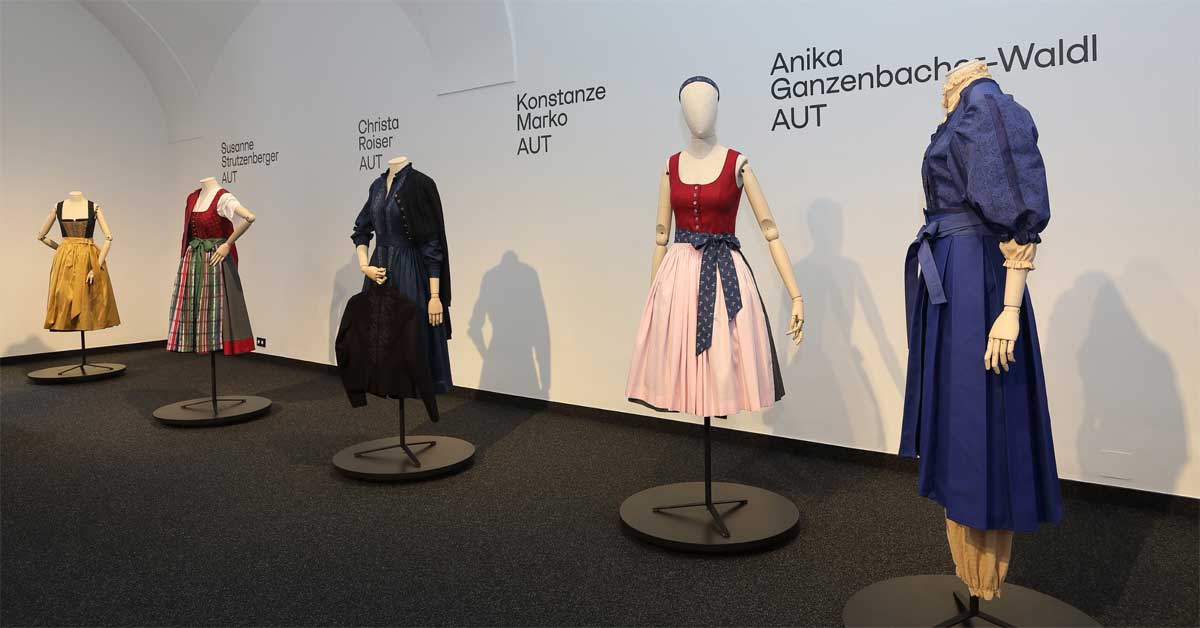
Quick Read
The exhibition "The Upper Austrian woman. Dirndl. Dress" at Schlossmuseum Linz examines how regional clothing traditions can be translated into the present. A recently published YouTube video expands this discussion by allowing the seven finalists of the design competition to explain their concepts in their own words. Instead of polished advertising language, the video focuses on materials, tailoring methods and references to historical garments from Upper Austria.
• A new YouTube video gives behind-the-scenes insight into seven finalist designs for a contemporary Upper Austrian women's costume.
The project was developed in cooperation with WKOÖ Mode & Bekleidungstechnik. Participants were invited to rethink the Upper Austrian women's costume based on garments from the 18th to 20th centuries preserved in the archives of the Oberösterreichisches Landesmuseum. Out of 46 submissions, a jury selected seven finalists whose works are now part of the exhibition, which runs from 26 March until 26 October 2026. From Museum Archive to Contemporary FashionOne of the recurring themes in the video is that none of the designers approached Tracht as a museum object. Instead, historical cuts, fabrics and decorative details became starting points for reinterpretation.Designer Konstanze Marko, who studied fashion design at Kunstuniversität Linz and later completed a menswear master's degree in London, combines feminine Dirndl elements with the structure of the traditional men's Trachten shirt known in Upper Austrian dialect as the "Pfoad". Her design includes regional linen, Blaudruck techniques and knitwear inspired by historical Trachten stockings. Particularly noticeable is the dialogue between deep blue fabrics and relief embroidery referencing historical Innviertel craftsmanship. Christa Roiser, a trained master tailor from St. Marien with a background in Salzburg's traditional costume school, approaches the topic through regional symbolism. In her design, the colours red, blue and green represent different areas of Upper Austria, while the grey skirt refers to granite landscapes, mountains and the industrial identity of Linz. Historical textile printing methods appear in her hand-printed silk apron. Traditional Techniques Reappear in New ContextsSeveral finalists focus strongly on textile craftsmanship. The video repeatedly highlights Blaudruck, a traditional indigo resist-printing technique still associated with the Mühlviertel region.Marie Wagner, a master dressmaker based in Leonding, works with original Mühlviertel Blaudruck on linen woven in the region. Her garments reduce decorative elements to minimalist lines, creating silhouettes that can move between traditional dress and everyday fashion. Wagner argues that Tracht historically always changed with society and individual taste. Textile artist Selina Huss, currently continuing her studies at Kunstuniversität Linz, brings an experimental perspective. Her Dirndl design uses colours connected to the four regions of Upper Austria and incorporates a printed gentian motif inspired by the protected alpine flower Schwalbenwurz-Enzian. The floral pattern appears restrained rather than decorative overload, reflecting an interest in textile surface design rather than nostalgic costume reproduction. Historic References Without Pure NostalgiaOther finalists draw more directly from museum collections. Susanne Strutzenberger references an 18th-century bodice from Scharnstein with gold-coloured cross lacing and historical silhouette details. Sahra Burgstaller, trained at the fashion school in Ebensee, incorporates motifs from the Upper Austrian coat of arms, including stylised arches and embroidered eagle symbolism. The Oberösterreichisches Heimatwerk, active for more than seventy years in the field of regional costume culture, presents a design developed with regional suppliers and traditional materials such as loden, jacquard linen and relief embroidery. The focus remains on continuity of craftsmanship rather than theatrical reinvention.A Video About Process Rather Than ImageWhat makes the YouTube video notable is its attention to process. The designers speak less about trends and more about stitching methods, material sourcing and pattern construction. The result is a documentation of applied textile culture.Certain details remain memorable: the reinterpretation of Trachten stockings in knitwear, the restrained gentian print, aprons visualising Upper Austria's four regions through colour, or corset-style lacing inspired by an 18th-century museum bodice. Together, these elements show how historical garments can function as living references instead of static heritage objects. The exhibition ultimately raises a broader question that goes beyond Upper Austria itself: how regional dress traditions survive in the present without becoming costume clichés. The finalists answer this differently, but all seven works suggest that contemporary Tracht design today depends as much on research and craftsmanship as on aesthetics. Image: Exhibition view of the finalist designs shown in 'The Upper Austrian woman. Dirndl. Dress' at Schlossmuseum Linz, featuring contemporary interpretations of Upper Austrian Tracht. © OÖLKG, Alexandra Bruckböck |