
|
1 November 2026 Vienna Art Week 2026: Contemporary Art, Fashion and ConsumptionFashion.at has looked through the Vienna Art Week programme to find the connections between contemporary art and fashion, textiles, consumption and identity. The selection ranges from fetish-inspired objects and embroidery to artworks made from discarded materials – with a few museum exhibitions adding a historical perspective.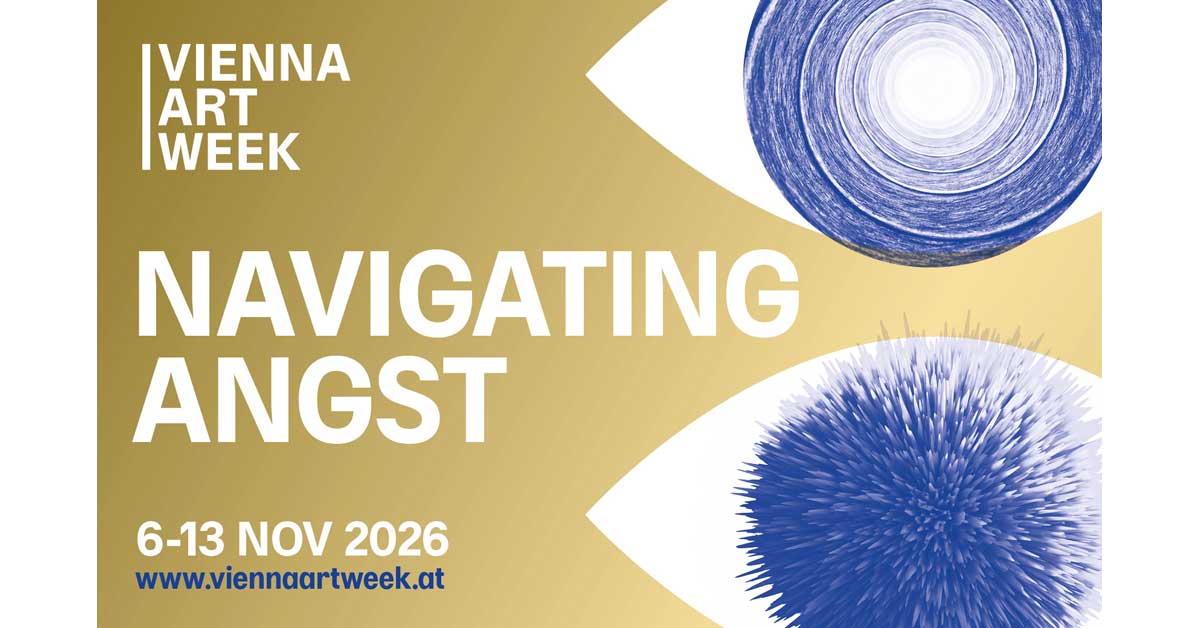
Quick Read
• Vienna Art Week takes place from 6 to 13 November 2026 under the theme NAVIGATING ANGST. Looking at Vienna Art Week through a fashion lensVienna Art Week is not a fashion festival. Its programme covers contemporary art in many forms, from exhibitions and installations to discussions, performances and studio visits. But look a little closer and some interesting connections emerge. How do objects shape identity? What can textiles communicate beyond their practical use? And what happens when materials associated with fashion and everyday life become art? For this article, Fashion.at has reviewed the programme with these questions in mind. The result is a selection of events that link art with subjects familiar from fashion and lifestyle journalism: the body, gender roles, craft, consumption and the materials that surround us.The 22nd Vienna Art Week runs from 6 to 13 November 2026. This year's theme, NAVIGATING ANGST, addresses uncertainty in a world shaped by ecological, political, technological and personal challenges. Around 70 programme partners contribute to more than 100 events across Vienna. One central location is the exhibition HOUSE OF NAVIGATING ANGST at Goldschlagstraße 1 in the 15th district. More than 30 international artists present works across four floors of a late-19th-century building that temporarily becomes the festival headquarters. The exhibition is open from 7 to 13 November, daily from 1 to 7 pm. Shoes, textiles and the question of identitySeveral museum exhibitions in the wider Vienna Art Week programme offer a useful starting point for looking at fashion-related themes.> At the Heidi Horten Collection, TO SHOE OR NOT TO SHOE – Warhol and Others takes the shoe as its subject. The exhibition begins with Andy Warhol's shoe drawings from 1955 and follows the object into the worlds of art, desire and social symbolism. Shoes can be practical accessories, status symbols or objects of fascination. Artists including Sylvie Fleury, Birgit Jürgenssen and Gudrun Kampl approach the subject from different perspectives, including feminist critique and the relationship between the body and consumer culture. > The ALBERTINA's HER STORY – Women Artists of the ALBERTINA looks at another question: whose work becomes part of art history? Spanning five centuries, the exhibition brings together works by women artists and addresses the historical barriers that have shaped their visibility. Names include Sonia Delaunay, Louise Bourgeois, Maria Lassnig and VALIE EXPORT. The exhibition also provides a reminder that the history of art, like the history of fashion, is shaped by decisions about what is collected, shown and remembered. > At the MAK, the permanent collection presentation Textiles and Carpets offers a longer view of the materials and techniques behind textile culture. European and East Asian examples from Late Antiquity to the present are shown in a presentation designed by Studio FormaFantasma. The objects also tell stories about trade, cultural exchange and the movement of materials and techniques between regions. These exhibitions are not all special productions created exclusively for Vienna Art Week. They are part of the participating museums' wider programmes – but they offer relevant points of connection for anyone interested in fashion, design and material culture. Fashion.at's Open Studio Days Selection: four artists, four different approachesThe Open Studio Days on Saturday 7 and Sunday 8 November provide a more direct encounter with contemporary art. Around 50 artists open their studios to visitors from 1 to 6 pm. It is an opportunity to see where and how works are made, ask questions and encounter artistic practices outside the traditional exhibition setting. Fashion.at has picked out four studios where materials, the body, craft or consumption play a particularly interesting role.FULTERER SCHERRER: between sculpture and fetish aesthetics At Viktorgasse 22/2 in the 4th district, the artist duo Gabriele Fulterer and Christine Scherrer presents work from its series STUDS. The artists combine elements of painting, sculpture, fashion and textiles. Instead of using conventional canvases, they build objects around wooden frames, which are covered and tightened with faux leather, straps, eyelets and metal studs. Bright colours and tactile surfaces bring associations with fetish and BDSM aesthetics. The works play with the appearance of body parts and explore desire, identity and control. They also question how materials and visual codes influence the way we read an object – or a body. Evelyn Loschy: when an object refuses to stay still Evelyn Loschy, born in Graz in 1980, works across sculpture, video, photography and site-specific interventions. A distinctive feature of her practice is the use of movement and mechanical processes. Her kinetic sculptures can behave like machines, repeating actions until something changes, wears down or breaks. Destruction and self-destruction are not simply dramatic effects in her work. They become ways of examining the tension between individual needs and external demands, as well as the vulnerability of bodies and materials. Loschy's studio is in the Nordpavillon of the Federal Sculpture Studios at Meiereistraße 3 in the 2nd district. Marlene Heidinger: embroidery as a shared activity At Speckbachergasse 43 in the 16th district, visitors can encounter a different kind of artistic process. Marlene Heidinger works as a painter, curator and filmmaker, with a particular interest in textile art and embroidery as a feminist practice. For the Open Studio Days, she invites visitors to join an open cross-stitch circle. Together, participants can continue working on one of her pieces, or simply watch. The activity turns embroidery – often associated with quiet, individual domestic work – into a collective experience. Conversation, exchange and the act of making something together become part of the artwork. There is also a wider question about the value of craft. In a culture that often measures productivity through speed and output, embroidery requires time, attention and repetition. Heidinger's approach gives these qualities a different significance. Gudrun Lenk-Wane: looking at what we throw away Gudrun Lenk-Wane works with discarded materials, including textiles, plastics and everyday packaging. Her subjects include mass production, waste, environmental destruction, migration, power structures and women's lived experiences. At her studio in Klopstockgasse 31 in the 17th district, the Open Studio Days include a participatory workshop titled daily plastics. On 7 and 8 November, from 1 to 3 pm, visitors can use packaging film, leftover materials, string and wire to make a small object. The artist also invites visitors to bring their own discarded packaging. It is a hands-on way to think about consumption: materials that usually disappear into the rubbish bin become the starting point for an artwork. A different way to explore the programmeThese four studios show how broad the relationship between fashion, the body and contemporary art can be. It is not necessarily about designing or wearing clothes. It can be about the cultural meaning of materials, the construction of identity, the history of craft or the environmental consequences of production and consumption. The Open Studio Days are free to visit, and individual studio visits do not require advance registration. Visitors can plan their own route using the addresses and artist descriptions on the official Vienna Art Week website. Guided studio tours are a separate programme and may require registration.For Fashion.at, these events offer a way to approach Vienna Art Week from a particular angle: by following the threads that connect art with fashion, everyday objects and the choices we make as consumers. |