
17 May 2026 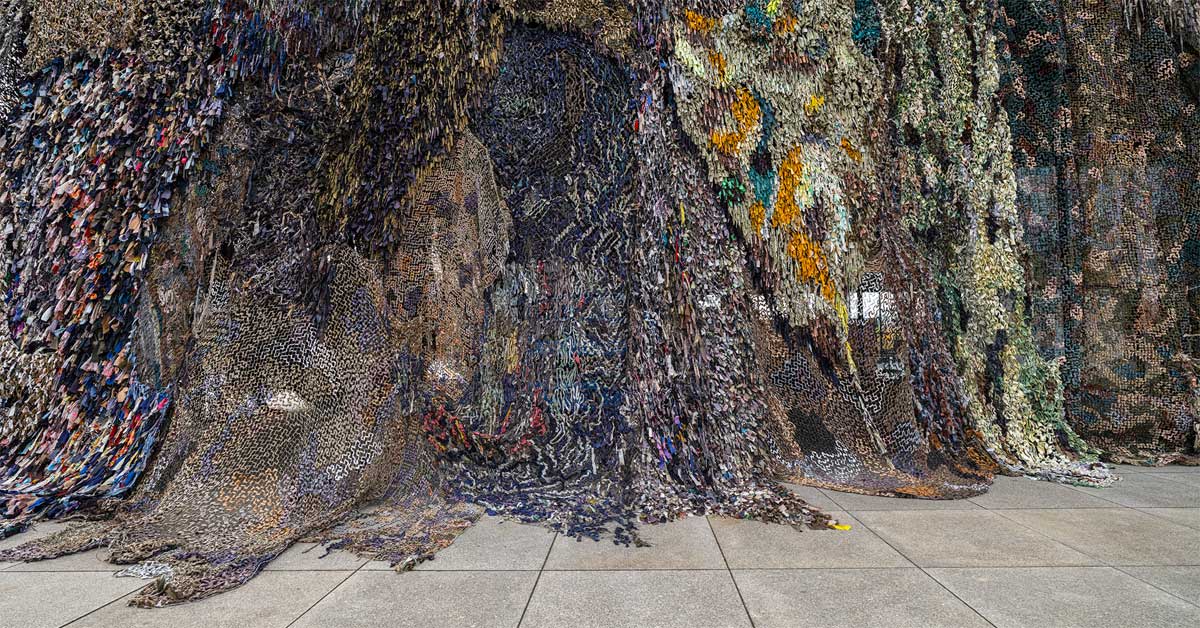
Quick Read
Vienna Digital Cultures returns for its second edition in May 2026 with a program that moves between contemporary art, technology, philosophy and political tension. After launching in 2025 at the main venue, the Kunsthalle Wien, the festival will take place this year at and around the Foto Arsenal Wien and the Arsenal area, expanding into the Panzerhalle and Ruhmeshalle of the Heeresgeschichtliches Museum. Curated once more by Nadim Samman, the festival focuses on the theme "Alone or Together?" — a question that feels increasingly relevant in a culture shaped by algorithms, digital identities and online communities.
Rather than presenting technology as futuristic spectacle, the program repeatedly asks how digital systems reshape the body, social behavior and even war.
• Vienna Digital Cultures returns in 2026 after its debut last year, again curated by Nadim Samman.
Textile Networks Against Drone WarfareOne of the central installations announced for the festival is Fabian Knecht's Lachen ist verdächtig ("Laughter is Suspicious"), a monumental network of frayed fabric strips and camouflage material for Foto Arsenal Wien. At first glance, the work resembles an oversized textile sculpture. Seen closer, the piece reveals traces of daily life: worn fabrics, improvised knots and irregular patterns. The materials come from camouflage nets produced by civilians in Ukraine since the Russian invasion in 2022. According to the festival information, the nets were used to hide vehicles and positions from drone attacks. Knecht collected the nets during humanitarian missions and exchanged them for professional camouflage material. Installed together in Vienna, the different textures and colors create a dense visual field that reflects both collective labor and survival strategies in a digitally controlled battlefield. Knecht's work shows that contemporary war is not only fought with advanced technologies and drones, but also through collective manual labor. Analog resistance becomes part of a conflict waged with digital means.Machines, Shadows and the Meaning of "Para Bellum"The theme of war continues inside the Panzerhalle of the Heeresgeschichtliches Museum. There, Austrian composer and artist Peter Kutin presents "Para Bellum", a large-scale light and sound installation. The Latin phrase "Si vis pacem, para bellum" translates roughly as "If you want peace, prepare for war." Kutin transforms this historical idea into an immersive audiovisual environment. LED lights move across tanks and military vehicles, reducing them to unstable silhouettes while abstract soundscapes fill the hall. The installation does not present war directly. Instead, it creates uncertainty and physical tension. Machines designed for destruction appear ghost-like, almost dissolving into shadows. The result is less a traditional exhibition than a sensory experience about perception, fear and memory. The work also reflects a broader shift in European consciousness. For decades, large-scale war in Central Europe was often treated as distant history, preserved inside museums. "Para Bellum" questions that assumption. Through light, sound and spatial disorientation, it suggests that military conflict has again become part of present reality — now shaped by surveillance systems, drones and digitally mediated warfare.Lu Yang and the Collapse of the Stable SelfWhile Knecht and Kutin focus on collective conflict, Chinese artist Lu Yang turns toward the human mind and digital identity. At Foto Arsenal Wien, the exhibition "The DOKU Trilogy" combines video-game aesthetics, motion-capture technology and Buddhist philosophy. Across three video works created between 2018 and 2025, an avatar based on the artist's own appearance moves through multiple realities. The figure constantly changes form and identity, existing somewhere between human consciousness, data stream and spiritual entity. Lu Yang draws on concepts from Yogācāra Buddhism, especially the idea of a "storehouse consciousness" that carries impressions and experiences without forming a permanent self. Within the context of Vienna Digital Cultures, the trilogy raises questions that go beyond technology itself: If identity can be endlessly copied, rendered and circulated online, does a stable "self" still exist? The works connect with current digital culture. Social-media profiles, AI-generated images and virtual avatars already allow identities to become fragmented, performative and constantly updated. In Lu Yang's videos, this process becomes both visually spectacular and philosophically unsettling.From Online Bodies to Digital CommunitiesThe festival's talks and workshops extend these artistic questions into everyday online culture. One notable event is the book talk "If a Flower Bloomed in a Dark Room, Would You Trust It?", which examines how fitness trends, spirituality and self-improvement content on social media can become connected to political radicalization. The discussion focuses on how visually appealing online aesthetics can hide ideological messaging. This creates another connection to the festival's broader theme: digital platforms not only shape communication, but also bodies, emotions and collective identities. Alongside exhibitions, the festival calendar includes workshops, lectures, guided tours, performances, panel discussions and a club night at the Badeschiff in cooperation with Wiener Festwochen. Together, the program presents Vienna Digital Cultures less as a technology showcase and more as an investigation into how digital systems reshape society — from warfare and surveillance to spirituality and selfhood.Image: Fabian Knecht, Lachen ist verdächtig (Laughter is Suspicious), since 2022, 60 x 10,5 m, nets and fabrics, Festival of Future Nows, Neue Nationalgalerie, Berlin, 2025. Fabian Knecht’s installation of large camouflage nets is about civilian resistance and drone warfare in Ukraine. © Studio Fabian Knecht / Photo: Christoph Häring |