
12 June 2026 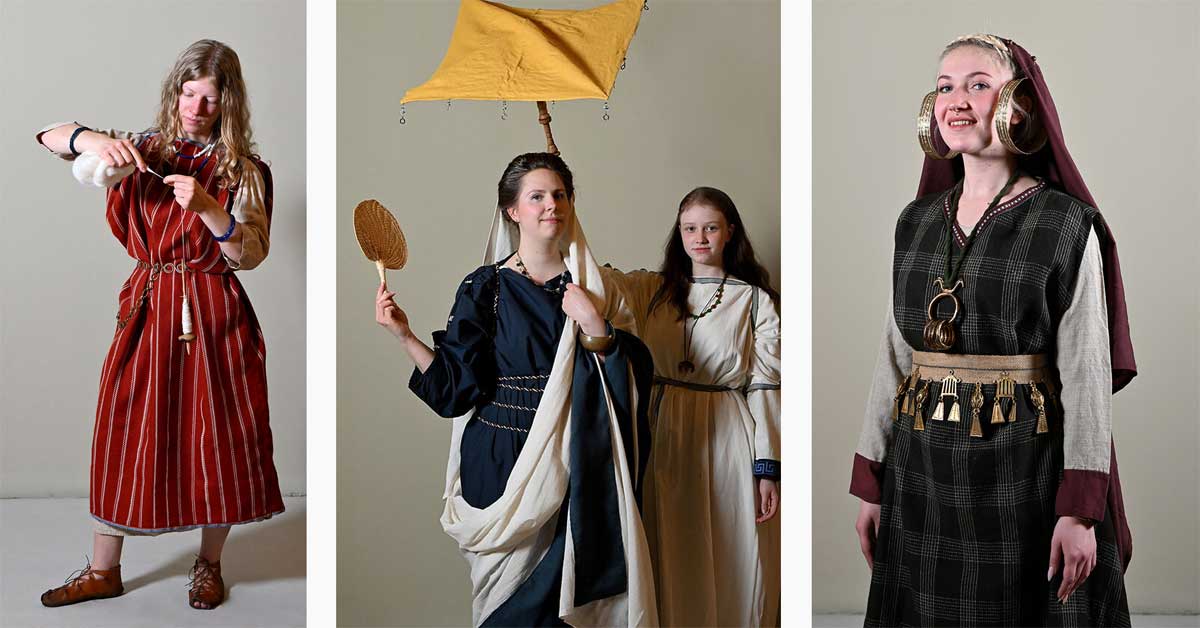
Quick Read
• Fashion and textile research is more than style: it combines archaeology, history, chemistry, conservation science and design to understand how people lived and worked across centuries. When archaeology meets contemporary designFashion is often associated with trends and seasonal collections, but the study of clothing reaches far beyond the present. Researchers examine textiles and garments to understand technology, trade, craftsmanship, social structures and cultural identity. This work draws on archaeology, history, conservation, chemistry and material science, making clothing an important source for understanding human societies.Against this background, Vienna's KunstModeDesign Herbststraße will present "Kleidung der Jahrtausende – Inspiration für heute" at the Natural History Museum Vienna on 19 June 2026. The event combines reconstructed historical garments with modern fashion inspired by prehistoric collections and techniques. Fifty-five models will present clothing spanning around seven millennia, from the Stone Age to contemporary interpretations. A school with a long tradition and evolving profileFounded in 1874, the institution has developed into one of Austria's established creative schools and today operates under the name KunstModeDesign Herbststraße, reflecting its interdisciplinary focus on art, fashion, design and craftsmanship. Alongside higher-level education in fashion and artistic design, it offers specialised programmes, including fashion design at the Kolleg für Mode, Design und Textil and jewellery design at the Kolleg für Kunst und Schmuckdesign. Jewellery design has become one of the school's defining characteristics in recent years.The school has repeatedly attracted attention through collaborations beyond the classroom, including projects connected with major museums, the Vienna State Opera and presentations at Vienna Fashion Week. Recently, students also participated in an exhibition at the Kunsthistorisches Museum, demonstrating how historical themes can be translated into contemporary creative practice. Why prehistoric textiles matter to scienceThe upcoming presentation at the NHM also highlights why clothing is studied within archaeology. Textile fragments preserve evidence of weaving methods, spinning technologies, raw materials and production processes that reveal how past societies functioned. In some cases they also provide information about trade networks, technological innovation and social status.The museum's Prehistoric Department is internationally recognised for research into such material, including the exceptionally preserved textiles from the prehistoric salt mines of Hallstatt. Thanks to the unique preservation conditions, these finds allow researchers to reconstruct techniques that are more than 2,500 years old and compare them with methods still used by craftspeople today. The event reflects this scientific perspective. Around 40 reconstructed historical costumes, based on archaeological, historical and art-historical evidence, will be presented before students unveil designs from the annual project "Hallstatt Revisited – the Hallstatt period as inspiration for sustainable fashion and art." The collection explores prehistoric craftsmanship and design methods while adapting them for modern, wearable garments with attention to sustainability and resource-conscious production. Fashion as a way to understand societyRather than treating clothing as decoration alone, the project illustrates how garments can function as historical documents. Textiles record technological knowledge, artistic expression and everyday life, making them valuable objects of scientific investigation as well as creative inspiration.The museum's prehistoric director and textile archaeologist Karina Grömer has emphasised that the finely woven and richly patterned Hallstatt textiles demonstrate remarkable craftsmanship and allow ancient spinning and weaving techniques to be reconstructed. She also points to their continuing relevance for preserving traditional knowledge and Europe's intangible cultural heritage through contemporary engagement with historical methods. Although admission to "Kleidung der Jahrtausende – Inspiration für heute" is already listed as fully booked, the collaboration between researchers and design students is likely to remain visible through documentation and media coverage. It offers younger audiences an accessible introduction to how archaeology, material science and fashion can intersect in unexpected ways. Images: Models promote the historical fashion show 'Kleidung der Jahrtausende – Inspiration für heute' at the Natural History Museum Vienna, presenting garments inspired by archaeology and textile history. © NHM Wien / Chloe Potter. |