
|
16 October 2026 Viennale 2026: A Vampire Countess Rewrites Vienna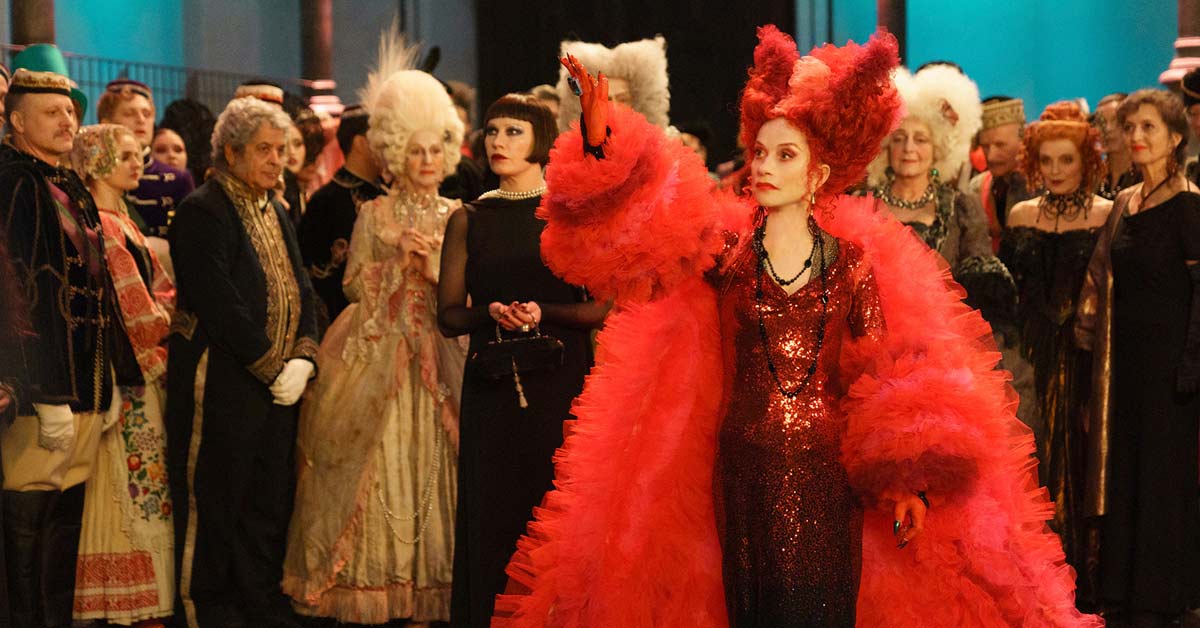
Quick Read
• The 64th Viennale runs from 22 October to 3 November 2026, presenting 260 programmed films plus a surprise film.
A different kind of Viennese bloodlineThe Viennale returns for its 64th edition from 22 October to 3 November, with a programme spanning international cinema, film history and contemporary cultural debate. One of its unusual titles is Die Blutgräfin (The Blood Countess), Ulrike Ottinger's Austrian-Luxembourgish-German production. The film combines vampire mythology, absurd humour and a distinctly theatrical view of Vienna. Isabelle Huppert plays an aristocrat with a taste for blood, while Elfriede Jelinek contributed to the screenplay. The Austrian premiere takes place at the Viennale, ahead of the film's regular cinema release on 29 October.Báthory: history, accusation and vampire legendThe film draws on Elisabeth Báthory, also known by her Hungarian name Erzsébet Báthory, a Hungarian noblewoman who lived from 1560 to 1614. In the early seventeenth century, she was accused of torturing and murdering young women. She was confined to her castle in 1610 and died four years later. Her story subsequently became the subject of increasingly sensational accounts, including the famous claim that she bathed in the blood of young women to preserve her youth. That image helped turn Báthory into one of European folklore's most notorious figures. However, the blood-bathing story is not an established historical fact; it belongs to the legends that grew around the case. Ottinger uses this uncertain territory between historical record and popular mythology as the starting point for a contemporary fantasy.In the film, the countess awakens from a long beauty sleep and travels through Vienna with her devoted maid, Hermine (Birgit Minichmayer), in search of the red elixir of life and a mysterious book that could threaten the vampire world. Their pursuers include a vegetarian nephew, his psychotherapist, two vampirologists and a police inspector. The action reaches the Narrenturm, Vienna's historic pathological-anatomical collection, among other settings. Vienna becomes more than a backdrop. Its imperial associations, fascination with death and elaborate cultural traditions are recast as elements of a grotesque comedy. The film's idea of Wiener Blut is therefore less a celebration of nostalgic charm than a playful encounter with the city's darker legends and theatrical self-image. Huppert, Minichmayr and a baroque visual languageHuppert plays the Blood Countess as an imposing, highly stylised figure. The French actor has built an international career through roles that often challenge conventional ideas of femininity, power and social behaviour. Her work includes Michael Haneke's The Piano Teacher (2001), for which she won the Best Actress award at Cannes, and Paul Verhoeven's Elle (2016), which earned her a Golden Globe.Beside her, Birgit Minichmayr plays Hermine, the countess's loyal maid and travelling companion. Minichmayr is one of Austria's prominent stage and screen actors, known for her work at the Burgtheater and her acclaimed film performances. She won the Silver Bear for Best Actress at the Berlinale in 2009 for Maren Ade's Everyone Else (Alle anderen). Her casting gives the film a strong Austrian acting presence alongside its international star. The costumes are central to the film's visual identity. Chilean-born designer Jorge Jara has an extensive career in theatre and opera, including work for the Vienna State Opera and other major international stages. His background in performance costume makes him well suited to Ottinger's world of exaggerated silhouettes, saturated colours and deliberate theatricality. In the film, Huppert's striking red gown sets the tone: clothing is not simply historical decoration but part of the characters' extravagant performance of power. Ottinger's cinema of artifice and excessUlrike Ottinger has worked across experimental cinema, feature films, photography and documentary. Since the 1970s, her films have challenged conventional storytelling and visual norms, often drawing on queer perspectives, art history, mythology and elaborate forms of staging. Among her best-known works are Madame X: An Absolute Ruler (1977), Ticket of No Return (1979), Freak Orlando (1981), Dorian Gray in the Mirror of the Yellow Press (1984) and Johanna d'Arc of Mongolia (1989). Her later documentaries include Prater (2007) and Paris Calligrammes (2019).Die Blutgräfin returns to the camp sensibility and fantastical imagery associated with several of her earlier films. The screenplay is credited to Ottinger and Jelinek, whose contribution to the dialogue brings another distinctive literary voice into the project. The result places language, costume and visual composition alongside plot, rather than treating them as secondary elements. The film had its world premiere in the Berlinale Special Gala section in February 2026, outside the competition. Its Viennale screening marks its Austrian premiere. It opens in cinemas in Austria and Germany on 29 October, distributed by Filmladen and Neue Visionen respectively. US and wider North American theatrical distribution is planned through Strand Releasing for spring 2027. Film details: Die Blutgräfin (The Blood Countess), directed by Ulrike Ottinger; Austria, Luxembourg and Germany, 2026; approximately 119 minutes. Starring Isabelle Huppert, Birgit Minichmayr, Thomas Schubert, Lars Eidinger and others. |