
31 March 2026 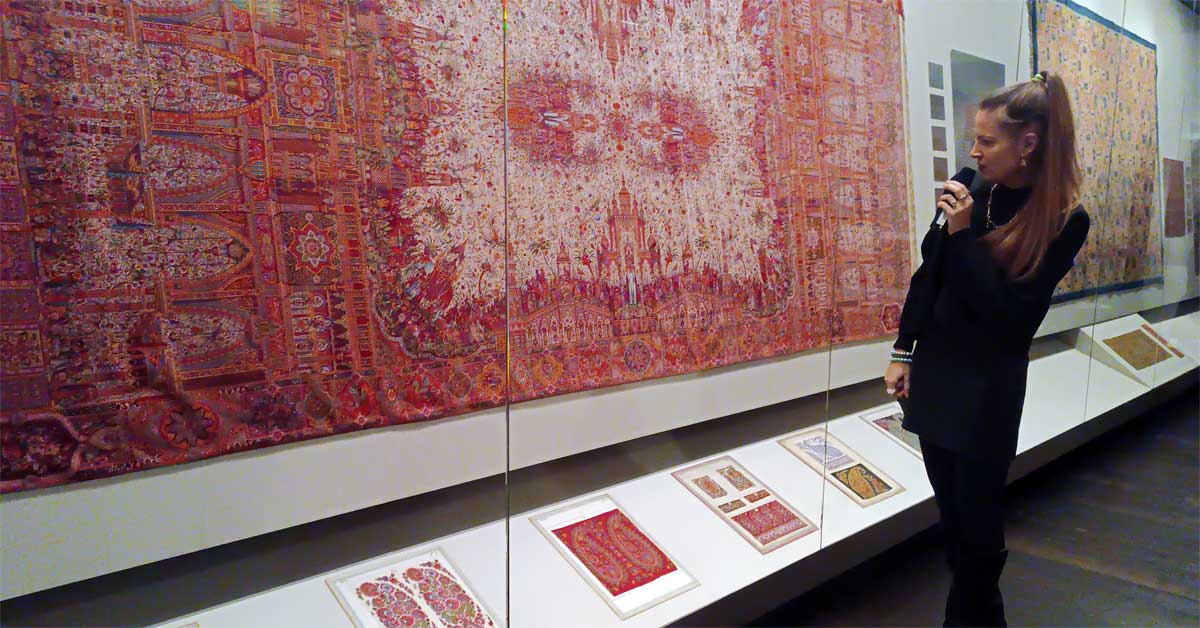 Atmosphere and Display: A Quiet Stage for TextilesDimmed lights, focused attention, and a calm tone defined the press tour of the newly presented permanent collection Textiles and Carpets at the MAK in Vienna. The guided visit, attended by many journalists, placed strong emphasis on the exhibition design by the Milan-based studio Formafantasma, with designer Simone Farresin present.The display is modern and minimal. Large glass cases, soft colors, and careful lighting create a quiet setting that allows the objects to stand out. According to the museum, this approach follows strict conservation needs for fragile textiles, while also enabling visitors to view them closely. The objects are mounted on a shimmering moiré fabric developed with the Venetian company Rubelli, adding a subtle visual layer without distracting from the works. From Woven to Printed: A Structured NarrativeCurator Lara Steinhäußer selected the objects from the MAK's extensive collection and arranged them into two main groups: woven textiles and printed or decorated fabrics. This structure helps visitors understand how patterns are created—either during the weaving process or added later through printing, painting, or embroidery.Among the woven pieces are cashmere shawls, which became popular fashion items in Europe during the 18th and 19th centuries. Originally inspired by fine shawls from Kashmir, these textiles reached Vienna through international trade routes. In the 19th century, Vienna became an important production center. Local manufacturers adapted the designs and produced what became known as "Viennese shawls," often using industrial techniques to make them more accessible. During the tour, Steinhäußer explained how these shawls reflect global exchange: materials, motifs, and techniques moved across regions and were reinterpreted locally. This historical context is central to the exhibition's concept of showing textiles as carriers of cultural connections. Between Object and Context: A Small GapWhile the objects themselves are presented with clarity, some visitors may miss additional visual context. For example, there are no images or illustrations showing how shawls or decorative fabrics were actually used or worn. Such material could help make the historical significance more accessible, especially for audiences without prior knowledge.The exhibition texts, displayed on elegant metal panels, are informative but in the dimmed lighting sometimes difficult to read due to reflections. This creates a slight tension between atmosphere and readability. Still, the reduced presentation may also encourage visitors to focus more on the objects themselves and to imagine their historical use. From William Morris to Virgil Abloh: A Broad TimelineOn the opposite side of the gallery, printed textiles include works by designers such as William Morris and Josef Frank, highlighting the development of decorative patterns in Europe. At the end of the exhibition, a contemporary piece provides a striking contrast: a white carpet designed by Virgil Abloh for IKEA, printed with an oversized receipt.This final object can be read as a comment on today's mass production and the democratization of design. While high-quality textiles were once accessible only to a small elite, design is now available to a much wider audience. At the same time, the display raises questions about value and consumption. Even if objects are more affordable today, they are not without meaning. The exhibition closes on this thoughtful note. It suggests that accessibility should not lead to disposability, but rather to a renewed appreciation of design—past and present. Image: Curator Lara Steinhäußer presents historic cashmere shawls and signature patterns during the press tour of the MAK’s newly installed textiles and carpets collection in Vienna, 24 March 2026. Photo: © Fashion.at |