
|
11 July 2026 Women of the Wiener Werkstätte: New York revisits Vienna's rediscovered pioneers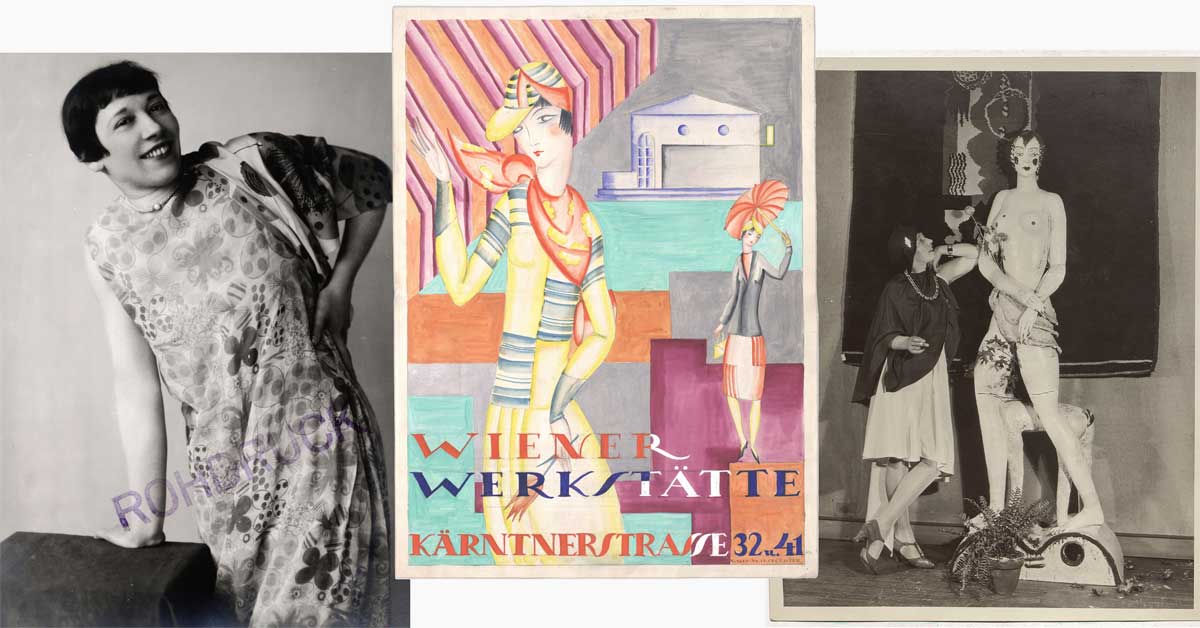
Quick Read
For many visitors in Vienna, the MAK's exhibition on the women of the Wiener Werkstätte marked the first comprehensive introduction to the female designers who helped shape one of the most influential design movements of the early twentieth century. Five years later, the story continues in New York. Presented by the Jewish Museum in cooperation with the MAK, Modernity and Opulence: Women of the Wiener Werkstätte revisits the subject with a more focused perspective that places Jewish artists, patrons and collectors at the centre of the narrative.
• Modernity and Opulence: Women of the Wiener Werkstätte is on view at the Jewish Museum, New York, from 17 July to 15 November 2026. From Vienna's broad survey to New York's focused perspectiveThe exhibition builds on research that began before its Vienna presentation. As early as 2020, the MAK launched an extensive research initiative that also involved Citizen Scientists, who helped identify artists, family histories and archival material that had largely disappeared from established art history. The resulting MAK exhibition presented the work of nearly one hundred women associated with the Wiener Werkstätte through more than 800 objects.The New York exhibition has been newly developed by MAK's Anne-Katrin Rossberg together with the curatorial team of the Jewish Museum. Rather than repeating the Vienna presentation, it narrows its focus to around 30 Jewish women artists and patrons, examining how they influenced modern design while also tracing the biographies that were interrupted, transformed or erased by National Socialism. Fashion and textiles emerge as a driving forceOne of the strongest themes of the New York exhibition is the growing recognition of the Wiener Werkstätte's textile and fashion production. The preview makes clear that fabrics, garments and printed textiles were far more than decorative additions to the workshop's output. They became one of its most successful commercial activities and, at times, provided the economic stability that helped sustain the entire enterprise.The exhibition also links fashion with wider social change. Reform dress, innovative textile patterns and clothing designed by women for women reflected changing ideas about independence, education and professional opportunities during the early decades of the twentieth century. Fashion therefore appears not only as a design discipline but also as an expression of cultural and social transformation. From Vienna to Paris, New York and HollywoodAmong the exhibition's central figures is ceramic artist Vally Wieselthier, whose expressive work became internationally recognised and whose career later continued in New York. Visitors interested in seeing more of her work can also visit the MAK in Vienna, where a major exhibition dedicated to Wieselthier remains on view until 10 January 2027.Another key figure is textile designer Felice Rix-Ueno, whose hundreds of designs helped define the visual identity of the Wiener Werkstätte. Alongside these well-known names, the exhibition introduces artists who remain unfamiliar to many audiences today. One example is Jacqueline Groag, who continued her career after leaving Central Europe by designing textiles for leading Paris couture houses including Chanel, Jeanne Lanvin and Elsa Schiaparelli, before becoming an influential designer in Britain. The exhibition also follows the international reach of Wiener Werkstätte design beyond Vienna. It recalls the artists' success at the 1925 Paris Exposition while exploring how designs by the Wiener Werkstätte appeared in Hollywood films starring actors such as Greta Garbo, thereby illustrating how Viennese design entered popular visual culture far beyond Europe. A familiar exhibition with fresh discoveriesVisitors who experienced the MAK exhibition will recognise many celebrated names, but the New York presentation offers a different way of reading their work. By placing Jewish women artists, patrons and collectors at the centre, it expands the historical narrative beyond individual objects and reveals the personal networks, international careers and disrupted biographies behind them. Rather than revisiting the Vienna exhibition, it opens another chapter—one that demonstrates how the history of the Wiener Werkstätte continues to evolve as new research brings overlooked lives back into public view.Images, from left to right: Portrait of Vally Wieselthier (1928); Design for a Wiener Werkstätte Poster (1928, pencil and gouache on paper); Vally Wieselthier with her ceramic sculpture 'Modern Youth' at a Contempora exhibition in New York (1929, photograph). © MAK Ceramic artist Vally Wieselthier is one of the central figures in 'Modernity and Opulence: Women of the Wiener Werkstätte' at the Jewish Museum, New York. Her career connected Vienna's avant-garde with New York's design scene after her emigration. At the same time, the MAK in Vienna is presenting the major exhibition 'Vally Wieselthier: Ceramic Sculptor' (until 10 January 2027), showcasing ceramics, fashion designs, drawings and archive materials that trace her groundbreaking contribution to modern design and her international career. |