
|
12 October 2026 Emilie Flöge’s Legacy Meets Vienna’s Chic at a New Hotel Opening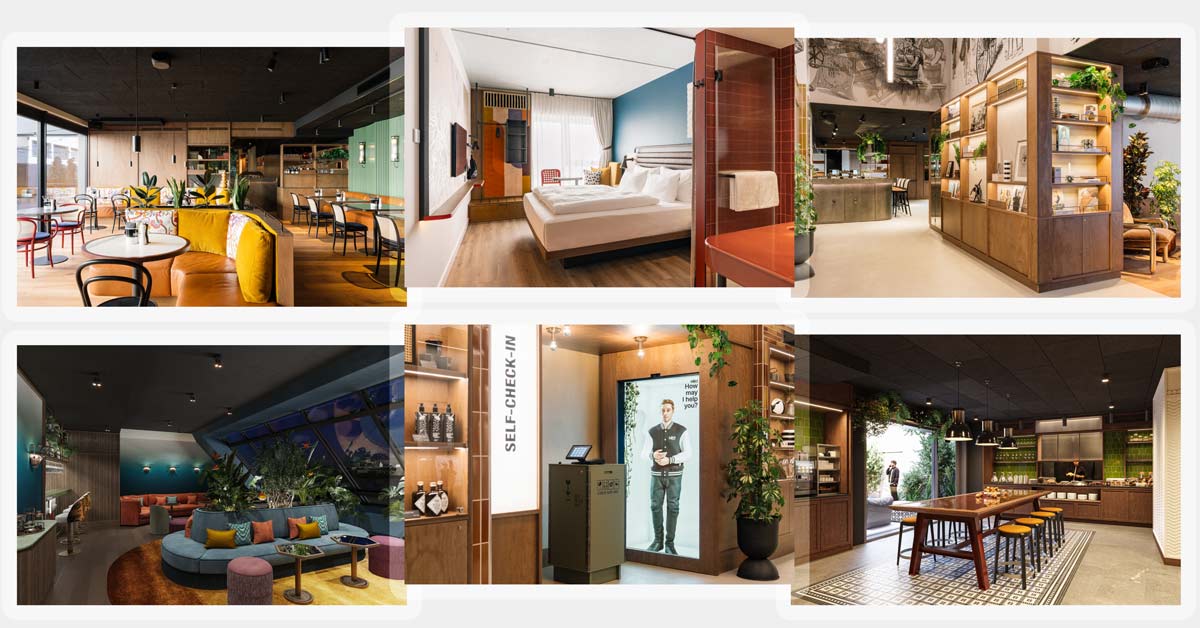
Quick Read
• Hotel Schani Naschmarkt opened on 22 September, ahead of its official opening party on 16 October.
Where fashion history meets Vienna's social sceneVienna's chic is expected to gather at Hotel Schani Naschmarkt on Friday, 16 October. The opening party brings together names from acting, fashion, music and the arts, according to the guest list circulated with the press invitation. The setting offers a fitting starting point for a hotel whose design looks back to Vienna's creative past, including the work of fashion entrepreneur Emilie Flöge.The hotel at Linke Wienzeile 130A has already been welcoming guests since 22 September. The event is therefore less a first unveiling than the official celebration of a new address in Mariahilf. With 90 rooms across nine floors, the sixth location in the Schani Hotels portfolio combines a historically informed interior with digital guest services. The invitation lists actors Stefano Bernardin and Faris Rahoma, presenter Kati Bellowitsch, model Sasha Knezevic and fashion designer Nicolas Dudek among the guests. Artists, musicians and performers are also represented. The list is an indication of the event's cultural and social mix, rather than a complete picture of who will attend. Emilie Flöge and the textile heritage of MariahilfThe hotel's design concept draws on the period around 1900, when Vienna developed a distinctive dialogue between architecture, applied arts, fashion and craftsmanship. Interior design studio Archisphere, led by architect Gabriel Kacerovsky, references figures including Josef Hoffmann, Otto Wagner and Joseph Maria Olbrich. Materials such as brass and aluminium, geometric forms and carefully worked details connect the interiors to the visual language of Viennese Modernism.Emilie Flöge provides a link to the district's fashion history. A designer and businesswoman, she ran the fashion salon Schwestern Flöge with her sisters from 1904. Located at Mariahilfer Straße 1b, the salon was designed by Josef Hoffmann and Koloman Moser and became associated with the Wiener Werkstätte, the influential Viennese arts and crafts movement. Flöge was known for her engagement with modern dress and for her close personal and artistic relationship with Gustav Klimt. From Viennese Modernism to Miami Art DecoThe interior follows a gradual change in mood as visitors move upwards through the building. The ground floor and lobby emphasise darker tones, metalwork and references to the Wiener Werkstätte. Higher floors introduce lighter colours and a more contemporary atmosphere. At the top, the Vieami rooftop bar shifts towards the colourful glamour associated with Miami Art Deco.The result is not a historical reconstruction but a sequence of design references, connecting the neighbourhood's craft and textile history with a more international hospitality aesthetic. The approach also reflects a broader challenge for city hotels: how to create a recognisable identity without turning local history into decoration alone. A digital Schani at the receptionTechnology is another part of the hotel's identity. The Schani Hotels group, founded by Benedikt and Alexander Komarek, opened its first Hotel Schani near Vienna's main railway station in April 2015. The Naschmarkt property is the group's sixth location, following several projects that have experimented with digital services and flexible hotel spaces.Here, a screen-based virtual host guides guests through check-in, helps answer questions about the hotel and provides practical information about the city. The avatar was developed by creative studio Bruce B, with the Fraunhofer Institute for Industrial Engineering IAO accompanying the project through research and evaluation. It is intended to support the guest journey, rather than simply replace every interaction with hotel staff. There is an amusing contrast between this digital host and the name Schani itself. In Viennese usage, *Schani* is a familiar form of Johann and has historically been associated with a servant, helper or person who carries out practical tasks. The expression "I bin doch ned dei Schani" — "I'm not your errand boy" — remains a recognisable piece of Viennese speech. The hotel brand gives the name a contemporary interpretation: a local character associated with service, now represented partly by a digital assistant. Whether the virtual Schani will also be checking the guest list at the entrance to Friday's opening party remains unknown. For the moment, that task may still belong to the human hosts. Images: Interior views of Hotel Schani Naschmarkt in Vienna, showing the restaurant and lobby, a guest room, the self-check-in area, breakfast buffet and Vieami rooftop bar. The design combines warm wood, colourful seating, greenery and contemporary details with references to Viennese Modernism. © Schani Hotels; photographs by Gregor Hofbauer and Archisphere. |