
|
22 September 2026 Europe’s Most Popular Castles: Schönbrunn Reaches No. 3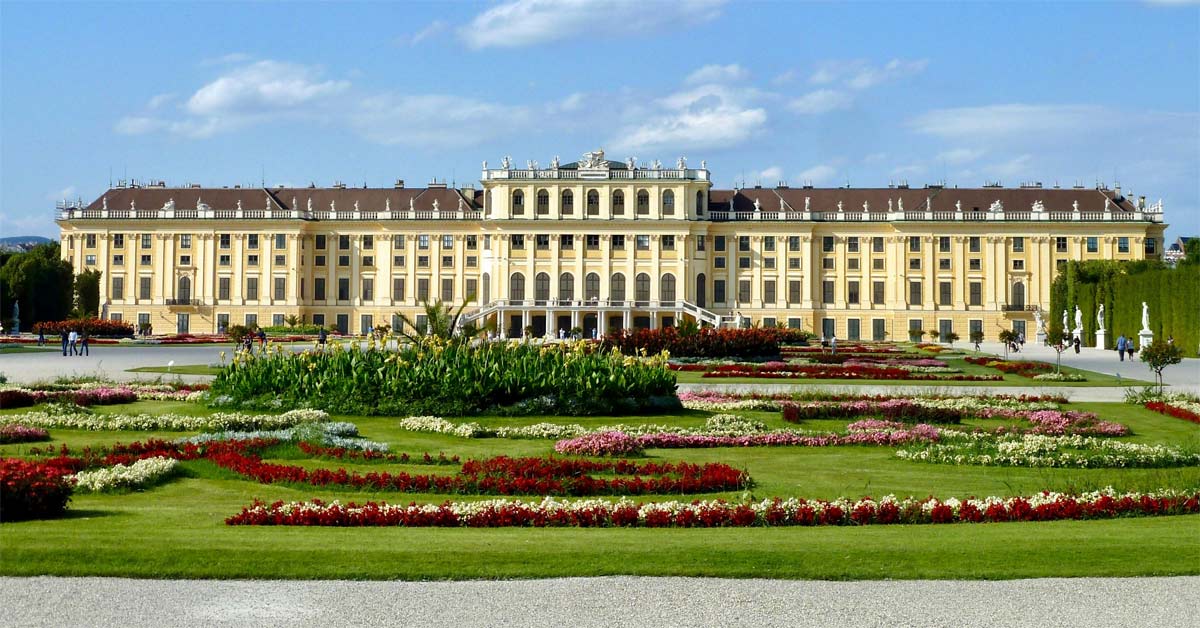
Quick Read
• TUI Musement ranks Europe's castles and palaces by the number of Google reviews. From Hohensalzburg to SchönbrunnAsk Austrians to name a few favourite castles and fortresses without preparation and a surprisingly long list is likely to emerge: Hohensalzburg Fortress in Salzburg, Hochosterwitz Castle in Carinthia, Ambras Castle in Tyrol, Schallaburg in Lower Austria, Forchtenstein Castle in Burgenland, Herberstein in Styria, Schattenburg in Vorarlberg or Schloss Ort in Gmunden, Upper Austria. This is only one example from each Austrian federal state outside Vienna; every region has several destinations worth visiting.Now a new European ranking provides a different perspective. TUI Musement has placed one Vienna landmark among Europe's ten most-reviewed castles and palaces: Schönbrunn Palace comes third. According to TUI, it recorded more than 182,000 Google reviews in July 2026, 41% more than in the comparable 2023 survey. The methodology is important. TUI Musement did not rank the sites according to architectural quality, historical significance or visitor ratings. Instead, it counted the total number of Google reviews for castles and palaces across Europe. The July 2026 figures were compared with data collected in July 2023. The result therefore says something about the online visibility and visitor activity surrounding these places, rather than establishing a hierarchy of cultural value. What makes Schönbrunn more than a palace?TUI describes Schönbrunn through its imperial history and its rooms associated with Maria Theresa, Emperor Franz Joseph I and Empress Elisabeth. The palace also celebrates 30 years as a UNESCO World Heritage Site in 2026.But the palace building is only part of the experience. The UNESCO designation covers the palace and its gardens, while the extensive park includes the Gloriette, fountains, sculptures and historic garden structures. The complex also encompasses several museum and exhibition spaces. Visitors can move beyond the traditional palace tour to places including the Imperial Carriage Museum, the Children's Museum and the historic Palm House. The palace tour itself leads through preserved ceremonial and residential rooms associated with successive generations of the Habsburg family. Schönbrunn is therefore not simply a palace interior, but a large historical landscape combining architecture, gardens, museums and different layers of court history. Prague, London, Vienna – and then VersaillesAt the top of TUI Musement's ranking is Prague Castle. With more than 199,000 Google reviews, it retains first place and is described as one of the world's largest castle complexes, bringing together sites such as St Vitus Cathedral, the Old Royal Palace and Golden Lane. Buckingham Palace follows at No. 2. TUI highlights its role as the official London residence of the British monarch, the Changing of the Guard and the seasonal opening of the State Rooms.Schönbrunn follows at No. 3, ahead of Versailles at No. 4. The four places illustrate different forms of European royal heritage: Prague Castle as a large historic complex, Buckingham Palace as a contemporary royal residence, Schönbrunn as a former Habsburg summer residence and Versailles as the former centre of the French monarchy. Versailles, Schönbrunn and the fashion of powerThe connection between Versailles and Schönbrunn is more than a resemblance between two grand residences. Versailles developed under Louis XIV into the principal seat of the French monarchy and became an architectural and landscape model copied across Europe. UNESCO describes it as a model for royal residences for more than a century. Schönbrunn likewise developed into an imperial summer residence under the Habsburgs and was shaped by architects including Johann Bernhard Fischer von Erlach and Nicolaus Pacassi.Marie Antoinette provides an unusually direct human link between the two places. Born Maria Antonia in Vienna, she grew up between the Hofburg and Schönbrunn, the Habsburg family's summer residence, before travelling to France in 1770 to marry the future Louis XVI. At Versailles she became one of the most visible figures of late-18th-century court culture. The palace itself notes her strong involvement in fashion and her relationship with the celebrated dressmaker Rose Bertin. Her influence was not limited to spectacular court dress. During the 1780s, new ideas about simplicity and a closer relationship with nature entered elite fashion. The loose, lighter chemise à la reine, associated with Marie Antoinette and Rose Bertin, became one of the period's most recognisable styles. Versailles itself describes Marie Antoinette as an emblem of 18th-century fashion. The same change of taste can be seen in her private domain at Versailles. At the Petit Trianon, Marie Antoinette commissioned an English-style garden and later the Hameau de la Reine, moving away from the formal geometry of the main royal gardens towards a more informal, picturesque landscape. That makes the TUI ranking interesting beyond its numbers. Google review counts can show which places generate enormous public attention online, but the stories behind these buildings extend far beyond popularity: architecture, political power, gardens, court life and even fashion are intertwined. Schönbrunn and Versailles are, in different ways, places where those histories can still be read in the buildings and landscapes. Image: Schönbrunn Palace in Vienna, one of Europe’s most-reviewed historic palaces in the 2026 TUI Musement ranking. © TUI Musement |