
19 March 2026 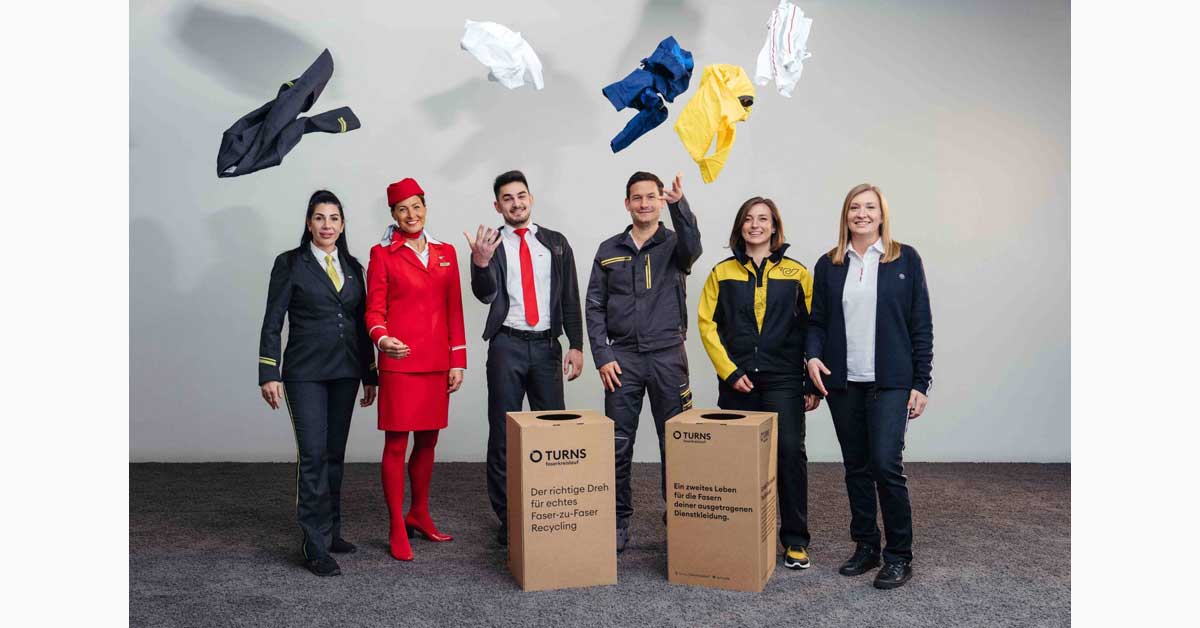 A milestone marked on Global Recycling DayOne year after its launch in spring 2025, the Austrian initiative "Uniform Recycling Pioneers" has presented its first results. The interim report was published yesterday, on Global Recycling Day, as part of a press communication. Global Recycling Day was first established in 2018 by the Global Recycling Foundation. It aims to highlight the importance of recycling as a key tool for protecting natural resources and reducing environmental impact. The day promotes the idea that waste should be seen as a valuable resource and encourages governments, industries, and individuals to support circular systems. Against this backdrop, the Austrian project positions itself as a practical example of how recycling can work at scale.Six partners from transport and logisticsThe initiative brings together major companies from Austria's daily mobility and logistics sector. These include Austrian Airlines, ÖBB (Austrian Federal Railways), Wiener Linien—covering subway, tram, and bus networks—the City Airport Train (a direct rail link between Vienna city center and the airport), the postal service Austrian Post, and the textile service company Salesianer. Salesianer is one of Austria's leading providers of textile services, specializing in the rental, cleaning, and logistics of workwear. Within the project, it plays a central role in collecting and managing used uniforms. The partners focus on recycling what is known internally as the "1er-Panier"—a term referring to uniform items that are no longer usable in daily operations and are officially withdrawn from service. Instead of being discarded, these garments are collected, sorted, and prepared for recycling.From used uniforms to new fibresSince the start of the project, around 30 tons of used uniforms have been collected. The textiles are first gathered through internal return systems, then pre-sorted in Austria. A key challenge lies in removing logos, badges, and other identifying elements. This step is necessary to prevent misuse of official uniforms and requires additional manual work before recycling can begin. The processed textiles are then transferred to the German start-up TURNS, based in Bavaria. The company specializes in textile-to-textile recycling and produces new fibres and yarns from old garments. Its approach goes beyond simple downcycling, aiming to reintroduce materials into the production cycle. The overall process is supported by EY denkstatt, a sustainability consultancy. Denkstatt has been part of the EY network in Austria since 2024, forming one of the country's largest advisory units for sustainability and environmental strategy.Scaling circular solutionsThe project demonstrates how cooperation across industries can help create viable circular systems. Together, the participating companies employ tens of thousands of people, making the volume of uniforms—and the potential impact of recycling—significant. The partners aim to reach around 50 tons of recycled textiles annually in the coming years. The initiative has already received national recognition, including an award as "Sustainable Shapers 2025."While textile waste remains a global issue, projects like this show how large organizations can influence change. When companies with extensive workforces and standardized clothing systems join forces, the impact can be substantial. More broadly, the initiative underlines a simple point: keeping textiles in use for longer—and returning them into production cycles—can be an important step toward a more resource-efficient economy. Image: Representatives of the partners of the 'Uniform Recycling Pioneers' project—Austrian Airlines, City Airport Train (CAT), ÖBB, Austrian Post, Salesianer, and Wiener Linien—pose together, with discarded workwear symbolically thrown into the air. The image illustrates cross-sector cooperation in textile recycling. Photo by Lukas Leonte. © ÖBB / Lukas Leonte |