
14 December 2025 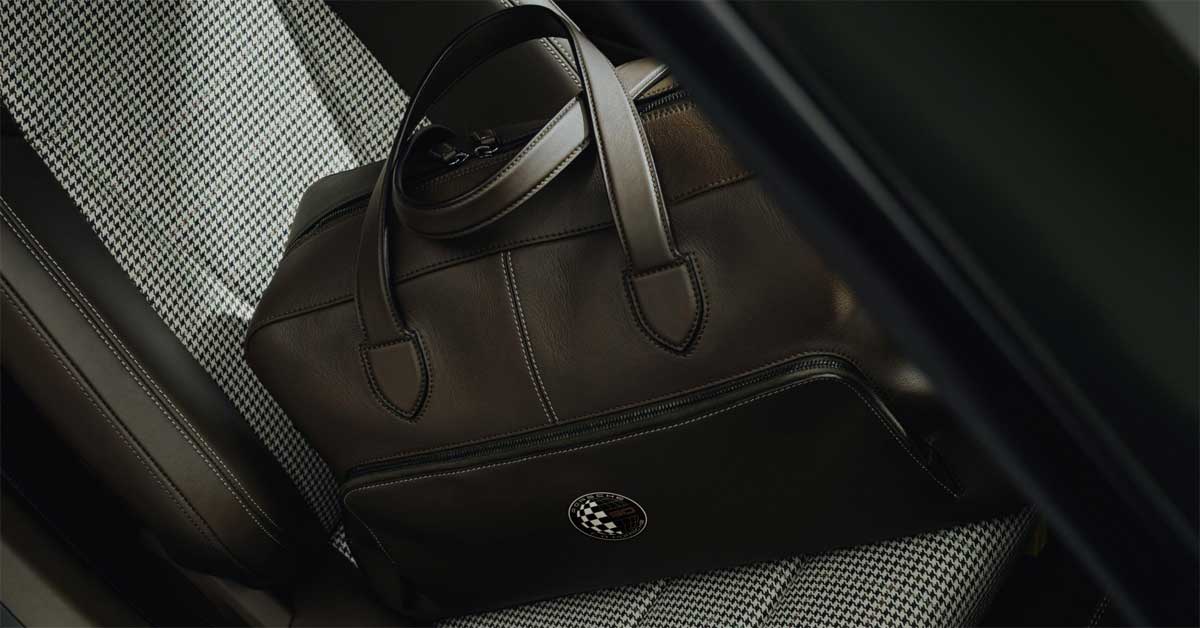 The Porsche 911 is often described through engines, body lines and racing success. Less frequently discussed, yet just as telling, are the fabrics that have shaped its interior identity over more than six decades. These textiles form a cultural layer of the car's history—one that leads directly to Austria, to Zell am See, and to Ferdinand Alexander Porsche, whose legacy continues to influence Porsche design today. Born on 11 December 1935, Ferdinand Alexander Porsche—known as F. A. Porsche—grew up between engineering workshops and the Schüttgut estate near Zell am See. After an early education in design, including time at the Ulm School of Design, he joined Porsche in the late 1950s. In 1961, he became head of the newly formed Porsche design studio, where he oversaw projects such as the 901, later renamed the 911. His design philosophy followed a simple principle: function determines form. That credo shaped not only the silhouette of the 911, but also its interior logic. To mark what would have been his 90th birthday, Porsche presented the limited 911 GT3 "90 F. A. Porsche", realised through the Sonderwunsch programme in Stuttgart-Zuffenhausen. Developed in close dialogue with F. A. Porsche's youngest son, Mark Porsche, the project reconnects the modern GT3 with personal memories, materials and colours associated with its original designer. While the car itself is built in Germany, its presentation deliberately references Austria, with imagery and locations connected to Zell am See, where Porsche Design was founded in 1972 and relocated two years later. From personal clothing to woven memoryOne of the most striking details of the anniversary model is the fabric used on the seat centre panels: a bespoke grid-weave inspired by the patterned jackets F. A. Porsche frequently wore. These garments became a visual constant in his working life, and for Mark Porsche, they remain inseparable from memories of his father. Translating this personal textile into an automotive interior reflects a long-standing Porsche tradition—using fabric not merely as decoration, but as narrative.Mark Porsche acted as a bridge between biography and production, working with the Sonderwunsch Manufaktur to ensure that such references remained restrained rather than nostalgic. Alongside the car, objects from Porsche Design were introduced, including a Chronograph 1 special edition and a leather weekender bag. Both draw on materials and colours associated with the vehicle and with the Porsche Design studio in Zell am See, underlining the ongoing relevance of Austria to the brand's design culture. Iconic fabrics in the 911 interiorThe 911 has long served as a canvas for distinctive fabric patterns. Among the earliest was Pepita, a black-and-white houndstooth introduced in the early 1960s in the Porsche 356 and offered in the first-generation 911 from 1965. Borrowed from fashion history—where it was popularised by Christian Dior—Pepita added graphic clarity and lightness to the cabin.In the 1970s, Porsche embraced bolder expressions. Tartan fabrics appeared first in the 911 Turbo in 1974, initially as exclusive options, before becoming available for the wider 911 range. Patterns such as Black Watch and MacLachlan connected motorsport performance with heritage symbolism, translating ideas of identity and craftsmanship into an automotive context. Equally emblematic is the Pasha pattern, introduced in 1977 with the Porsche 928 and later offered in the 911. Composed of rhythmic, rectangular shapes, Pasha visually referenced motion and racing flags, capturing the experimental spirit of the late 1970s. Velour pinstripes and other patterned textiles followed, each reflecting the aesthetics and technologies of their time. Zell am See and the continuity of designToday, these historic fabrics are once again relevant. Porsche Classic has reissued Pepita, tartan and Pasha in original-quality reproductions, while Porsche Exclusive Manufaktur continues to reinterpret them for contemporary models. The 911 GT3 "90 F. A. Porsche" fits within this lineage, not as a retro exercise, but as an example of how material culture can convey continuity.Zell am See plays a quiet yet essential role in this story. As the home of Studio F. A. Porsche, it remains a place where functional design principles are developed beyond the automobile—into watches, luggage and industrial objects. The anniversary GT3, presented alongside a dedicated website and a short film drawing on imagery from the region, demonstrates how deeply this Austrian setting is woven into Porsche's identity. In the Porsche 911, fabric has never been incidental. From Pepita to tartan, from Pasha to contemporary bespoke weaves, textiles tell stories of time, place and people. They remind us that design history is not only shaped by metal and mechanics, but also by patterns that carry memory across generations. Image: Porsche Design weekender bag created for the 911 GT3 90 F. A. Porsche, using interior materials and a bespoke fabric pattern derived from the houndstooth-patterned jacket Ferdinand Alexander Porsche was known to wear. Photo: © Dr. Ing. h.c. F. Porsche AG / Porsche Holding |