
3 February 2026 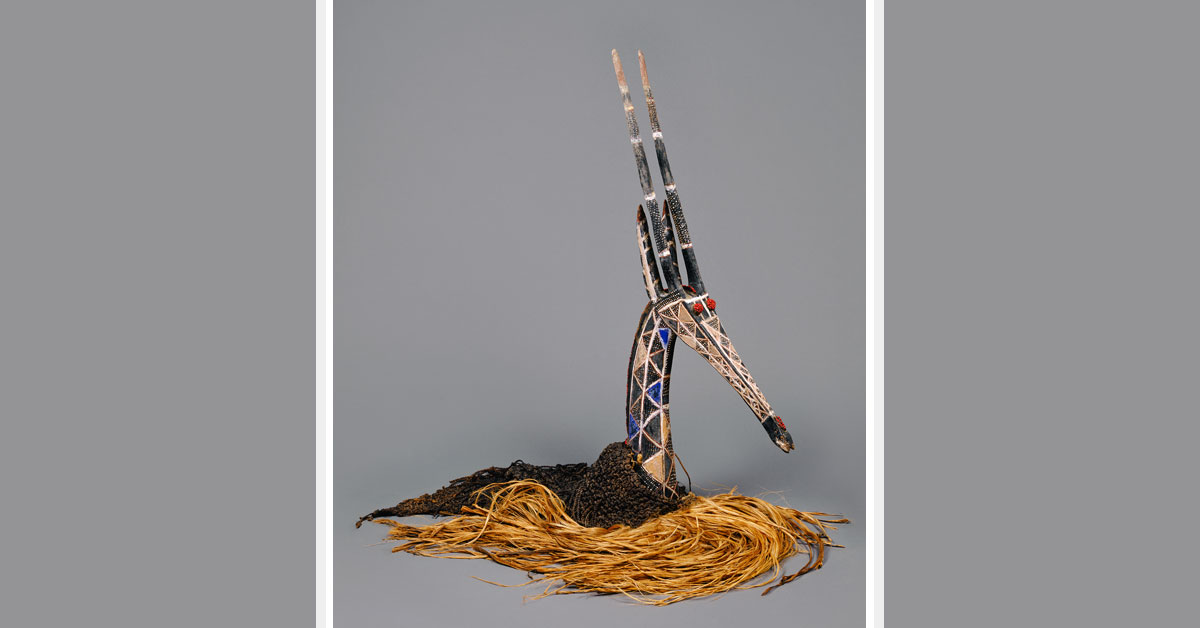 The Weltmuseum Wien and the Klima Biennale ViennaIn 2026, the Weltmuseum Wien plays a central role in the Klima Biennale Vienna, which takes place from 9 April to 10 May. As one of the Biennale's key institutions, the museum positions itself not only as an exhibition space, but as an active participant in debates about climate, culture, and future ways of living. A first preview of this direction was already visible in the main Biennale project SUPERFLUX. The Craftocene, covered in an article published on fashion.at.Building on this approach, the Weltmuseum Wien continues to challenge traditional ideas of what an ethnological museum can be. A Collection That Is Not StaticThe Weltmuseum Wien does not understand its collection as something fixed or silent. Its holdings include objects from many world regions, created in close relationship with nature, materials, rituals, and long-term social structures. These objects are not only historical witnesses, but also carriers of knowledge.This understanding becomes visible in the pop-up exhibition "Regenerative Design. The Weltmuseum Wien as a Lab for the Future", developed in cooperation with the University of Applied Arts Vienna. Opening on 6 February 2026 and running until June, the project ideally overlaps with the Klima Biennale period. Regenerative Design as a Way of ThinkingAt the centre of the exhibition are around 25 objects from the museum's collection. Students from the international design theory course Design Revolution Now! examine these objects not to copy their forms, but to understand the regenerative principles embedded in them. These include responsibility toward resources, long-term thinking, and the close link between design, ritual, and community.The objects are presented in a non-linear way, grouped into thematic "islands". Instead of chronology, the exhibition focuses on relationships and impacts. Design here is understood as a cultural practice that connects humans, animals, plants, and non-human systems. The project is led by Harald Gründl, co-founder of the Vienna-based design studio EOOS. EOOS became internationally known for high-end furniture and product design, as well as for social design projects in areas such as water, sanitation, and hygiene. Gründl is also the author of The Death of Fashion, a book that analyses the fast cycles of the fashion industry and interprets seasonal sales as a ritual of destruction and renewal. His work highlights how consumption, speed, and symbolism are deeply connected. In his more recent publication Design Revolution Now!, which shares its title with his course at the University of Applied Arts Vienna, Gründl argues for a shift from problem-solving to relationship thinking. Regenerative design, in this sense, aims not to reduce damage, but to actively support ecological and social systems. An Antelope Mask and a Change of PerspectiveIn a preview, the Weltmuseum Wien has already shown selected objects from the exhibition, including a 1960s antelope mask from Burkina Faso, created by an unknown master of the Kurumba. The mask was used in funeral ceremonies and represents the presence of ancestors. The antelope stands for endurance, adaptability, and purpose. Here, design is neither decoration nor function, but a way to stabilise relationships across generations.Gründl describes the exhibition as an invitation to rethink design and consumption fundamentally. The aim is not to imitate indigenous objects, but to apply the future-oriented principles behind them. The exhibition encourages visitors to let their thinking move in unfamiliar directions—and to consider design as a tool for regeneration rather than acceleration. Image: Antelope mask 'Noumtiri', created by an unknown master of the Kurumba in the 1960s. Used in funeral rituals in Burkina Faso, the mask represents ancestral presence and the close relationship between humans, animals, and the natural world. Photo: © KHM-Museumsverband, Weltmuseum Wien |